Rated 4.7 out of 5 stars
4.7 / 5


726,000+ customers
Free 60-Day Returns
1-Year Warranty
726,000+ customers
Free 60-Day Returns
1-Year Warranty
Finding the right red light therapy face device can feel overwhelming with so many masks, wands, and handheld tools on the market. You want an effective way to support skin renewal, smooth the look of fine lines, and bring out a healthy glow at home. At Solawave, we design accessible skincare tools backed by proven technology so you can achieve noticeable results without salon price tags.
In this guide, you will learn how red light therapy works, how different formats compare, and what technical features matter most. We also cover practical routine steps, topical pairings, and safety guidelines to help you get the most out of every session. Understanding these key factors ensures you select the best device for your personal skincare goals.
Quick Answer: The ideal red light therapy face device delivers targeted wavelengths such as 630nm red and 830nm near-infrared light. Choose a flexible LED mask for hands-free, full-face sessions, or a multifunction wand for targeted facial massage and localized care.
Red light therapy uses specific, non-invasive wavelengths of visible and near-infrared light to support the appearance of healthy skin. Unlike ultraviolet rays from the sun, cosmetic LED light contains zero UV rays and does not burn or damage the skin barrier. Instead, gentle light energy passes into the upper layers of the skin to refresh tone and texture over time.
Consistent use helps target common aesthetic concerns. Many users notice that their complexion appears more radiant, balanced, and smooth after several weeks of regular sessions. For more guidance, explore this red light therapy overview.
Different wavelengths offer distinct cosmetic benefits. Light is measured in nanometers (nm), and each band interacts with the skin at varying depths.
| Wavelength Range | Light Type | Visible Skin Support |
|---|---|---|
| ~605 nm | Amber | Revitalizes tired skin and enhances visible radiance |
| ~630 nm | Red | Softens the look of fine lines and evens skin tone |
| ~660 nm | Deep Red | Refines the appearance of rough texture and wrinkles |
| ~830 nm | Near-Infrared | Helps skin look firmer, tauter, and visibly rejuvenated |
Choosing the best red light therapy face device comes down to your lifestyle, treatment goals, and how much time you want to spend on your routine.
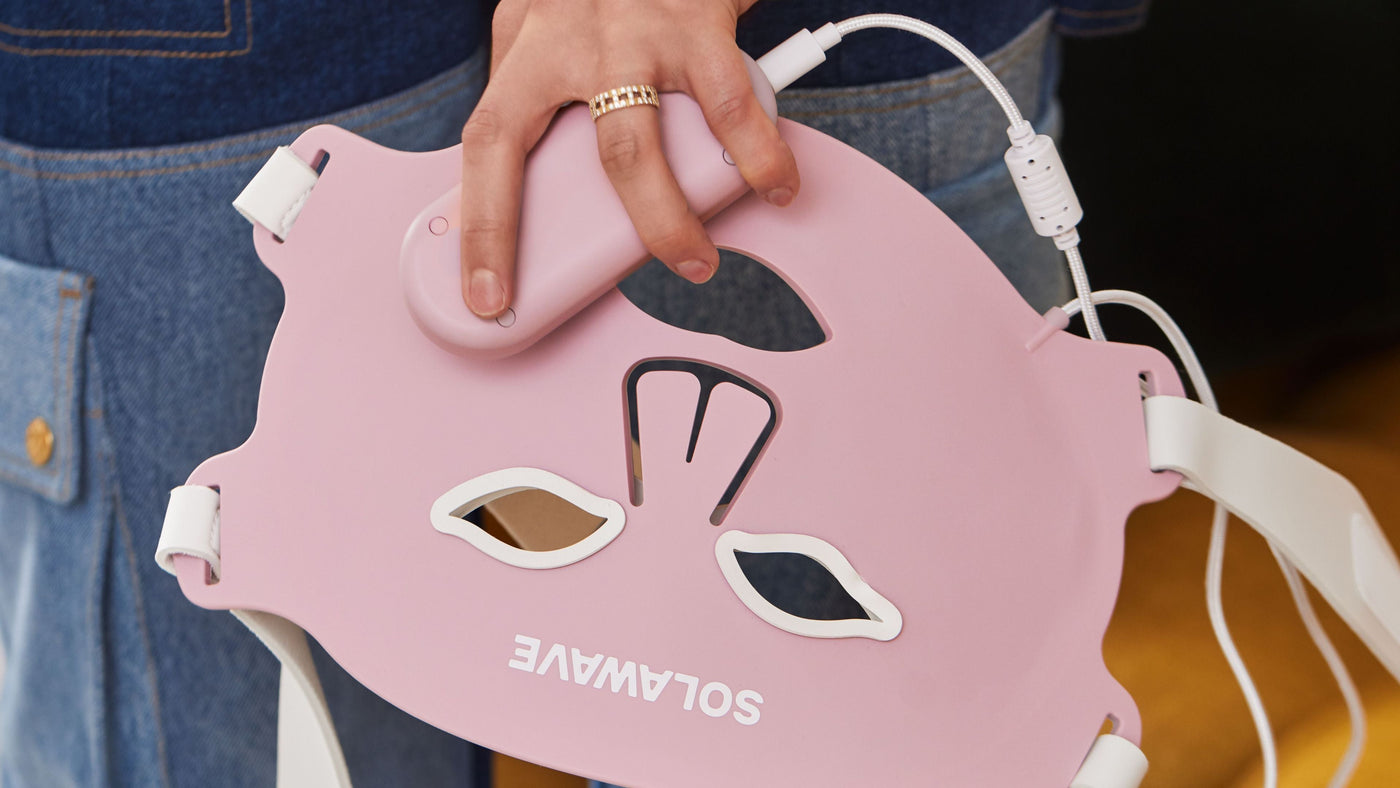
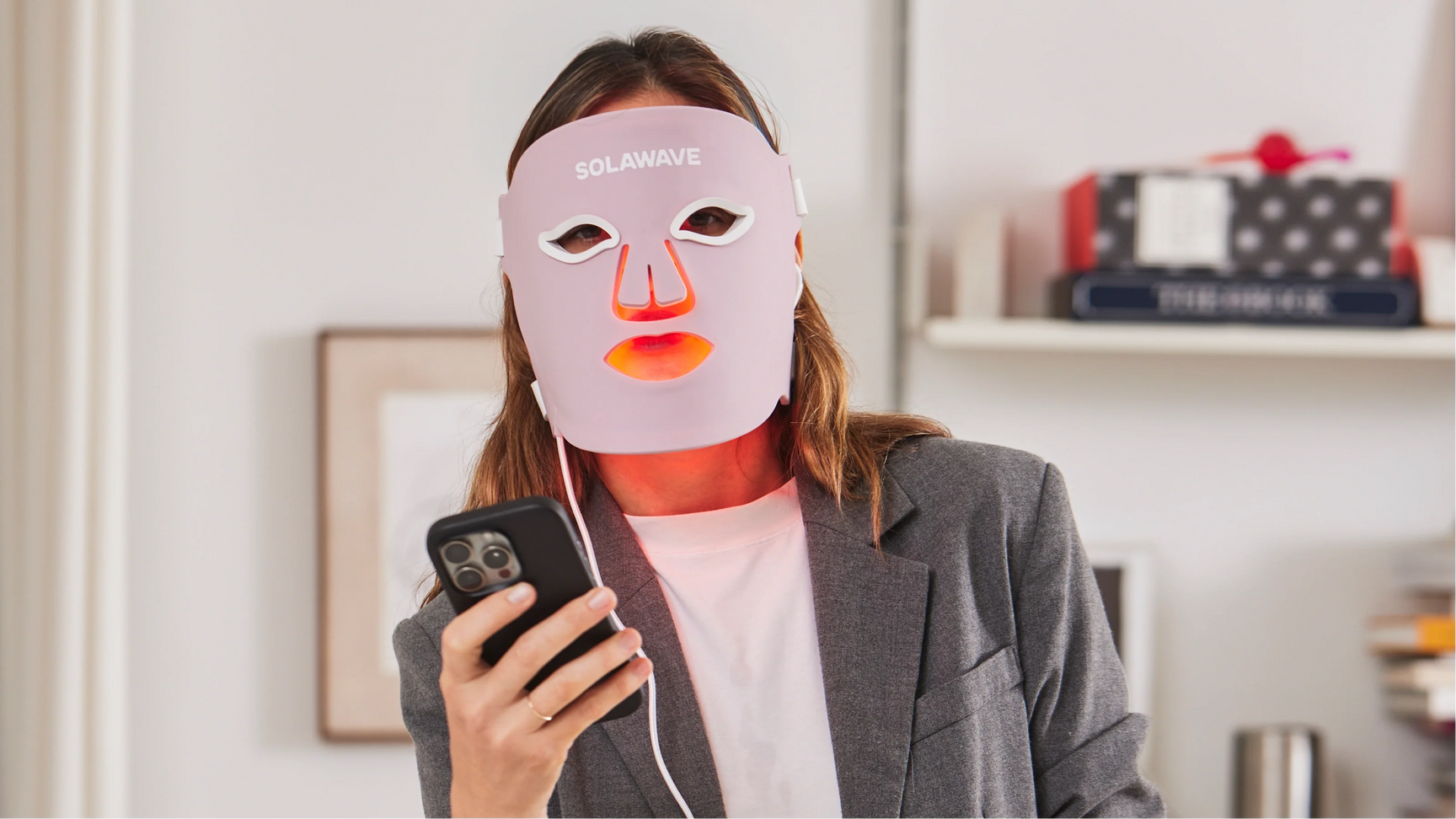
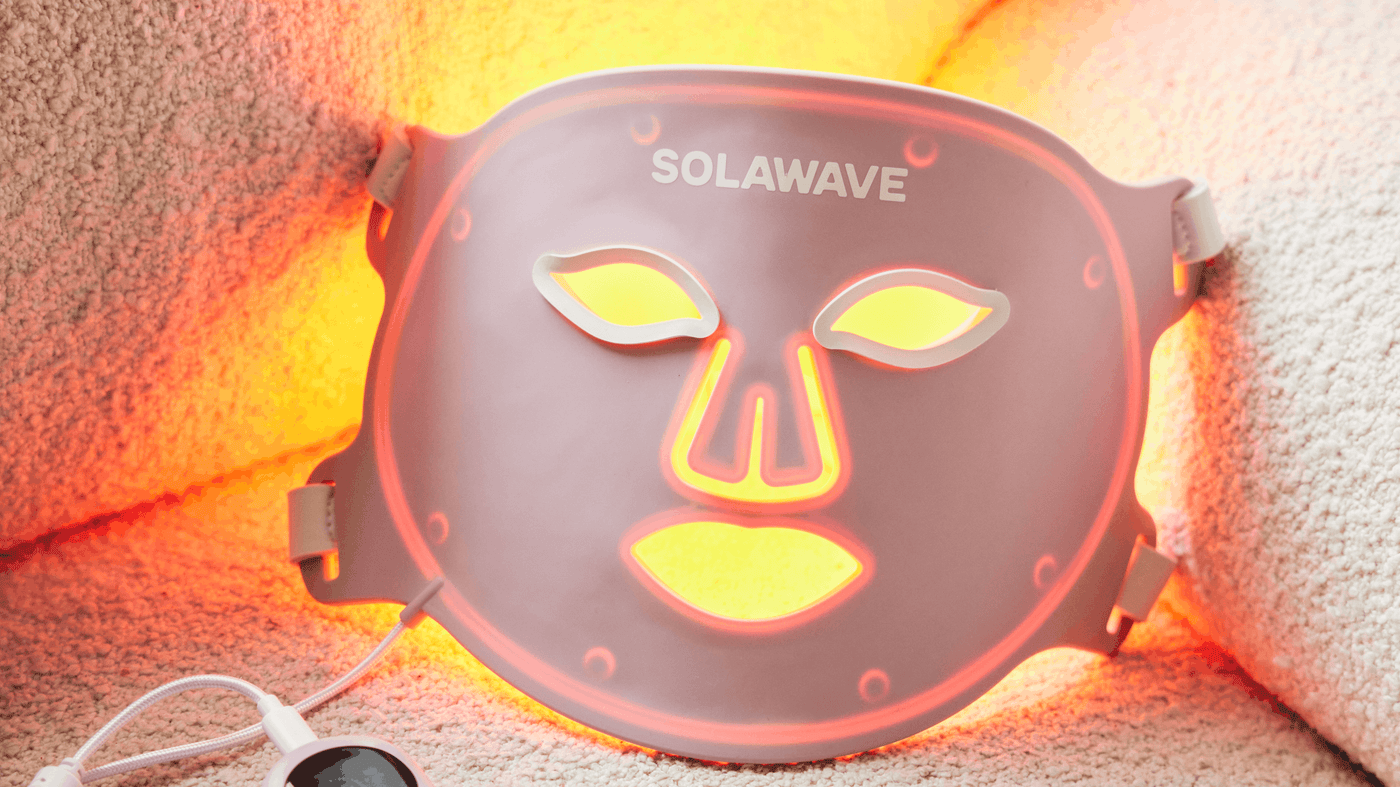
Full-face masks offer total facial coverage in a single, hands-free session. High-end flexible silicone masks rest directly against the skin, delivering balanced light distribution across the forehead, cheeks, jawline, and mouth area.
The Wrinkle Retreat Pro LED Face Mask is an FDA-cleared option designed with 320 LEDs. It delivers four targeted wavelengths (amber 605nm, red 630nm, deep red 660nm, and near-infrared 830nm) in a quick 3-minute session. Built-in eye protection goggles ensure comfortable, safe use 3 to 5 times per week. Masks are ideal if you prefer a passive treatment while relaxing, reading, or meditating.
Handheld wands combine red light therapy with additional skincare technologies for targeted treatment. They give you complete control over where you focus your session, making them perfect for smile lines, crow's feet, the forehead, and the neck.
The 4-in-1 Skincare Wand combines 630nm red light therapy with galvanic current, facial massage, and therapeutic warmth. Galvanic current helps improve skin tone and assists with product absorption, while gentle warmth and vibration soothe tension and reduce the look of puffiness. A full wand routine takes just 12 minutes (3 minutes per facial zone), used 3 to 5 times per week. For additional usage guidance, read how often to use red light therapy.
If portability is your top priority, compact devices provide focused care in a pocket-sized footprint.
| Device Type | Primary Technology | Best For | Typical Session Time |
|---|---|---|---|
| Full-Face Mask | Multi-wavelength LED light | Comprehensive facial coverage and hands-free convenience | 3 minutes |
| 4-in-1 Wand | Red light, galvanic current, massage, warmth | Targeted smoothing, lifting appearance, and daily depuffing | 12 minutes total (3 min/zone) |
| Skincare Mini | Red + Near-Infrared light, warmth | On-the-go travel, focused face, and body areas | 3 minutes per zone |
| Acne Spot Tool | Blue + Red light | Calming the look of active, individual blemishes | 3 minutes per spot |
Not all light therapy devices offer the same performance or build quality. Before investing in an at-home tool, review these essential criteria:
Always look for an FDA-cleared device. FDA 510(k) clearance confirms that an at-home light therapy device has undergone rigorous review for safety and performance equivalence. Clearance provides peace of mind that the electrical, thermal, and optical outputs meet strict consumer standards.
Effective cosmetic devices emit precise wavelengths within the proven 600nm to 850nm range. Cheaper novelty lights often use broad-spectrum LEDs that lack the targeted output needed to produce visible changes in skin tone and elasticity.
The number and placement of LED bulbs dictate how evenly light reaches your facial contours. Masks with high LED counts (such as 300+ bulbs) ensure uniform coverage without patchy gaps, while dual-core LED chips maximize energy delivery per square inch.
Consistency is the single most important factor in light therapy. Choose a device with a treatment protocol that fits comfortably into your schedule. A 3-minute mask or quick handheld routine is much easier to maintain over several months than a corded device requiring 20 to 30 minutes daily. This red light therapy frequency guide can help you plan a routine.
Your eyes should always be protected from bright optical output. Quality face masks come with built-in, properly fitted protective eyewear or blackout goggles that shield vision during your session.
Pro Tip: Look for a device made from flexible, medical-grade silicone. Flexible designs rest naturally against varied facial shapes, keeping LEDs at an optimal distance from the skin for consistent light delivery.
To get the most out of your red light therapy face device, pair it with a clean skincare routine designed to support light transmission and skin hydration. You can also review this step-by-step at-home light therapy guide.
Always begin with clean, dry skin. Oil, heavy makeup, and sunscreens containing physical mineral blockers (like zinc oxide or titanium dioxide) can reflect light waves, reducing the efficiency of your session.
Topical pairing depends on the specific device you use:
Finish your routine by sealing in moisture and nourishing your skin barrier.
Caring for your skincare device keeps it clean, sanitary, and working properly for years.
At-home red light therapy is non-invasive, gentle, and painless. However, following established safety rules ensures a comfortable experience. If your skin feels irritated, review these red light therapy sensitivity and irritation tips.
Light therapy is not an overnight fix. While many users report an immediate refreshed look, meaningful improvements in the appearance of fine lines, firmness, and texture occur gradually over 4 to 8 weeks of consistent use. Consistency 3 to 5 times per week is essential.
Red light therapy devices are intended for healthy adults aged 18 and older. Consult your physician or dermatologist before starting light therapy if you:
Always perform a quick light-sensitivity patch test on your arm before using a new light therapy device on your face. For additional guidance, read about red light therapy for sensitive skin.
Selecting the right red light therapy face device allows you to build an enjoyable, sustainable habit at home. Whether you choose a hands-free LED mask for full-face care or a portable wand for targeted smoothing, quality engineering and consistent use make all the difference.
Key Takeaway: The most effective red light therapy face device is the one you will use consistently. Select a tool that fits effortlessly into your schedule, use it on clean skin, and give your routine several weeks to reveal a radiant, refreshed complexion.
Ready to discover the perfect light therapy match for your unique skin goals? Take our quick Skin Quiz to find your personalized routine, or explore our FDA-cleared light therapy devices.
Most at-home red light therapy face devices are designed to be used 3 to 5 times per week. Sessions typically range from 3 to 12 minutes depending on whether you use a full-face mask, a wand, or a targeted spot device. Consistency is key, but you should not exceed one session per treatment zone per day.
Always start with a clean face free of makeup and sunscreen. When using a full-face mask, you can apply compatible, water-based serums like LightBoost Face & Neck Serum before your session as long as they are fully absorbed. When using a skincare wand, apply a conductive serum before and during the treatment to ensure smooth glide and proper contact.
Neither is universally better; they serve different skincare preferences. An LED face mask provides effortless, hands-free coverage across the entire face in a single 3-minute session. A handheld wand offers targeted control, allowing you to focus on specific areas while combining red light with galvanic current, gentle warmth, and facial massage. For more eye-area guidance, read this red light therapy guide for eyes.
Many devices can be used regularly, but following the manufacturer's recommended schedule of 3 to 5 sessions per week is best for optimal skin comfort. Overusing a device will not speed up visible results and may lead to mild skin dryness. If you have underlying skin concerns or take light-sensitizing medications, speak with a dermatologist before starting a routine.
The statements on this website have not been evaluated by the FDA. The information provided on this site is not intended to diagnose, treat, cure, or prevent any disease and should not be construed as medical advice. Results may not be typical.
 Skincare Devices
 Skincare Devices