Rated 4.7 out of 5 stars
4.7 / 5


726,000+ customers
Free 60-Day Returns
1-Year Warranty
726,000+ customers
Free 60-Day Returns
1-Year Warranty

If you have started shopping for an LED face mask, you have likely seen products labeled as FDA approved red light therapy for face devices. It is easy to assume that label means the government tested the device and guaranteed dramatic results. The reality of how facial light therapy is regulated in the United States is slightly different, but just as reassuring once you understand the details.
At-home facial light devices are generally FDA-cleared rather than FDA-approved. Solawave designs its light therapy devices around these precise regulatory standards to ensure consumer safety and reliable performance. In this article, you will learn the difference between approval and clearance, why specific wavelengths matter for the appearance of your skin, and how to choose a safe, effective device for your at-home routine.
Quick Answer: Facial red light devices are typically FDA-cleared, not FDA-approved. FDA clearance means the device has been reviewed for safety and verified to be substantially equivalent to an established, legally marketed predicate device.
Regulatory terminology can feel confusing when shopping for skincare tech. Many brands use these terms interchangeably in their marketing, which creates misleading expectations for shoppers. Understanding the official definitions helps you evaluate product claims with confidence.
The Food and Drug Administration categorizes medical and cosmetic devices into three distinct classes based on risk level.
FDA approval is reserved for Class III medical devices. These are high-risk products that sustain or support human life, are implanted inside the body, or present a potential unreasonable risk of illness or injury. Examples include pacemakers, heart valves, and deep-brain stimulators.
To earn FDA approval, a manufacturer must submit a Premarket Approval (PMA) application. This rigorous process requires extensive human clinical trials to demonstrate both safety and efficacy before the product can enter the market. Low-risk beauty tools do not fall into this high-risk category.
FDA clearance applies to Class II medical devices, which present moderate risk. Most reputable at-home red light therapy masks, targeted wands, and acne spot tools fall into this class.
To achieve clearance, a brand submits a 510(k) premarket notification. The brand must prove that its device is substantially equivalent in safety, materials, power output, and intended use to an existing legally marketed device. Clearance confirms that the product meets strict manufacturing and performance standards under its labeled conditions.
| Designation | Risk Class | What It Requires | Common Skincare Examples |
|---|---|---|---|
| FDA-Cleared | Class II | 510(k) submission showing safety and substantial equivalence to a predicate device | LED face masks, targeted skincare wands, blue light acne spot tools |
| FDA-Approved | Class III | Extensive clinical trials demonstrating safety and effectiveness for high-risk uses | Implantable devices, pacemakers, prescription drugs |
| FDA-Registered | Facility only | Basic administrative listing that a manufacturer is registered with the agency | Facilities that produce cosmetics or devices (not a review of the product itself) |
Be cautious of brands using phrases like "FDA-certified." The FDA does not issue certificates to medical device companies.
Similarly, "FDA-registered" simply means the manufacturer filed paperwork to list their facility. It does not mean the device itself underwent safety reviews or technical checks. When evaluating at-home devices, look specifically for the term FDA-cleared.
Light therapy involves delivering specific optical wavelengths directly to delicate facial skin. Choosing an uncleared device exposes you to several avoidable risks.
FDA clearance provides an objective layer of consumer protection. When a facial device passes through the 510(k) clearance process, several critical safety and engineering factors are reviewed.
LEDs must emit precise light wavelengths to deliver visible cosmetic benefits. Cheap, unverified LEDs often drift outside the intended optical range or emit unintended wavelengths. A cleared device verifies that the emitted spectrum matches the technical specifications submitted to regulatory reviewers.
LED components generate heat during operation. If a facial device lacks proper thermal regulation, it can overheat, leading to skin irritation, surface burns, or electrical failure. Cleared devices undergo bench testing to confirm that surface temperatures remain comfortable and safe during use.
Facial masks sit close to the eyes. An uncleared device might emit uncontrolled light energy that causes visual discomfort. Cleared devices feature tested irradiance levels (power density per square centimeter) and often provide dedicated protective eye shields to protect your vision.
Cleared devices must be produced in facilities that follow strict quality management systems. This oversight reduces the likelihood of loose wiring, poor battery safety, or inconsistent light output across different production runs.
Key Takeaway: FDA clearance confirms that a facial light device meets strict electrical, thermal, and optical safety standards. It ensures you are putting a tested, reliable tool onto your skin.
For additional background, read about how red light therapy works.
Facial light therapy relies on non-invasive wavelengths of visible and invisible light. Different wavelengths target different visual aspects of the skin.
When reviewing facial devices, you will usually encounter combinations of red, near-infrared, amber, and blue light.
| Wavelength | Spectral Band | Primary Visible Skin Benefit |
|---|---|---|
| Amber (~605nm) | Visible Amber Light | Helps support a radiant, refreshed, and glowing complexion |
| Red (~630nm) | Visible Red Light | Helps improve the appearance of fine lines, overall texture, and redness |
| Deep Red (~660nm) | Deep Red Light | Contributes to a multi-wavelength approach for the look of aging skin |
| Near-Infrared (~830nm) | Invisible Light | Helps skin look firmer, plumper, and visibly revitalized |
| Blue (~415nm) | Visible Blue Light | Targets the visible appearance of blemishes and surface breakouts |
Red light (around 630nm) and near-infrared light (around 830nm) are the most popular pairing in facial light therapy. Red light targets the superficial layers of the skin, helping skin look more even and refreshed.
Near-infrared light operates just beyond the visible spectrum. Its longer wavelength allows it to reach deeper layers, helping support the appearance of firmer, smoother-looking facial contours.
Advanced full-face masks combine multiple visible and invisible wavelengths to deliver balanced coverage across the entire face. Combining amber, red, deep red, and near-infrared light provides comprehensive cosmetic support for dullness, uneven texture, and early signs of aging.
Different facial tools serve different lifestyle habits and aesthetic preferences. Depending on your routine, you may prefer a hands-free full-face mask, a compact wand, or a targeted spot tool.
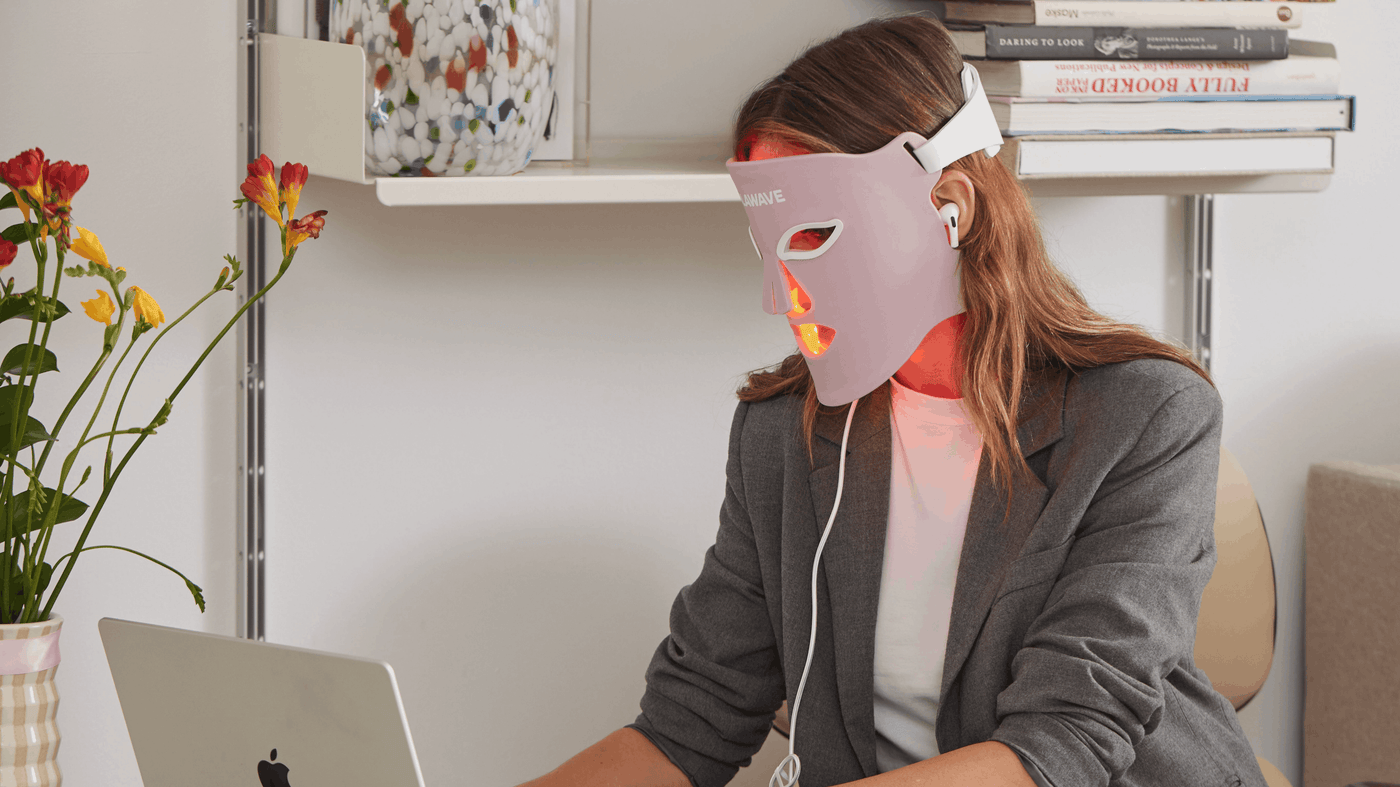
Full-face masks provide even, hands-free coverage across the forehead, cheeks, jawline, and perioral area. They are ideal if you want a complete facial treatment while resting or reading.
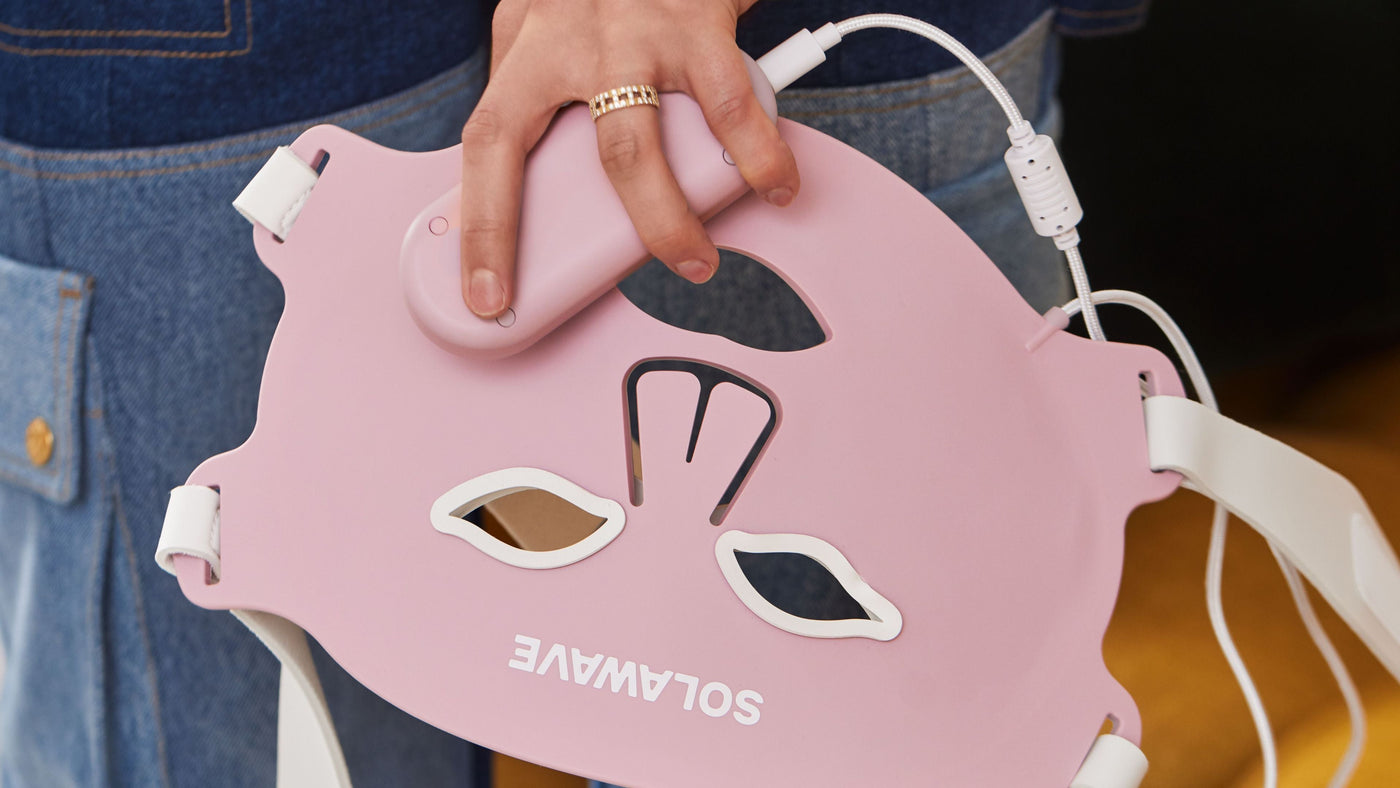
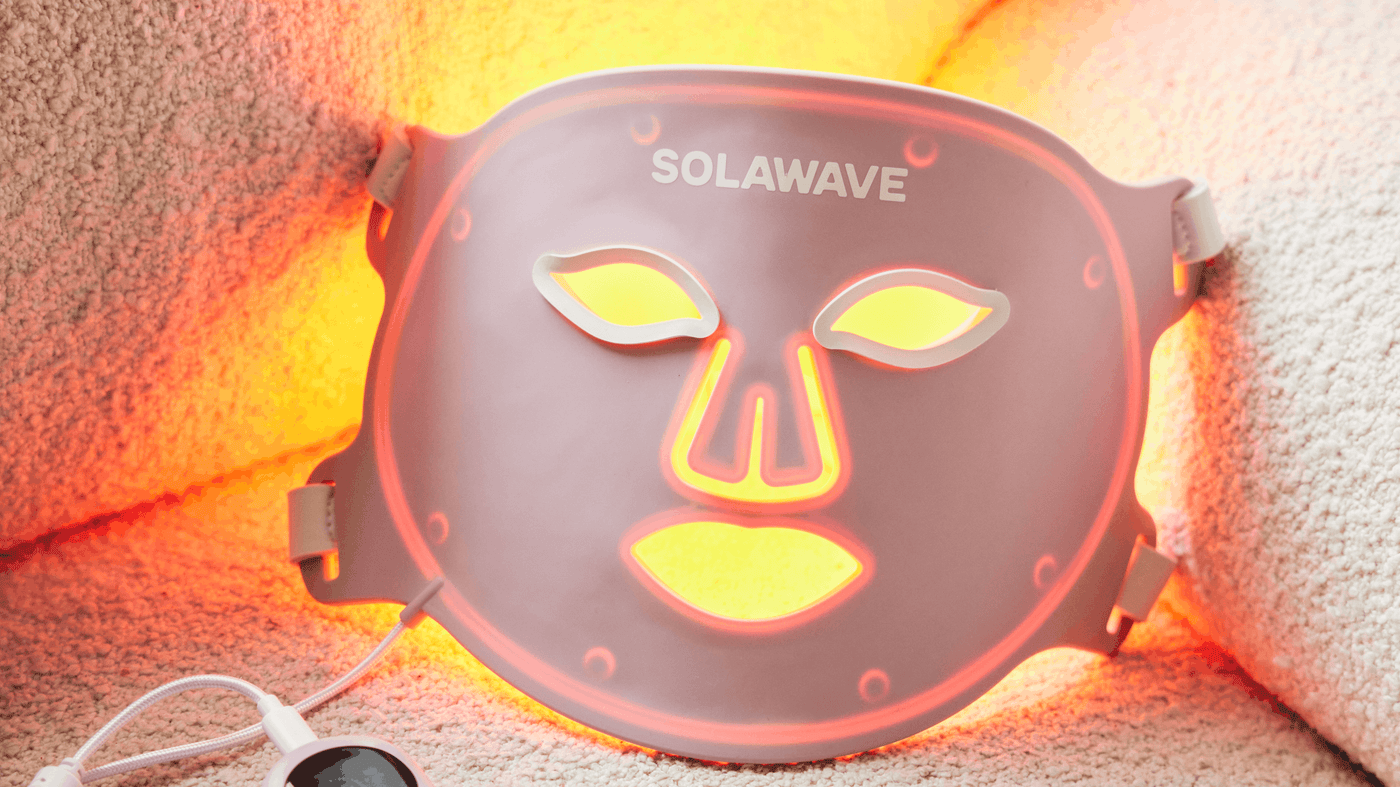
The Wrinkle Retreat Pro LED Face Mask is an FDA-cleared mask that combines four targeted wavelengths: Amber (605nm), Red (630nm), Deep Red (660nm), and Near-Infrared (830nm). With 320 LEDs built into flexible silicone, it delivers a pre-timed 3-minute session designed to help skin look smoother and more radiant. It includes required protective eyewear to ensure a comfortable, safe experience every time.
For more guidance on treatment frequency, read how often to use red light therapy.
If you prefer an active, hands-on routine or want to focus on specific facial zones, a compact wand is an excellent option.
The 4-in-1 Skincare Wand is an FDA-cleared handheld device that pairs 630nm red light therapy with gentle galvanic current, soothing therapeutic warmth, and facial massage. This combination allows you to glide over specific areas, such as the forehead, cheeks, and jaw, for a customized 3-minute treatment per zone.
For those who travel often or want to treat both the face and body, a compact dual-wavelength tool offers great flexibility.
The 2-in-1 Skincare Mini is an FDA-cleared device featuring 9 dual-core LEDs emitting Red (630nm) and Near-Infrared (830nm) light alongside gentle warmth. It provides a simple 3-minute treatment per area for the face, neck, hands, or arms.
If your primary skin concern is the appearance of sudden breakouts, blue light technology is a helpful addition to your skincare lineup.
The Bye Acne: 3-Minute Pimple Spot Treatment is an FDA-cleared blue-and-red light acne device. It pairs blue light (415nm) to target the look of blemishes with red light (630nm) to calm the appearance of surface redness. It is designed for simple, 3-minute localized spot sessions on clean, dry skin.
Getting visible benefits from light therapy requires consistency and proper skin preparation. Light cannot effectively pass through heavy occlusive barriers, thick sunscreens, or layers of makeup.
For a step-by-step routine, read how to use red light therapy at home.
Always start your session with clean, refreshed skin. Wash away dirt, daily oil, and makeup using a gentle cleanser that will not strip your skin barrier.
The Solabiome Pre- & Probiotic Hydrating Gel Cleanser provides a thorough cleanse while maintaining skin comfort. Work a small amount into wet hands, massage gently across the face for 30 to 60 seconds, and rinse with lukewarm water.
How you prep your skin depends on the device you are using:
Fit your device comfortably and secure any straps. If your device includes protective goggles, ensure they are properly positioned over your eyes before turning on the LEDs.
After your light session, lock in moisture to support a supple, dewy finish.
If you used a wand, massage any remaining serum into your skin without rinsing. You can follow with the Solabiome Pre- & Probiotic Plumping Peptide Serum and seal everything in with the Solabiome Pre- & Probiotic Nourishing Moisturizer. For daytime routines, always finish with a broad-spectrum sunscreen.
Pro Tip: Consistency is far more important than session duration. Using an FDA-cleared device for 3 minutes 3 to 5 times per week will deliver much better visible results than doing one long session once a month.
Light therapy works gradually. Because at-home devices use gentle, non-thermal light energy, they do not produce instant, dramatic transformations overnight.
Many users notice that their skin looks more radiant, rested, and refreshed after several weeks of consistent use. Over 4 to 8 weeks of regular sessions, you may observe visible improvements in the appearance of fine lines, overall skin tone, and surface texture.
Results vary from person to person based on age, skin type, lifestyle factors, and consistency. Light therapy is designed to complement a healthy lifestyle and daily sun protection, not replace foundational skincare habits.
For examples of visible skincare changes, visit Before & Afters.
While red light therapy has a strong safety profile, following general precautions ensures the best possible experience.
For additional guidance about sensitivity and irritation, read what to do if your skin feels irritated after using a red light therapy device.
Visible red and near-infrared light is bright. The Wrinkle Retreat Pro LED Face Mask and Radiant Renewal Eye Recovery Pro both include custom protective eye shields. Always install and wear the supplied eye protection during every session. Do not rely solely on closing your eyes.
If you are new to light therapy or have sensitive skin, perform a patch test first. Run a short session on an inconspicuous area, like your forearm, and wait 24 hours to ensure you do not experience unexpected redness or sensitivity.
For more tips, read this guide to red light therapy for sensitive skin.
Consult a board-certified dermatologist or healthcare provider before using light therapy devices if you:
Finding the right facial red light device comes down to understanding safety standards, selecting the proper wavelengths, and maintaining a regular routine. Look for devices that are FDA-cleared, built with stable LED technology, and backed by clear operating instructions.
Bottom line: FDA clearance gives you confidence in the safety of your skincare tools so you can focus on building a consistent, relaxing ritual.
To find the right light therapy match for your specific routine, take the skin quiz or explore our collection of FDA-cleared facial devices today.
Facial red light therapy devices are generally FDA-cleared rather than FDA-approved. FDA approval is reserved for high-risk medical items like pacemakers or prescription drugs. At-home LED masks and skincare tools go through the 510(k) process to obtain FDA clearance, which confirms their safety, materials, and substantial equivalence to established predicate devices.
FDA registration simply means a manufacturing facility has registered its business address with the agency. It does not involve any review of the device itself. FDA clearance means the agency has reviewed the product's technical data, safety profile, and manufacturing standards through a formal 510(k) submission.
Most FDA-cleared facial masks, including the Wrinkle Retreat Pro, are designed to be used for 3 minutes per session, 3 to 5 times per week. You should not use your device more than once per day on the same area. Following the manufacturer's specified schedule ensures consistent cosmetic benefits without overusing the device.
It depends on the device and the topical formula. Heavy oils and thick sunscreens should always be cleansed away before a session to allow light to reach the skin. For full-face masks, compatible hydrating formulas like LightBoost Face & Neck Rich Cream may be applied before your session, provided they are allowed to absorb completely into the skin first.
The statements on this website have not been evaluated by the FDA. The information provided on this site is not intended to diagnose, treat, cure, or prevent any disease and should not be construed as medical advice. Results may not be typical.
 Skincare Devices
 Skincare Devices