Rated 4.7 out of 5 stars
4.7 / 5


726,000+ customers
Free 60-Day Returns
1-Year Warranty
726,000+ customers
Free 60-Day Returns
1-Year Warranty
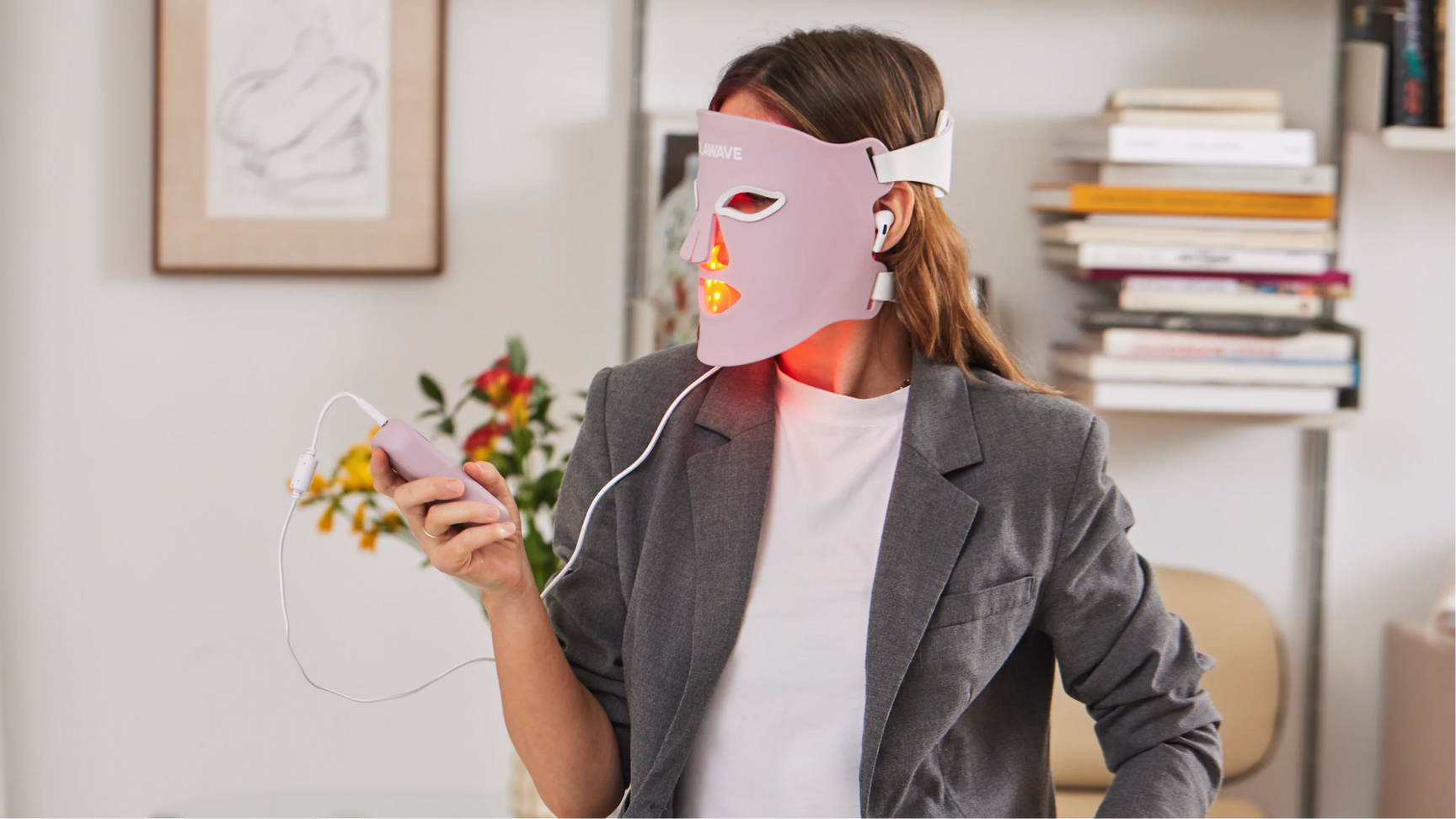
Shopping for the best red light therapy face device can feel daunting with so many shapes, light colors, and technical specifications available today. Whether you want to address the look of fine lines, uneven texture, or lingering blemish marks, finding the right tool depends on your personal schedule and daily routine. Solawave designs light-powered skincare tools to make visible skincare benefits simple and accessible from home. In this guide, we break down what separates a high-performing device from the rest of the pack, from LED counts and wavelength selection to flexible versus rigid mask designs and handheld wands. With the right information, you can choose a device that fits your lifestyle and helps you maintain a consistent, radiant complexion.
Quick Answer: The best red light therapy face device combines research-backed wavelengths (like 630nm red and 830nm near-infrared), comfortable design, and realistic session times (3 to 10 minutes) that you can maintain 3 to 5 times per week.
Not all light therapy devices deliver the same experience. When you evaluate at-home tools, looking past marketing claims to examine practical design, verified safety markers, and light specifications is essential. Here are the core factors to consider before adding a device to your cart.
Red light therapy uses specific visible and near-infrared bands of the light spectrum measured in nanometers (nm). For facial skincare, research consistently centers around precise wavelengths:
Devices that incorporate a multi-wavelength array provide comprehensive cosmetic support compared to single-color models. For more background, explore how red light therapy works.
Always check whether an at-home light therapy device is FDA-cleared. An FDA 510(k) clearance confirms that a device has demonstrated substantial equivalence to legally marketed predicate devices for safety and cosmetic performance. While it is not a medical endorsement or an approval to treat diseases, clearance offers peace of mind that the device meets established manufacturing and safety standards.
The form factor of a facial light device plays a massive role in whether you will actually use it consistently:
Consistency is the single most important factor in seeing cosmetic results from light therapy. If a mask requires 20 to 30 minutes per day, it is easy to skip sessions when your schedule gets busy. Modern LED devices with efficient diodes often complete a full session in as little as 3 to 10 minutes. A long-lasting rechargeable battery also means you can complete multiple treatments before needing a recharge. For additional scheduling guidance, read how often to use red light therapy.
| Feature | What to Look For | Why It Matters |
|---|---|---|
| Wavelength Range | 605nm, 630nm, 660nm, 830nm | Covers visible red, deep red, amber, and near-infrared for complete appearance benefits |
| Safety Credential | FDA-cleared (510(k)) | Validates cosmetic device safety and manufacturing standards |
| Material | Medical-grade flexible silicone | Molds comfortably to different facial shapes without pinching |
| Session Length | 3 to 10 minutes | Shorter sessions make daily or regular consistency realistic |
| LED Density | High diode count (e.g., 80 to 320+ LEDs) | Ensures even light distribution across target areas |
When choosing the best red light therapy face device, the first major decision is choosing between a full-face mask and a targeted handheld wand. Both offer distinct benefits depending on your skincare goals.
Full-face masks are designed for anyone who wants an all-over facial treatment with zero effort during the session. Once you secure the adjustable straps and switch on the remote, you can sit back and relax.
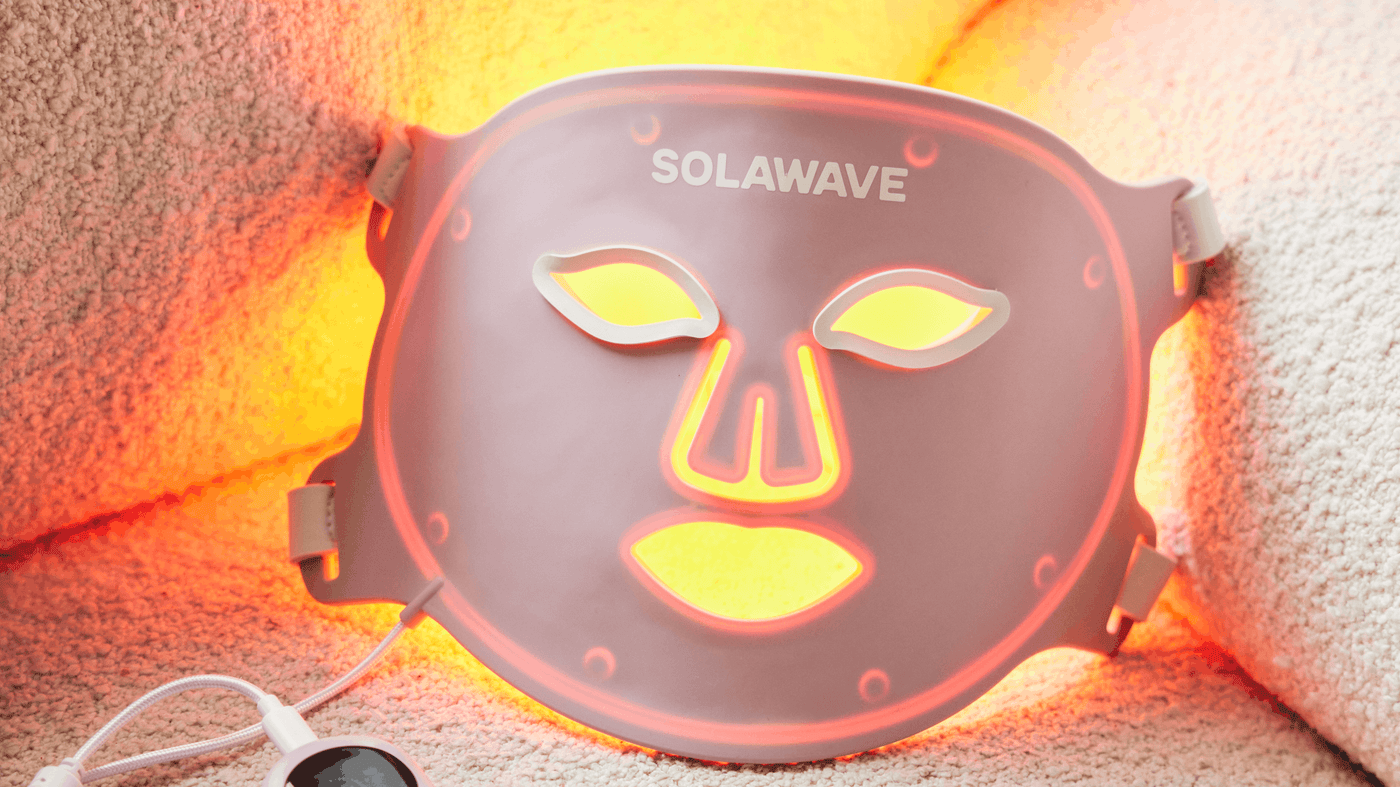
Solawave's Wrinkle Retreat Pro LED Face Mask is an FDA-cleared, full-face flexible silicone mask that delivers four targeted wavelengths (Amber 605nm, Red 630nm, Deep Red 660nm, and Near-Infrared 830nm) across 320 high-density LEDs. Designed for a quick 3-minute session 3 to 5 times per week, it offers complete facial coverage without taking up significant time in your morning or evening routine. The mask includes required protective eyewear to shield vision during treatments and features an auto shut-off remote that ensures consistent session timing.
Full-face masks are ideal if:
Handheld devices give you complete control over where light is applied. They are especially useful if you want to focus extra attention on specific areas, such as laugh lines, between the brows, or along the jawline.
The 4-in-1 Skincare Wand is an FDA-cleared, compact handheld tool that combines 630nm red light therapy with three complementary technologies: gentle galvanic current, soothing therapeutic warmth, and relaxing facial massage. Using 14 LEDs powered by 7 dual-core chips, the Wand glides smoothly across the face in 3-minute zones, up to a total of 12 minutes per session, 3 to 5 times weekly.
Handheld tools are ideal if:
+-----------------------------------------------------------------------+
| Note: While both options deliver red light, full-face masks offer     |
| hands-free convenience, whereas handheld wands allow precise,         |
| multi-tech spot treatment and supreme portability.                    |
+-----------------------------------------------------------------------+
In addition to full-face masks and wands, specialized light therapy devices target specific facial regions or localized concerns.
The delicate skin around the eyes is often the first place to show fine lines, dark circles, and the appearance of puffiness. Standard full-face masks have eye openings that may leave this zone untreated.
The Radiant Renewal Eye Recovery Pro is an FDA-cleared, targeted light therapy mask shaped specifically for the eye contour. It features 80 LEDs delivering Amber (605nm), Red (630nm), Deep Red (660nm), and Near-Infrared (830nm) light in a convenient 3-minute session. Built-in protective eyewear ensures safe use while delivering light right to the crow's feet and under-eye area.
The neck and chest receive significant sun exposure over time, leading to visible crepiness, uneven tone, and horizontal neck lines. Because facial masks do not wrap comfortably around the throat, dedicated neck devices fill this gap.
The Neck & Chest Pro Light Therapy Mask is designed specifically for the contours of the neck and chest. Powered by 320 LEDs across 160 dual-core chips, it delivers Amber, Red, Deep Red, and Near-Infrared wavelengths in an effortless 3-minute session 3 to 5 times per week.
If you are dealing with localized breakouts, a targeted blue and red light tool helps calm the visible appearance of blemishes. Blue light (around 415nm) targets the look of surface blemishes, while red light (630nm) calms the look of redness.
The Bye Acne: 3-Minute Pimple Spot Treatment is an FDA-cleared device combining 415nm blue light and 630nm red light. It is placed directly over an individual breakout for a 3-minute spot session once per day to help visibly improve the appearance of the blemish.
For versatile, palm-sized treatment across both the face and body, compact devices provide focused care. The 2-in-1 Skincare Mini is an FDA-cleared tool combining 630nm red light, 830nm near-infrared light, and therapeutic warmth across 9 dual-core LEDs. It works across 3-minute zones on the face, hands, arms, and chest.
Different wavelengths of light address distinct visible skin concerns. Understanding these differences helps you choose a device equipped with the right spectrum for your personal goals.
| Wavelength | Color Category | Primary Visual Benefits |
|---|---|---|
| 415nm | Blue Light | Targets the appearance of blemishes and surface breakouts |
| 605nm | Amber Light | Supports a radiant, refreshed, and glowing appearance |
| 630nm | Red Light | Helps skin look smoother, more even, and calms the look of redness |
| 660nm | Deep Red Light | Addresses the appearance of fine lines, wrinkles, and texture |
| 830nm | Near-Infrared Light | Supports the look of firmer, more supple, and resilient skin |
Combining several of these wavelengths in a single treatment session allows at-home users to target multiple visible signs of aging simultaneously.
Getting the most out of your light therapy device requires proper skin prep. How you cleanse and what you apply before turning on your device directly impacts how comfortably the device sits and how radiant your skin appears afterward.
Always start with clean skin free of makeup, sunscreen, dirt, and heavy oils. Sunscreen filters and makeup pigments can reflect or scatter LED light, reducing the amount of light that reaches your skin surface.
Use a gentle, non-stripping cleanser like the Pre- & Probiotic Hydrating Gel Cleanser. Work a small amount into wet hands, massage across the face for 30 to 60 seconds, rinse thoroughly with lukewarm water, and pat skin dry.
Depending on which device you use, applying compatible skincare before your session can help hydrate the skin and support a radiant glow:
Fit your device securely using the adjustable straps or move your wand in slow, upward and outward strokes. Always make sure supplied protective eyewear is properly installed when using the Wrinkle Retreat Pro Face Mask or Eye Recovery Pro. Relax for the programmed session time (typically 3 minutes for Solawave masks).
After completing your session, finish your daily skincare routine:
+-----------------------------------------------------------------------+
| Pro Tip: Store your device in a clean, dry spot and wipe the silicone |
| surface after each use with a damp cloth or Light Therapy Device      |
| Cleaning Wipes to keep your device fresh and ready for every session. |
+-----------------------------------------------------------------------+
Consistency is key when using any at-home light therapy device. Rather than doing long, infrequent sessions, short treatments done regularly yield the best cosmetic results.
You can use your red light device in the morning or evening based on your preference:
At-home red light therapy is non-invasive, gentle, and suitable for most skin types when used as directed. For additional guidance, read red light therapy tips for sensitive skin.
LED devices emit bright light. While red and near-infrared light are non-ultraviolet and do not cause UV damage, bright light can feel intense to sensitive eyes. Devices like the Wrinkle Retreat Pro LED Face Mask and Radiant Renewal Eye Recovery Pro come with custom protective eyewear that must be properly installed and worn for every treatment. Never substitute simply closing your eyes for required protective goggles.
Red light therapy devices are intended for cosmetic use by healthy adults aged 18 and older. Keep the following precautions in mind:
To help you decide which tool fits your personal routine, here is a direct comparison of the primary device styles on the market:
| Device Style | Best For | Typical Time | Portability | Key Advantages |
|---|---|---|---|---|
| Flexible Silicone Face Mask | Full-face rejuvenation, fine lines, skin tone | 3 to 10 min | High (rolls flat) | Hands-free, full coverage, lightweight, comfortable fit |
| Rigid Plastic Face Mask | Multi-mode cycling (red/blue), structured wear | 3 to 15 min | Low (bulky shell) | Holds shape, often features built-in mode switches |
| 4-in-1 Skincare Wand | Targeted zones, travel, multi-tech facial massage | 3 min/zone (12 min total) | Maximum (pocket-sized) | Combines light, warmth, galvanic current, and massage |
| Targeted Eye Mask | Under-eye lines, crow's feet, dark circle appearance | 3 min | High | Direct coverage for delicate periorbital skin |
| Neck & Chest Mask | Neck lines, décolletage crepiness, chest tone | 3 min | High | Contoured fit for upper body areas often missed by face masks |
The best red light therapy face device is the one you will use consistently. If you want quick, effortless, full-face care that takes just 3 minutes, a flexible silicone mask like the Wrinkle Retreat Pro LED Face Mask offers the ideal blend of coverage, comfort, and multi-wavelength technology. If you value versatility, targeted facial contouring, and portable multi-action skincare, the 4-in-1 Skincare Wand is a proven favorite.
Key Takeaway: Prioritize comfortable silicone materials, research-backed wavelengths, and realistic 3-minute session times so your light therapy device seamlessly fits your weekly routine.
To explore which device matches your individual skin goals and daily schedule, take the skin quiz or explore our FDA-cleared light therapy collection today.
For best results, use your device 3 to 5 times per week for the duration specified in the manual, usually 3 to 10 minutes per session. Do not exceed one session per treatment area per day. Consistency over 4 to 8 weeks is key to seeing visible improvements in skin radiance, texture, and smoothness.
Always start with clean skin. If using compatible skincare like LightBoost Face & Neck Serum or Rich Cream, apply them before your session and allow them to fully absorb before putting on your mask. If using other active serums or oils, it is best to apply them after your light therapy session.
Flexible silicone masks mold directly to the contours of your face, providing close, even light exposure while remaining lightweight and comfortable. Hard plastic masks maintain a rigid shape, which can feel heavier on the nose and may leave gaps around the curves of different face shapes.
Red light therapy is non-invasive and generally suitable for all skin types when used as directed. However, individuals who are pregnant, taking photosensitizing medications, or dealing with light-induced medical conditions should avoid use. Users with darker skin tones (Fitzpatrick V–VI) or sensitive skin should perform a patch test and consult a dermatologist regarding optimal treatment frequency.
The statements on this website have not been evaluated by the FDA. The information provided on this site is not intended to diagnose, treat, cure, or prevent any disease and should not be construed as medical advice. Results may not be typical.
 Skincare Devices
 Skincare Devices