Rated 4.7 out of 5 stars
4.7 / 5


726,000+ customers
Free 60-Day Returns
1-Year Warranty
726,000+ customers
Free 60-Day Returns
1-Year Warranty

Searching for FDA-approved red light therapy devices for face treatments usually begins with a simple desire: finding skin tech that is safe, rigorously tested, and delivers visible results at home. With countless LED masks, wands, and panels flooding the beauty market, navigating the regulatory terms and technical claims can feel overwhelming. Many shoppers quickly discover that while "FDA-approved" is the common search phrase, cosmetic at-home light therapy devices actually undergo review for FDA clearance. Solawave designs accessible, science-backed skincare tech with verified clearances to help you achieve a refreshed, radiant complexion from the comfort of home. In this guide, we break down what regulatory clearances mean, how to choose the right facial light device, and how to pair your tool with targeted topicals for visibly smoother, glowing skin.
When shopping for facial light therapy, understanding regulatory terminology helps you separate verified skincare devices from unverified beauty gadgets. The U.S. Food and Drug Administration (FDA) oversees medical and aesthetic devices using a risk-based classification system.
Quick Answer: Consumer LED devices for the face are categorized as Class II medical devices and receive 510(k) FDA clearance rather than FDA approval. FDA clearance confirms that a device has demonstrated substantial equivalence to a legally marketed predicate device in safety and performance.
The FDA assigns medical devices to one of three classes:
| Regulatory Status | FDA Classification | Typical Products | Review Pathway |
|---|---|---|---|
| FDA Registered | Class I or Facility Listing | Basic establishment registration | Facility data submission |
| FDA Cleared | Class II | LED face masks, skincare wands, spot devices | 510(k) Premarket Notification |
| FDA Approved | Class III | High-risk medical implants, life-support tech | Premarket Approval (PMA) |
Choosing an FDA-cleared device provides confidence that the manufacturer has submitted technical documentation, verified optical outputs, and adhered to rigorous electrical and thermal safety standards. Unregulated devices found on third-party marketplaces often lack consistent power output, accurate wavelengths, or proper eye safety precautions. For additional context, read our guide to FDA clearance for red light therapy devices.
Not all facial light therapy tools offer the same user experience or performance. When evaluating devices, consider the following technical and practical criteria.
Light therapy relies on specific nanometer (nm) bands to deliver visual skincare benefits. Premium devices use calibrated light-emitting diodes that deliver focused wavelengths rather than generic colored bulbs. For more background, explore how red light therapy works.
| Wavelength Band | Primary Visual Benefit | Best Suited For |
|---|---|---|
| Amber (~605nm) | Promotes a glowing, radiant look | Dull skin and uneven appearance |
| Red (~630nm) | Helps skin look more even and calms the look of redness | Fine lines and overall facial tone |
| Deep Red (~660nm) | Multi-wavelength support for mature-looking skin | The appearance of deeper lines |
| Near-Infrared (~830nm) | Helps skin look firmer, refreshed, and revitalized | Loss of visible elasticity |
| Blue (~415nm) | Targets the look of blemishes and surface breakouts | Blemish-prone skin |
The right format depends entirely on your daily lifestyle, time commitment, and primary skincare concerns:
The periorbital area is delicate. Full-face LED masks and dedicated eye devices should include custom-fit protective eyewear to shield vision during bright light sessions. Look for devices with automatic shut-off timers to prevent overexposure and maintain consistent session lengths.
Understanding which device aligns with your routine makes all the difference in achieving visible, long-term skincare benefits.
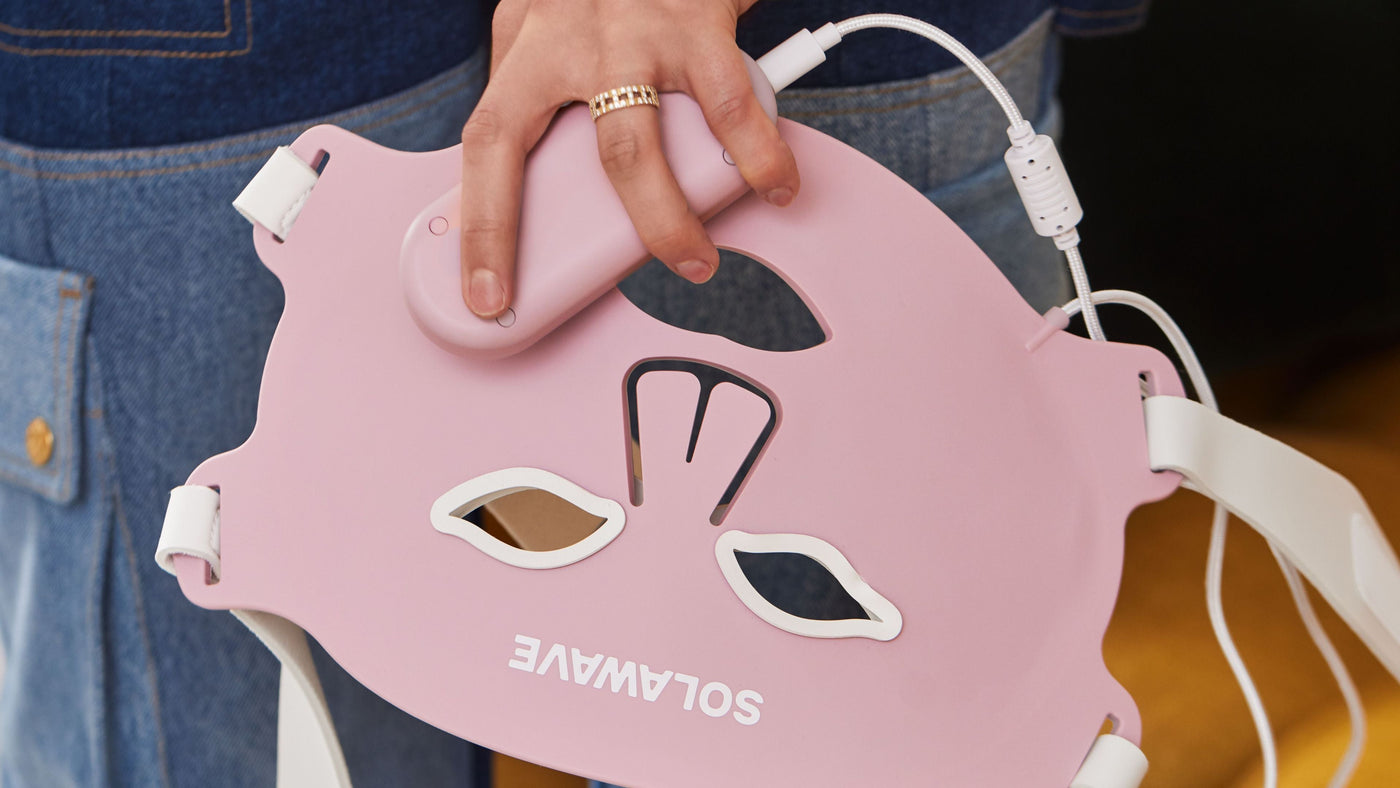
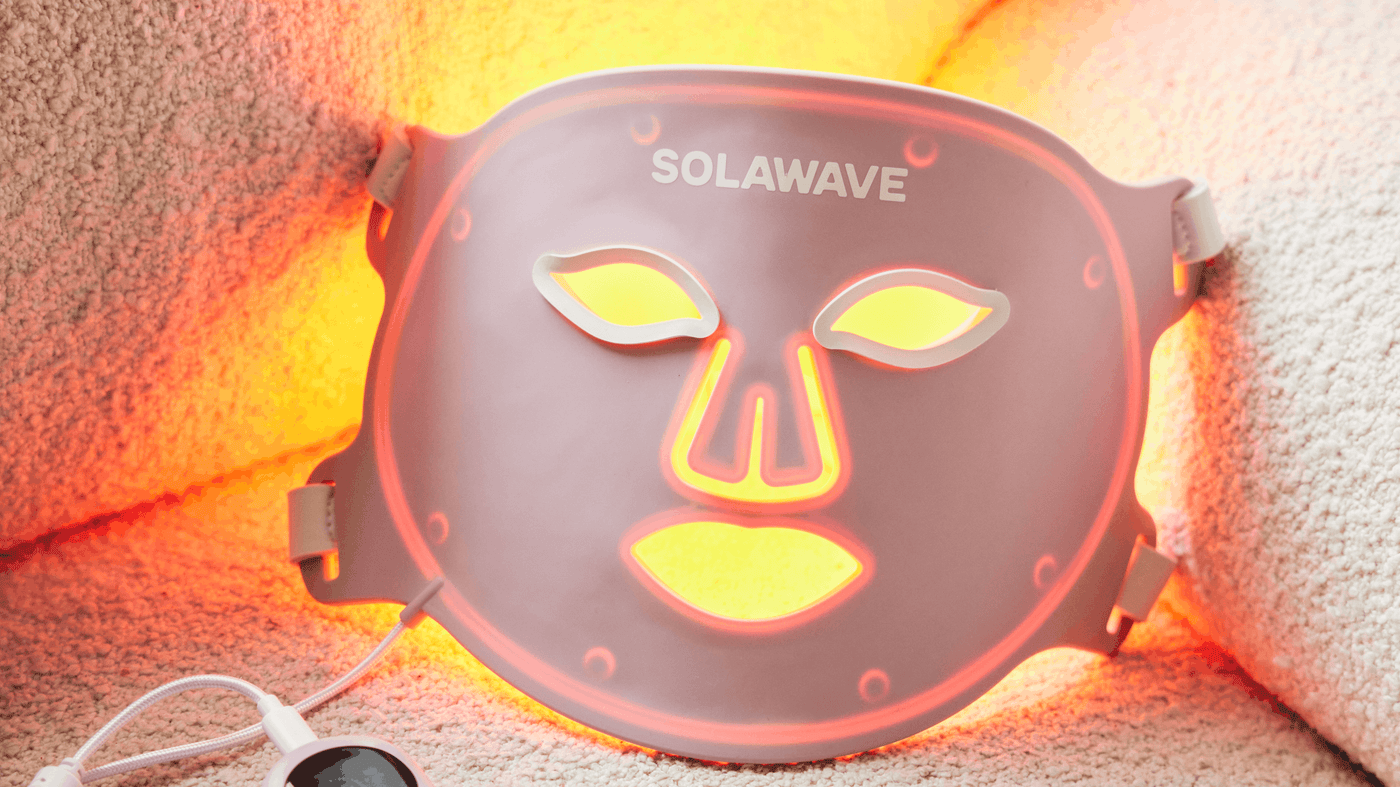
For overall facial tone and texture, a full-face mask delivers the most complete coverage. The Wrinkle Retreat Pro LED Face Mask is an FDA-cleared mask featuring 320 LEDs distributed across four distinct wavelengths: Amber (605nm), Red (630nm), Deep Red (660nm), and Near-Infrared (830nm).
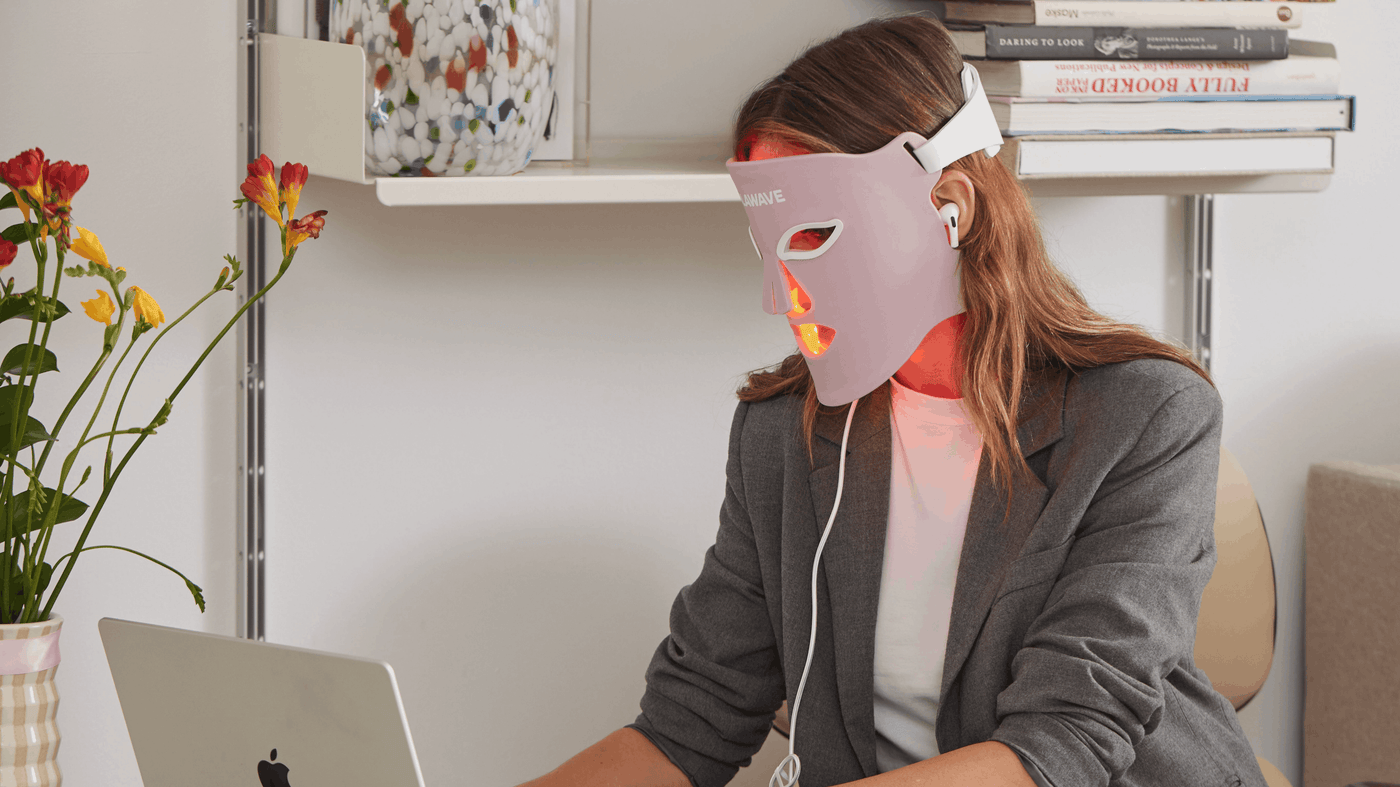
This device runs for a convenient 3-minute session, 3 to 5 times per week. Because consistency is key to visible improvements, short treatment sessions make it simple to maintain a regular habit. The mask comes with custom protective goggles, an adjustable head strap, and an automatic shut-off feature.
If you prefer a hands-on routine that contours facial features, a multifunctional wand offers portability and versatility. The 4-in-1 Skincare Wand is an FDA-cleared handheld device that pairs red light therapy (630nm) with therapeutic warmth, gentle facial massage, and galvanic current.
Galvanic current works alongside topical skincare to support optimal product distribution, while therapeutic warmth soothes the skin. The wand uses 14 LEDs powered by 7 dual-core chips and operates in 3-minute intervals per facial zone, totaling up to 12 minutes per session across four areas.
The skin around the eyes is significantly thinner than the rest of the face and often shows early signs of fatigue and aging. The Radiant Renewal Eye Recovery Pro is an FDA-cleared eye mask equipped with 80 LEDs delivering Amber (605nm), Red (630nm), Deep Red (660nm), and Near-Infrared (830nm) light. It provides a targeted 3-minute session designed to refresh the look of the delicate under-eye area.
For breakout-prone areas, blue and red light work together to target the look of surface imperfections. Bye Acne: 3-Minute Pimple Spot Treatment is an FDA-cleared blue-and-red light acne device designed to target the look of blemishes and calm the appearance of redness. It combines 415nm blue light with 630nm red light in an automatic 3-minute spot protocol.
Pro Tip: When choosing an at-home light tool, focus on treatment time. A device with a 3-minute automated shut-off is often much easier to maintain consistently than a bulky unit requiring 20 to 30 minutes of stationary use.
To maximize the visual benefits of your light therapy sessions, layer your device with compatible, hydrating topical skincare. Clean skin and proper product application ensure comfortable device glide and an enviable post-treatment glow.
Cleanse thoroughly -> Apply compatible serum -> Run light therapy session -> Lock in moisture
Always begin with clean skin free of makeup, heavy oils, and sunscreen. Mineral sunscreens containing zinc oxide or titanium dioxide can reflect visible light and reduce session efficiency. Wash your face using a gentle formula like Pre- & Probiotic Hydrating Gel Cleanser. Massage a small amount into wet hands, lather for 30 to 60 seconds, rinse thoroughly with lukewarm water, and pat dry.
Depending on the device you choose, applying the correct topical before your session supports skin comfort and visible radiance:
After completing your session, lock in moisture to keep your skin looking plump and dewy. Smooth Pre- & Probiotic Nourishing Moisturizer over the face and neck using upward motions. If your skin needs an extra hydration boost once or twice a week, apply a Hydrating Sheet Mask for 10 to 20 minutes, remove the biodegradable water-gel sheet, and massage the leftover serum into your complexion. During the day, always finish your morning routine with broad-spectrum sunscreen.
While non-invasive light therapy is widely regarded as gentle and well-tolerated, following proper safety protocols ensures the best possible experience. If you have reactive or sensitive skin, review these red light therapy tips for sensitive skin.
Visible red and near-infrared light is bright. When using full-face masks or targeted periorbital devices, always use the supplied protective goggles. Do not rely solely on closing your eyes. Ensure the eye protection fits securely before powering on the LEDs.
Do not use light therapy devices if you:
If you have an underlying medical condition, active dermatitis, or have recently received cosmetic injectables, consult your dermatologist or healthcare provider before introducing a new light device to your routine.
Individuals with Fitzpatrick Skin Types V and VI have melanocytes that can be more reactive to light and thermal energy. While red and near-infrared light are non-thermal compared to in-office laser treatments, anyone prone to hyperpigmentation should perform a light-sensitivity patch test on their arm before facial use. Consulting a board-certified dermatologist helps determine an ideal weekly session frequency for your specific skin profile.
Light therapy is not an overnight fix, and results vary from person to person. At-home light devices operate at gentle, cumulative energy levels designed for regular maintenance. For more information about realistic timelines, read how long red light therapy can take to show visible changes.
Most individuals begin noticing a more refreshed, radiant-looking complexion after 4 to 6 weeks of consistent use, 3 to 5 times per week. Over time, regular sessions help improve the appearance of fine lines, support the look of skin firmness, and promote a visibly smoother, more even skin texture. Setting realistic expectations and maintaining consistent weekly sessions are the real keys to visible skincare success.
Choosing an FDA-cleared red light therapy device ensures that your at-home skincare investment meets established safety and manufacturing standards. Whether you prefer the comprehensive coverage of a full-face mask or the targeted, multi-benefit action of a skincare wand, consistency remains the single most important factor in achieving visibly radiant, smoother-looking skin.
Key Takeaway: FDA-cleared red light devices provide a gentle, non-invasive way to support the appearance of youthful, glowing skin when used consistently 3 to 5 times per week.
Ready to find the perfect light therapy match for your skincare goals? Take the skin quiz to discover your personalized device and topical routine.
At-home LED face masks are classified as Class II medical devices and receive 510(k) FDA clearance rather than FDA approval. FDA approval is reserved for high-risk Class III devices such as pacemakers. FDA clearance indicates that the device has undergone review to demonstrate substantial equivalence in safety and technical performance to existing legally marketed devices.
Most FDA-cleared facial light devices, including the Wrinkle Retreat Pro LED Face Mask and the 4-in-1 Skincare Wand, are designed for use 3 to 5 times per week. Sessions typically last 3 minutes per area, with a maximum of one session per day. Consistency over 4 to 8 weeks is essential for noticing visible improvements in skin tone and texture. For more scheduling guidance, read how often to use red light therapy.
Always start with clean skin free of makeup and sunscreen. When using a full-face LED mask, you may apply compatible formulas like LightBoost Face & Neck Serum and LightBoost Face & Neck Rich Cream before your session, ensuring they are fully absorbed first. If using the 4-in-1 Skincare Wand, apply a layer of LightBoost Wand Activating Serum before and during treatment to ensure optimal contact and glide.
Yes, consistent red light therapy helps improve the appearance of fine lines and wrinkles while supporting visibly firmer, more refreshed skin. For blemishes, combination devices using both blue light (415nm) and red light (630nm), such as the Bye Acne spot treatment, help target the look of breakouts and calm the visible appearance of redness.
The statements on this website have not been evaluated by the FDA. The information provided on this site is not intended to diagnose, treat, cure, or prevent any disease and should not be construed as medical advice. Results may not be typical.
 Skincare Devices
 Skincare Devices