Rated 4.7 out of 5 stars
4.7 / 5


726,000+ customers
Free 60-Day Returns
1-Year Warranty
726,000+ customers
Free 60-Day Returns
1-Year Warranty
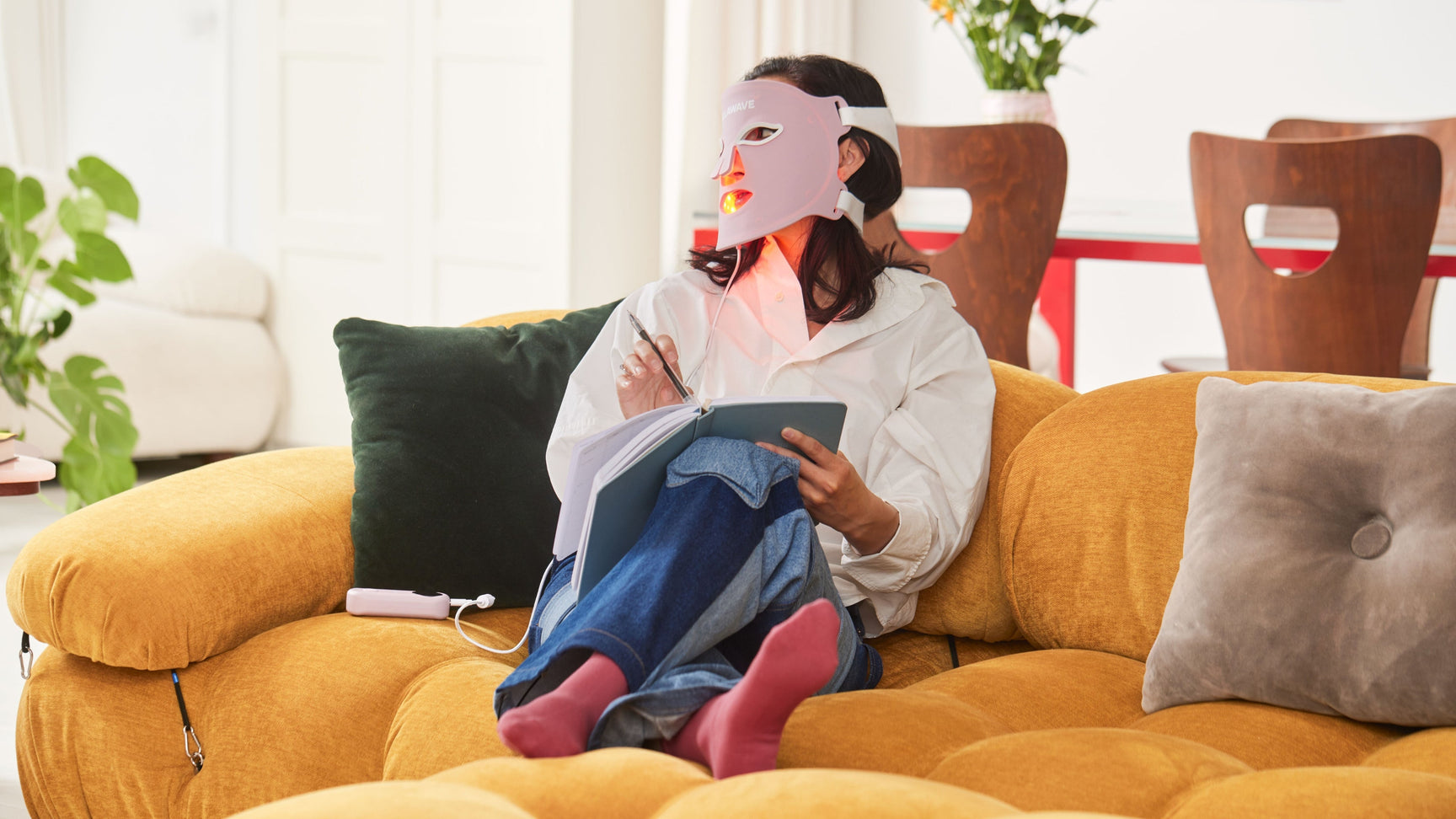
You've got pimple patches in one hand and a red light therapy device in the other. Now you're wondering if you can actually use both. Good news. You can. But the order and timing matter more than you might think.
Yes, pimple patches and red light therapy can absolutely be part of the same skincare routine. But here's the key detail that makes or breaks the results. You should not use them at the same time.
Traditional hydrocolloid pimple patches work by sitting on the skin's surface, absorbing excess oil and impurities while creating a protective barrier over the blemish. They're passive. They pull things out and shield the spot from bacteria, dirt, and the temptation to pick.
Red light therapy for acne works differently. It uses specific wavelengths of LED light to interact with skin cells beneath the surface. Red light at 630nm is absorbed by the mitochondria inside your cells, where it supports increased ATP production and helps calm inflammation. Blue light at 415nm targets Propionibacterium acnes, the bacteria that drives inflammatory breakouts, and helps reduce excess sebum production.
Think of it this way. Pimple patches handle the surface. Light therapy handles what's happening underneath. They serve different purposes, and that's exactly why they work well together, just not at the same time.
A hydrocolloid patch creates a physical barrier on the skin. If you try to use a light therapy device while the patch is on, the patch can block the LED wavelengths from reaching the skin cells where they actually need to go. According to research on phototherapy for acne, effective light therapy depends on specific wavelengths reaching their target depth in the skin. Anything sitting between the light source and your skin can reduce that effectiveness.
The sequence is simple. Remove first, treat second, reapply third.
Gently peel off your pimple patch. If the patch has turned white or opaque, it's already absorbed what it can. If you want to learn more about how long to leave a pimple patch on, Solawave's guide breaks down the timing for different patch types.
Cleanse and dry the area. Light therapy works best on clean, bare skin with nothing blocking the light from reaching the treatment zone.
Use your light therapy device. The Solawave Bye Acne 3-Minute Pimple Spot Treatment combines blue light at 415nm and red light at 630nm in one FDA-cleared device. Blue light destroys acne-causing bacteria while red light calms inflammation and redness. Hold it over the spot for 3 minutes and the device turns off automatically.
After your treatment, apply a fresh pimple patch if you'd like continued surface-level protection. The patch will keep the area covered while the light therapy continues working at the cellular level.
This approach gives you the best of both worlds. The science behind how pimple patches work is surface-level absorption and protection. The science behind light therapy is cellular-level treatment. Together, they create a more complete approach to managing breakouts.
If you're used to spot treatments that dry out your skin or harsh cleansers that strip your moisture barrier, light therapy feels like a different category entirely. Because it is.
LED light therapy, also called photobiomodulation, uses visible light wavelengths to trigger biological responses in the skin without chemicals, UV exposure, or irritation. The American Academy of Dermatology recognizes red light therapy as a safe, non-invasive option for skin concerns, and the Cleveland Clinic notes that LED light therapy has been used in dermatology for decades.
For acne specifically, the combination of blue and red light is where the real results happen. A 2024 review published in PubMed Central supports the use of combined red and blue light therapy as an effective, non-invasive approach for inflammatory acne.
Blue light at 415nm penetrates the pore and destroys P. acnes bacteria by activating porphyrins naturally present in the bacteria. This triggers a reaction that eliminates bacterial cells without antibiotics or harsh chemicals. Red light at 630nm reduces the visible inflammation and redness surrounding breakouts, calming the skin's immune response without drying or peeling.
Neither wavelength strips moisture from the skin. That's a big deal if you've ever dealt with the flaking, tightness, and irritation that come with conventional spot treatments.
Here's something worth knowing. While you're treating active breakouts with blue and red light, the red light component is also supporting broader skin health. Red light at 630nm supports healthy collagen production and can help visibly smooth fine lines over time.
If acne is your primary concern but you're also noticing early signs of aging, redness, or uneven texture, red light therapy pulls double duty. The Wrinkle Retreat Pro LED Face Mask delivers 320 LEDs across four therapeutic wavelengths in just 3 minutes per session. In an independent 56-day clinical study of 30 participants, 100% showed visible improvement in fine lines, skin brightness, and texture.
And don't overlook the skin below your jawline. The Neck & Chest Pro Light Therapy Mask brings the same quad-wavelength technology to the area that shows sun damage and aging first but gets treated last.
For a deeper look at how red light pimple patches and light therapy devices compare, Solawave's full guide breaks down the options.
Yes. Red light therapy targets mitochondria, not melanin. Unlike lasers or IPL treatments that carry risks of burns or hyperpigmentation in deeper skin tones, red light is safe and effective across all Fitzpatrick skin types from I to VI. There's no UV exposure, no irritation, and no downtime.
Solawave devices are FDA-cleared, clinically tested, and backed by a 60-day money-back guarantee. Whether you're dealing with occasional breakouts or persistent acne, combining smart surface protection with deeper light-based treatment gives your skin the kind of support it actually needs. Because clearer skin shouldn't come with guesswork.
Results may vary. Individual results are not guaranteed.
No. Remove the pimple patch before your light therapy session so the LED wavelengths can reach the skin directly. Apply a fresh patch afterward for continued protection.
Remove the patch, cleanse the area, use your light therapy device on clean skin, and then apply a new patch if desired. This ensures both treatments work at their full potential.
No. Unlike many topical spot treatments, red light therapy is non-drying and non-irritating. It works by supporting the skin's natural healing processes at the cellular level without stripping moisture.
The Solawave Bye Acne device treats individual spots in 3 minutes each. Use it consistently as part of your routine for the best results, following the device guidelines for frequency.
Absolutely. Wearing a hydrocolloid patch overnight lets it absorb impurities while you sleep. In the morning, remove it, cleanse your skin, and use your light therapy device on a clean surface.
Yes. Red light therapy targets mitochondria, not melanin, making it safe and equally effective for all Fitzpatrick skin types from I to VI with zero risk of burns or hyperpigmentation.