Rated 4.7 out of 5 stars
4.7 / 5


726,000+ customers
Free 60-Day Returns
1-Year Warranty
726,000+ customers
Free 60-Day Returns
1-Year Warranty
You've been taking care of your face for years. But what about the skin between your chin and your neckline? If you've started noticing fine lines, creasing, or sun damage on your chest, you're not imagining it. And you're definitely not alone.
The décolleté is one of the first areas to show visible signs of aging, yet it's one of the last areas most people think to treat. So the real question is whether red light therapy can actually do something about it. The short answer is yes, and the science backs it up.
Before jumping into the solution, it helps to understand why chest wrinkles happen in the first place. The skin on your chest is thinner and more delicate than the skin on your face. It has fewer oil glands, which means less natural moisture. And it gets a significant amount of daily sun exposure, especially during warmer months or anytime you wear open necklines.
On top of that, years of side sleeping can create compression wrinkles that deepen over time. Combined with the natural decline in collagen production that starts in your late twenties, the chest becomes one of the most vulnerable areas for visible aging.
Most skincare routines stop at the jawline. That means serums, moisturizers, and treatments are rarely reaching the décolleté consistently. So while your face benefits from daily attention, your chest is left to fend for itself.
Red light therapy, also called photobiomodulation, uses specific wavelengths of LED light to interact with skin cells at a cellular level. It's not a new technology. It's been studied for decades, with roots in NASA research from the 1990s that explored low-level light therapy for wound healing.
Here's how it works. When red and near-infrared light at specific wavelengths penetrate the skin, they are absorbed by cytochrome c oxidase, an enzyme in the mitochondria. This absorption triggers increased production of ATP, the energy molecule that powers cellular function. With more energy available, fibroblast cells ramp up production of collagen and elastin, the structural proteins that keep skin firm and resilient.
A 2014 controlled trial published in Photomedicine and Laser Surgery studied 136 volunteers treated with red and near-infrared light over 30 sessions. The treated subjects showed statistically significant improvements in skin roughness, intradermal collagen density, and visible reduction of fine lines and wrinkles compared to the control group. The researchers concluded that photobiomodulation is a safe, non-ablative, effective tool for skin rejuvenation.
According to Cleveland Clinic, red light therapy is considered safe and may promote wound healing, reduce inflammation, and support collagen production. And a 2023 review published in PMC further supports the role of photobiomodulation in stimulating fibroblast activity and improving skin texture across multiple clinical studies.
Stanford Medicine has also highlighted the growing clinical interest in red light therapy for skin and hair applications, noting its expanding role in medical and aesthetic settings.
The mechanism behind red light therapy doesn't change based on location. Red light targets mitochondria, which exist in every skin cell regardless of where that cell sits on the body. So the same collagen-supporting, cell-energizing process that benefits facial skin applies equally to the chest and neck.
In fact, there's a strong argument that the décolleté benefits even more from consistent light therapy treatment. Because the chest skin is thinner and has already lost more collagen from sun exposure, the regenerative support that red light provides can make a visible difference over time. It's the same reason dermatologists have increasingly recommended targeted light therapy for the neck and chest area as part of a comprehensive skincare approach.
Red light therapy also doesn't target melanin, which is what makes it fundamentally different from lasers and IPL treatments. Those technologies carry risks of burns and hyperpigmentation, especially for darker skin tones. Red light targets mitochondria, which all skin cells possess regardless of melanin content. That makes it safe and equally effective across all Fitzpatrick skin types, from I to VI.
The challenge with treating the chest has always been device design. Most skincare devices are built for the face. Handheld wands and panels can work, but they require you to hold them in place and often leave gaps in coverage.
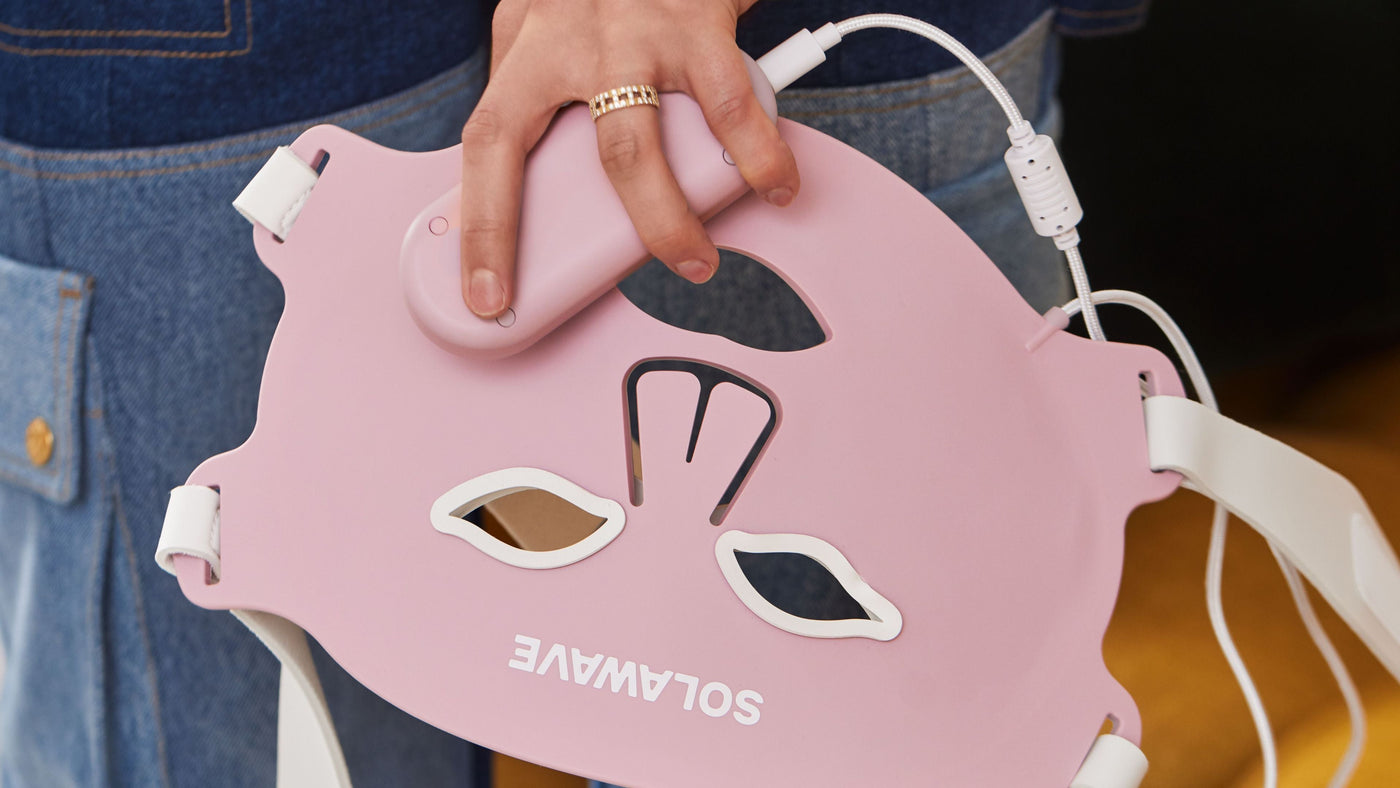
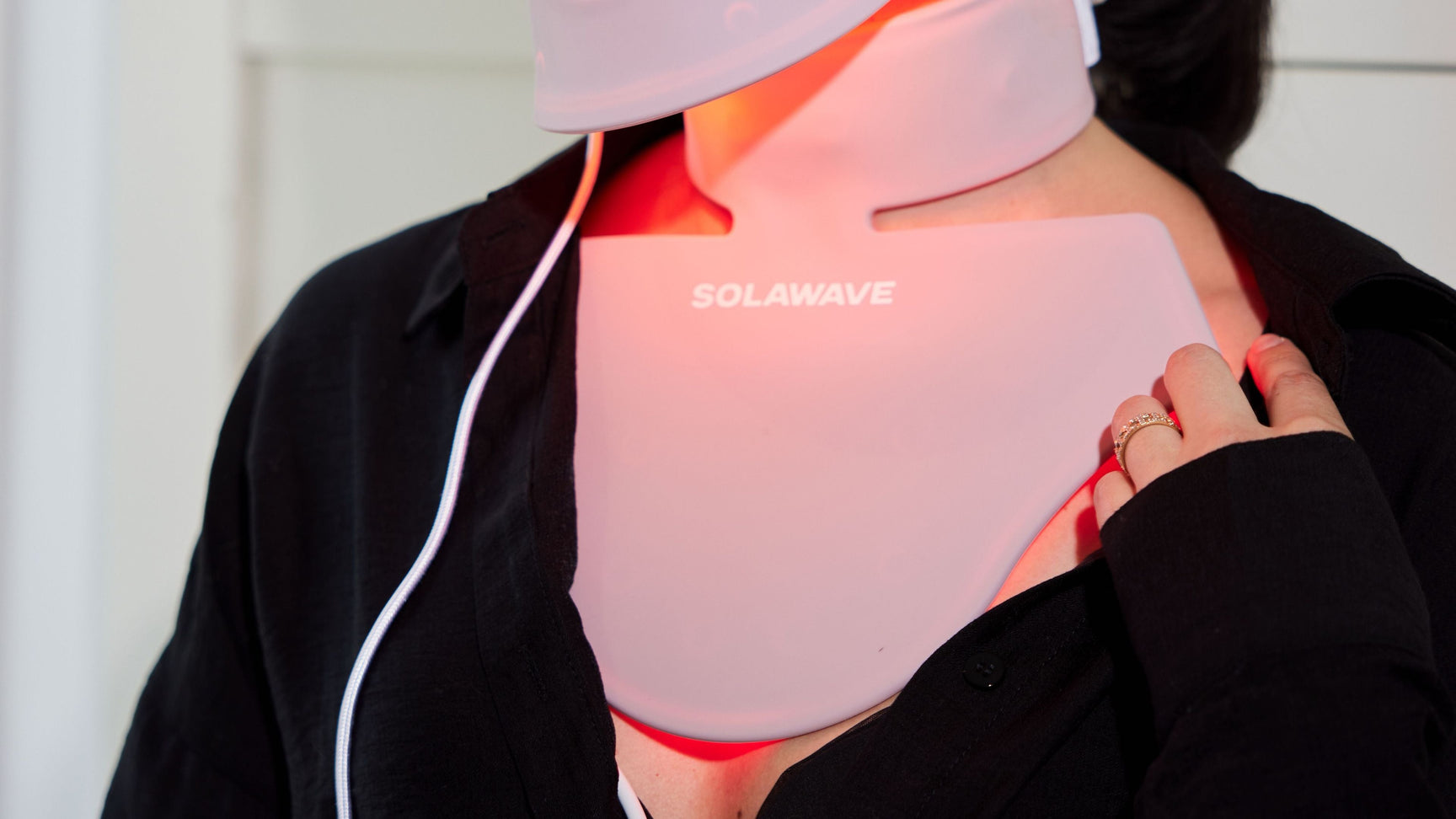
The Solawave Neck & Chest Pro Light Therapy Mask was engineered specifically for this problem. It features 320 LEDs across four therapeutic wavelengths, all calibrated to target the delicate skin of the décolleté with edge-to-edge coverage and zero blind spots.
Those four wavelengths each serve a distinct purpose. Red light at 630nm supports collagen and elastin production. Deep red at 660nm targets deeper signs of aging and supports elasticity. Amber at 605nm calms redness, revives dullness, and helps even skin tone. And near-infrared at 830nm penetrates deepest to support circulation, tissue repair, and radiance from within.
The treatment takes just 3 minutes per session, 3 to 5 times per week. The mask is hands-free, rechargeable, and holds a single charge for up to a month. It's made from soft, medical-grade silicone for comfortable, skin-safe contact, and science-backed.
If you're also dealing with broken capillaries on the chest, the amber wavelength specifically helps calm visible redness and promote circulation, which can support the appearance of more even-toned skin over time.
The research is clear. Red light therapy supports collagen production, reduces visible signs of aging, and does so without UV exposure, irritation, or downtime. For the chest specifically, where topical products often fall short of reaching deeper skin layers, light therapy offers a mechanism-based approach that works beneath the surface.
All Solawave devices are clinically tested and backed by a 60-day money-back guarantee. Because healthy skin shouldn't stop at the jawline.
Results may vary. Individual results are not guaranteed.
Yes. Peer-reviewed research shows that red and near-infrared light therapy can increase intradermal collagen density and visibly reduce fine lines and wrinkles. The mechanism works on all skin, including the thinner skin of the chest.
Most clinical studies show measurable improvements in collagen density, skin texture, and fine lines within 4 to 12 weeks of consistent use, typically with sessions performed 3 to 5 times per week.
Absolutely. Red light therapy targets mitochondria, not melanin. It carries no risk of burns or hyperpigmentation, making it safe and effective for all Fitzpatrick skin types from I to VI.
Red light at 630nm and near-infrared at 830nm are the most studied wavelengths for collagen support and skin rejuvenation. Deep red at 660nm and amber at 605nm add additional benefits for elasticity, tone, and redness.
Face masks are designed to fit facial contours, not the chest. The Solawave Neck & Chest Pro Light Therapy Mask is specifically engineered for the décolleté area with edge-to-edge LED coverage and a hands-free, adjustable fit.
The Solawave Neck & Chest Pro Mask is designed for 3-minute sessions, 3 to 5 times per week. Consistency is key, as the collagen-building benefits compound over time with regular use.
 Red Light Therapy
 Red Light Therapy