Rated 4.7 out of 5 stars
4.7 / 5


726,000+ customers
Free 60-Day Returns
1-Year Warranty
726,000+ customers
Free 60-Day Returns
1-Year Warranty

Your skin feels tight, looks dull, and fine lines seem more prominent than usual. The obvious conclusion: you need more moisture. So you slather on the richest cream you own, and somehow your skin feels worse. Maybe it's even breaking out now on top of everything else.
This frustrating scenario plays out constantly because of one fundamental confusion: conflating dryness and dehydration. These terms get used interchangeably in skincare conversations, but they describe entirely different conditions with different causes and different solutions. Understanding the difference between dehydrated skin and dry skin isn't just semantic precision. It's the key to actually solving your skin concerns.
Dry skin is a skin type, not a temporary condition. It describes skin that chronically underproduces sebum, the natural oil that lubricates and protects the skin surface.
Sebaceous glands embedded in the dermis produce sebum, a complex mixture of lipids including triglycerides, fatty acids, wax esters, and squalene. This oily substance travels up hair follicles to coat the skin surface, where it serves several purposes.
Sebum creates a protective film that slows water evaporation from skin. It provides lubrication that keeps skin supple. It contributes to the skin's acid mantle, helping maintain the slightly acidic pH that inhibits harmful bacteria.
In dry skin types, sebaceous glands simply don't produce enough sebum. This is largely genetic. If your parents have dry skin, you probably do too. Hormonal factors also play a role, which is why skin often becomes drier with age as hormone levels shift.
Dry skin tends to feel rough or scaly to the touch. Visible flaking may occur, particularly in harsh weather. Pores appear small because they aren't stretched by oil production. The skin rarely looks shiny, even at the end of a long day.
Dry skin is a consistent pattern throughout your life, though it may worsen with age, seasonal changes, or hormonal shifts. You've likely always had it to some degree.
The condition affects the entire face relatively uniformly, though areas with fewer sebaceous glands, like cheeks, may appear even drier.
Because dry skin lacks oil production, it needs external lipids to compensate. The solution is oil-based products that provide what the skin isn't making itself.
Rich moisturizers with emollient ingredients like shea butter, plant oils, and fatty acids help replace missing sebum. Facial oils can provide additional lipid support. Occlusive ingredients like petrolatum and squalane help seal in whatever moisture is present.
The goal is to supplement what skin underproduces: oil, lipids, and emollients.
Dehydrated skin is a temporary condition, not a skin type. It describes skin that lacks water, regardless of how much oil it produces.
Understanding skin moisture vs oil is essential here. They're completely different substances with different functions.
Water in the skin comes primarily from inside the body, traveling up through the dermis to the epidermis. The stratum corneum, the outermost layer of dead cells, holds water through several mechanisms: natural moisturizing factors (NMFs) that attract water, lipid barriers that prevent evaporation, and the general integrity of the barrier structure.
Dehydration occurs when water loss exceeds water replenishment. This happens when the barrier is compromised and can't retain water, when environmental conditions strip water faster than skin can replace it, when internal hydration is inadequate, or when certain products or treatments disrupt normal moisture balance.
According to dermatological research, transepidermal water loss (TEWL) is the primary mechanism through which skin becomes dehydrated. Any factor that increases TEWL or decreases barrier function can cause dehydration regardless of skin type.
Dehydrated skin feels tight but may simultaneously look oily. This confuses people because they expect dryness and oiliness to be opposites. In dehydration, they coexist.
Fine lines appear more prominent because water-depleted skin loses its plump cushioning effect. Skin may look dull, lacking the light-reflecting quality of well-hydrated tissue. A "tired" appearance persists regardless of sleep quality.
The pinch test offers a quick assessment: gently pinch the skin on your cheek. Hydrated skin snaps back immediately. Dehydrated skin holds the pinch shape momentarily before slowly returning.
Dehydrated skin is intermittent rather than constant. It worsens with environmental stress, after certain product use, during illness, or with inadequate water intake. It improves relatively quickly when properly addressed.
Because dehydrated skin lacks water, it needs hydration, not oil. The solution is water-binding ingredients that attract and hold moisture in the skin.
Hyaluronic acid draws water from the environment and lower skin layers to hydrate the surface. Glycerin is a powerful humectant that attracts water molecules. Aloe vera provides hydration along with soothing properties. Urea in lower concentrations acts as both a humectant and a gentle exfoliant.
The goal is replenishing and retaining water, which is fundamentally different from adding oil.
Now you can see why treating these conditions correctly requires identifying which you're experiencing.
The difference between dehydrated skin and dry skin comes down to what's missing.
Dry skin lacks oil. The sebaceous glands don't produce enough lipids to properly protect and lubricate the skin surface.
Dehydrated skin lacks water. The skin isn't retaining adequate moisture regardless of oil production.
These can occur independently or simultaneously, which adds another layer of complexity.
Dry skin is an inherent skin type you're born with and live with throughout your life. You can manage it, but not fundamentally change it.
Dehydration is a temporary condition that any skin type can experience. Oily skin gets dehydrated. Combination skin gets dehydrated. Even naturally dry skin can become dehydrated on top of its existing oil deficiency.
This means someone with oily skin might recognize the tightness and dullness of dehydration but assume they can't be "dry" because they produce plenty of oil. They keep using mattifying products that exacerbate the water loss while their skin desperately needs hydration.
Applying the wrong treatment doesn't just fail to help. It can actively worsen your condition.
If you have dehydrated skin and treat it with heavy oils, you're not providing what skin actually needs. The oils sit on the surface without addressing the underlying water deficit. Worse, rich products can clog pores and cause breakouts, especially in skin types that already produce adequate oil.
If you have dry skin and treat it with water-based hydrators alone, you're not replacing the missing lipids. Whatever moisture you add evaporates quickly without an oil layer to seal it in. Skin remains uncomfortable despite your hydration efforts.
Accurate diagnosis directs effective treatment. Here's how to identify your situation.
Think about your skin's behavior over years, not weeks. Has it always felt oil-deficient? Have you always had small pores and rarely experienced shine? Does rich moisturizer feel comfortable rather than suffocating? This suggests a dry skin type.
Alternatively, has your skin generally produced adequate or excess oil? Are your pores visible? Does your face get shiny within hours of washing? This suggests a normal to oily skin type, though you may still be currently dehydrated.
Look at your skin right now, ideally several hours after washing with no products applied.
If skin appears oily in the T-zone but simultaneously feels tight and looks dull, you're likely dealing with dehydration in oily or combination skin. The oil is there, but the water is missing.
If skin appears matte everywhere, feels rough or flaky, and has felt this way consistently for as long as you remember, you likely have dry skin type.
If skin feels tight, looks dull, and shows prominent fine lines but is normally comfortable, something has recently disrupted your hydration. Consider what changed: new products, travel, seasonal shift, illness, and changed water intake.
How does your skin respond to pure hydration vs. pure oil?
Apply a hyaluronic acid serum to one cheek and a facial oil to the other. Wait an hour without additional products.
If the serum side feels more comfortable and looks better, you primarily need hydration (dehydrated skin).
If the oil side feels more comfortable and looks better, you primarily need lipids (dry skin).
If both sides improve different aspects of discomfort, you need both, probably a dry skin type that's also currently dehydrated.
If you've determined you have a dry skin type, your routine should prioritize lipid replacement.
Avoid foaming cleansers and anything that leaves skin squeaky clean. That squeaky feeling is your natural oils being stripped away, exactly what dry skin can't afford to lose.
Choose cream, milk, or oil-based cleansers that clean without stripping. Consider cleansing only in the evening, using just water in the morning.
Your moisturizer should contain emollients that soften and smooth, like plant oils, fatty acids, and butters. Occlusives that seal in moisture matter too: petrolatum, mineral oil, silicones, and lanolin all help prevent water loss.
Moisturize more than you think you need to. For dry skin, a thin layer is rarely enough.
The LightBoost Face and Neck Cream delivers intensive moisture with barrier-supporting ingredients appropriate for dry skin that needs substantial lipid replenishment.
Dry skin often benefits from facial oils applied after or mixed with moisturizer. Look for oils rich in oleic acid, like olive, avocado, and argan, for extra emollient benefit.
Dry skin's barrier is inherently vulnerable. Support it with ceramides, cholesterol, and fatty acids that reinforce the lipid matrix.
The LightBoost Niacinamide Face and Neck Serum provides niacinamide, which supports ceramide production, helping dry skin strengthen its own barrier over time.
If you've determined your skin is dehydrated, your routine should prioritize water delivery and retention.
Avoid anything harsh or stripping. Even oily skin that's dehydrated needs gentle cleansing to avoid further compromising water retention.
Consider whether you're over-cleansing. Twice daily might be unnecessary if your skin is struggling with hydration.
Layer water-based hydrants before any oil-based products. The classic humectants work well: hyaluronic acid, glycerin, aloe vera, and panthenol.
The LightBoost Activating Serum provides hyaluronic acid hydration that addresses the water deficit in dehydrated skin.
Apply to damp skin. Humectants work by drawing water, so providing water at application time gives them something to work with.
Even dehydrated oily skin needs a thin layer of something to seal in hydration. This doesn't mean a heavy cream, but a light moisturizer or even a hydrating serum as the final step helps retain the water you've added.
The key difference from dry skin: you need just enough occlusion to prevent evaporation, not enough to supplement missing oil production.
Dehydration is a symptom, and something is causing it. Consider whether you're over-exfoliating with too many acids or retinoids applied too frequently. Evaluate if your environment is extremely dry, as indoor heating and air conditioning both dehydrate the air and skin. Check whether your water intake has decreased. Ask if you've introduced any new products that might be disrupting your barrier.
Fix the underlying cause, or dehydration will recur no matter how many hydrating products you use.
Dry skin can be dehydrated, too. In fact, it's common. The lack of natural oil production leaves the barrier more vulnerable to water loss.
If you have a dry skin type experiencing dehydration, you need both hydration and oil. Layer water-based hydrators first, then seal with lipid-rich moisturizers and potentially facial oils.
Think of it in layers. Water goes on first to hydrate. Oil goes on second to seal and provide the lipids your skin doesn't make.
Regardless of whether you're dealing with dryness, dehydration, or both, barrier function matters. A healthy barrier retains water better and distributes natural oils more effectively.
Red light therapy supports cellular function that underlies both oil production and water retention. Enhancing mitochondrial energy production, it helps skin cells perform all their functions more effectively.
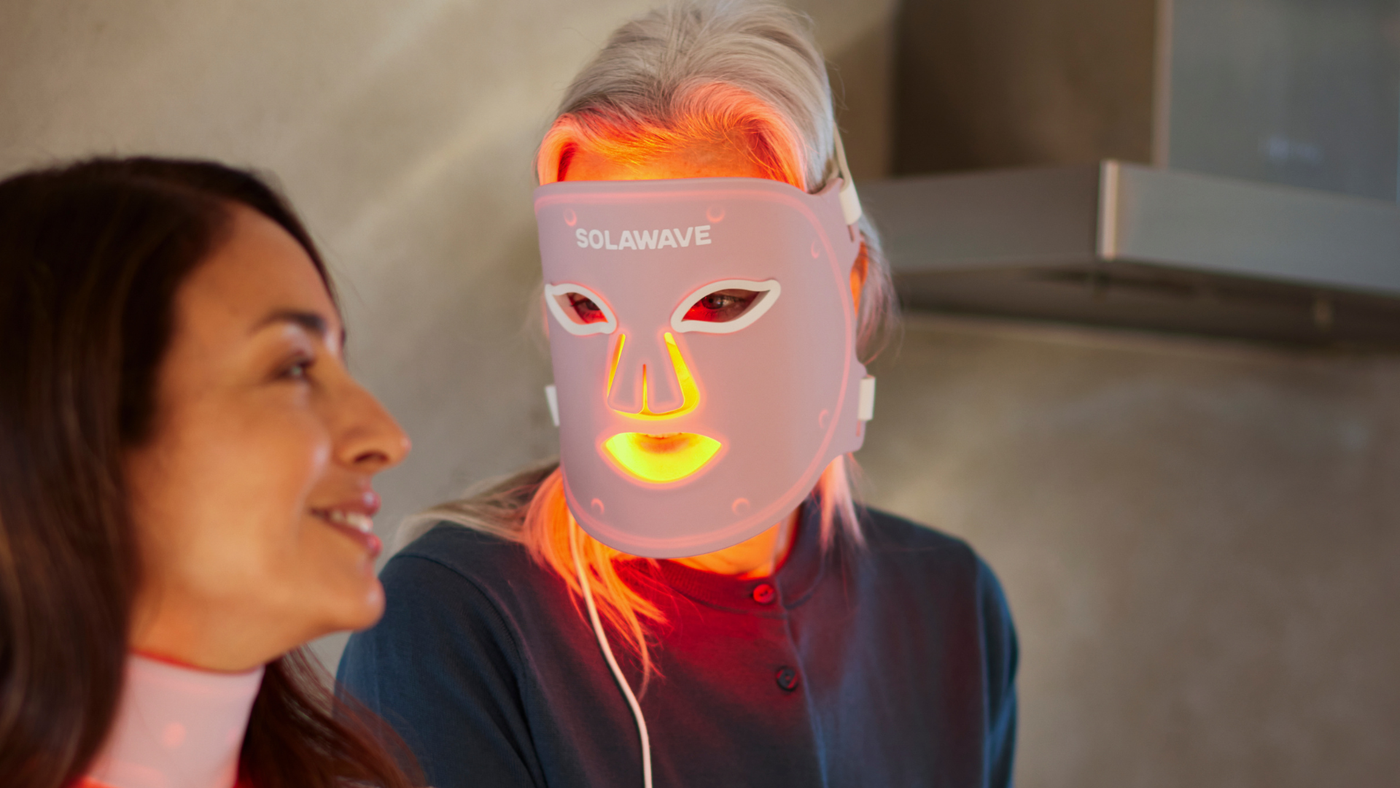
The Red Light Therapy Face Mask delivers four therapeutic wavelengths (Red 630nm, Deep Red 660nm, Amber 605nm, and Near-Infrared 830nm) through 320 medical-grade LEDs. FDA-cleared and requiring just 3-minute sessions, it provides cellular support that benefits both dry and dehydrated skin.
For targeted treatment, the red light therapy wand combines red light with galvanic current, therapeutic warmth, and galvanic current. The wand requires a water-based serum to activate all four technologies.
The eye area has fewer oil glands and thinner skin, making it vulnerable to both dryness and dehydration. The red light therapy eye mask provides targeted support for this delicate zone.
The LightBoost Collagen Caffeine Eye Cream addresses both hydration and lipid needs in the eye area.
These areas often show dehydration prominently due to thinner skin and sun exposure. The Neck & Chest Rejuvenating Mask extends light therapy support to these commonly neglected zones.
Beyond products, daily habits influence skin moisture vs oil balance.
Drink adequate water throughout the day. While drinking water doesn't directly hydrate skin from the inside out as dramatically as some claim, chronic dehydration affects skin along with every other tissue. Adequate hydration supports the body's ability to deliver water to the skin.
Very dry environments accelerate water loss from skin. Consider a humidifier during winter or in air-conditioned spaces. This benefits dehydrated skin directly and helps dry skin retain whatever moisture it has.
Long, hot showers strip both oil and moisture from skin. Keep water temperature moderate and shower duration reasonable, especially if you're prone to either dryness or dehydration.
Alcohol-based toners, strong acids, and overly aggressive exfoliation compromise barrier function, worsening both conditions. Review your routine for potential irritants if you're struggling with persistent dryness or dehydration.
All Solawave devices are FSA/HSA eligible and recommended by dermatologists, providing professional-grade support for restoring healthy skin function.
The confusion between dehydrated skin and dry skin leads countless people to treat their skin incorrectly, often making things worse instead of better. Understanding that dry skin lacks oil while dehydrated skin lacks water reveals why the same symptoms might need completely different solutions. Dry skin is a lifelong skin type requiring consistent lipid supplementation. Dehydration is a temporary condition that any skin type can experience, requiring hydration and often barrier repair. Many people experience both simultaneously, needing both hydration and oil in the correct order. Once you've identified the difference between dehydrated skin and dry skin in your own face, you can finally give your skin exactly what it actually needs rather than what you assumed it needed.
Ready to support your skin's moisture and barrier health? Shop Solawave's skincare collection today.
Absolutely. This is one of the most common misunderstandings in skincare. Oily skin produces plenty of sebum but can still lack adequate water content. Signs include skin that feels tight yet looks shiny, prominent fine lines despite young age, and dullness alongside visible pores. Dehydrated oily skin needs hydration, not mattifying products that strip more water.
This usually indicates dehydration in skin that produces adequate oil. The tightness and dullness come from water loss, while the oiliness comes from normal or even increased sebum production. Sometimes skin overproduces oil when dehydrated, trying to compensate for the compromised barrier. Address the dehydration first, and oil production often normalizes.
Dehydration can improve significantly within days to weeks with proper hydration and barrier support. Dry skin type cannot be "fixed" because it's inherent to your biology, though it can be well-managed with consistent lipid-rich care. If your symptoms resolve quickly with hydrating products, you were dealing with dehydration. If they persist regardless of hydration efforts, you have a dry skin type.
Hyaluronic acid benefits all skin types by providing hydration. Even dry skin needs water as well as oil. The key is layering: apply hyaluronic acid to damp skin first, then seal with an oil-rich moisturizer that provides the lipids dry skin lacks. Hyaluronic acid alone won't address dry skin because it doesn't provide oil, but it's still a valuable part of a complete routine.
Niacinamide supports barrier function and helps skin produce more ceramides, benefiting both conditions. Ceramides themselves reinforce the barrier, helping retain water while also supporting lipid matrix integrity. Squalane mimics natural skin lipids while also helping seal in moisture. These versatile ingredients work whether your concern is oil deficiency, water deficiency, or both.