Rated 4.7 out of 5 stars
4.7 / 5


726,000+ customers
Free 60-Day Returns
1-Year Warranty
726,000+ customers
Free 60-Day Returns
1-Year Warranty
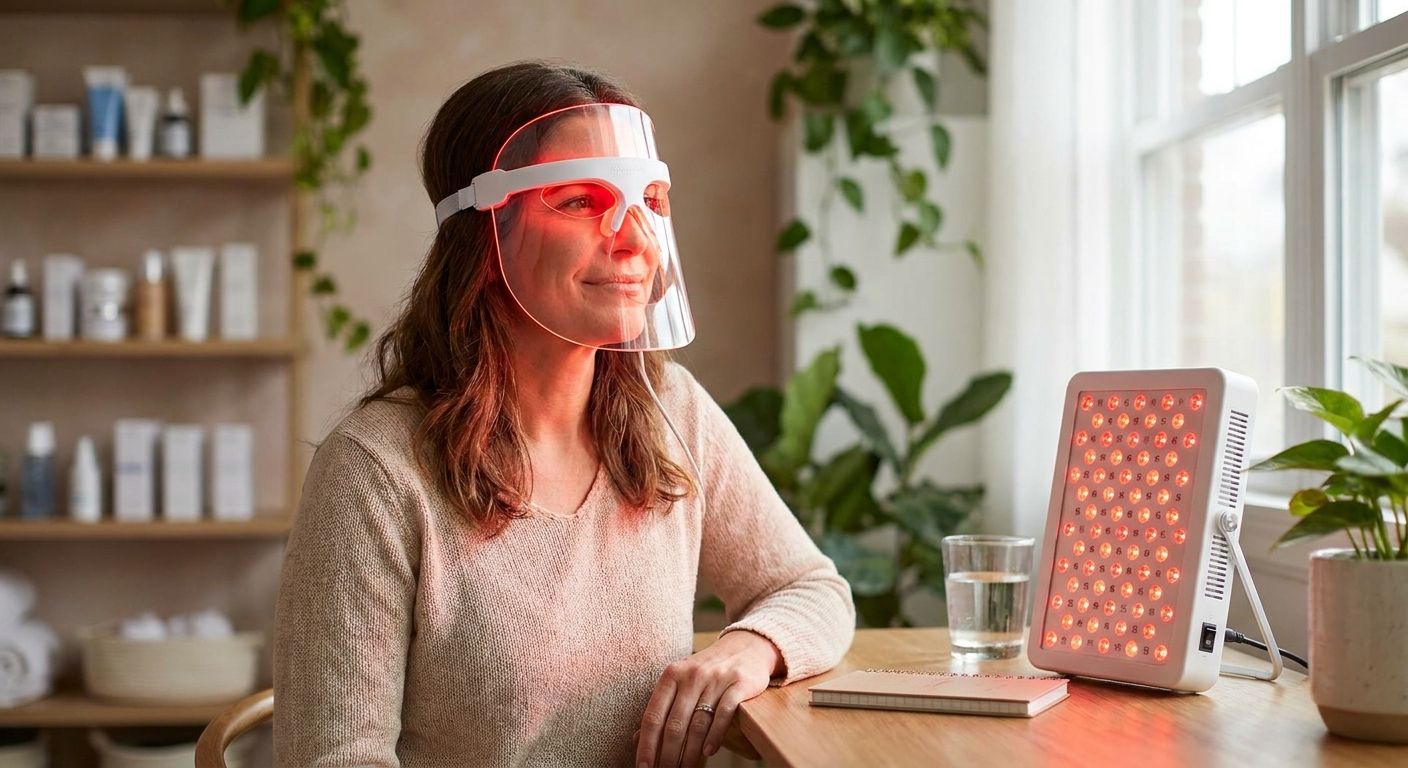
Red light therapy for hyperpigmentation works by hitting dark spots, post-acne marks, and sun damage with red and near-infrared wavelengths that calm the inflammation driving excess melanin, no needles or downtime required.
Hyperpigmentation is not one condition. Post-inflammatory marks from acne, sun-triggered dark spots, and melasma all involve excess melanin, but they don't respond the same way to light, heat, or actives. That's why a device marketed generically as "good for dark spots" can underperform for one type and do nothing for another.
Solawave's red light therapy lineup is FDA-cleared and built around wavelengths studied for skin repair rather than a single blanket red LED. That distinction matters more in 2026 than it did a few years ago, because the at-home LED market is now crowded with low-LED-count masks that use the same marketing language as clinically-backed devices without matching the dose.
The rest of this guide breaks down what actually moves the needle on hyperpigmentation, which devices are worth buying in 2026, and where the category still falls short.
This guide is for anyone dealing with visible dark spots that aren't responding to spot treatments alone: post-acne marks that linger for months, sun spots on the cheeks or chest, or melasma-prone skin that darkens with heat and sun exposure. It's built for people who want a non-invasive at-home option to run alongside — not instead of — sunscreen and any actives a dermatologist has already recommended, and who are deciding between a full LED mask, a handheld wand, or a light-boosting serum.
It is not for anyone expecting an overnight fix. Red light therapy for hyperpigmentation is a cumulative-use category: results build over weeks of consistent sessions, not a single treatment.
Dark spot correction responds to more than one wavelength. Red light in the 630-660nm range works at the skin's surface, while near-infrared around 830nm reaches deeper layers tied to repair and turnover. A device that only lists "red light" without a wavelength range or infrared component is likely under-dosing the treatment for pigmentation specifically.
FDA clearance means a device has gone through a regulatory review for the claims it makes. For a category with as many unregulated imports as at-home LED masks, this is the single fastest filter for cutting risky or underpowered devices before you spend a dollar.
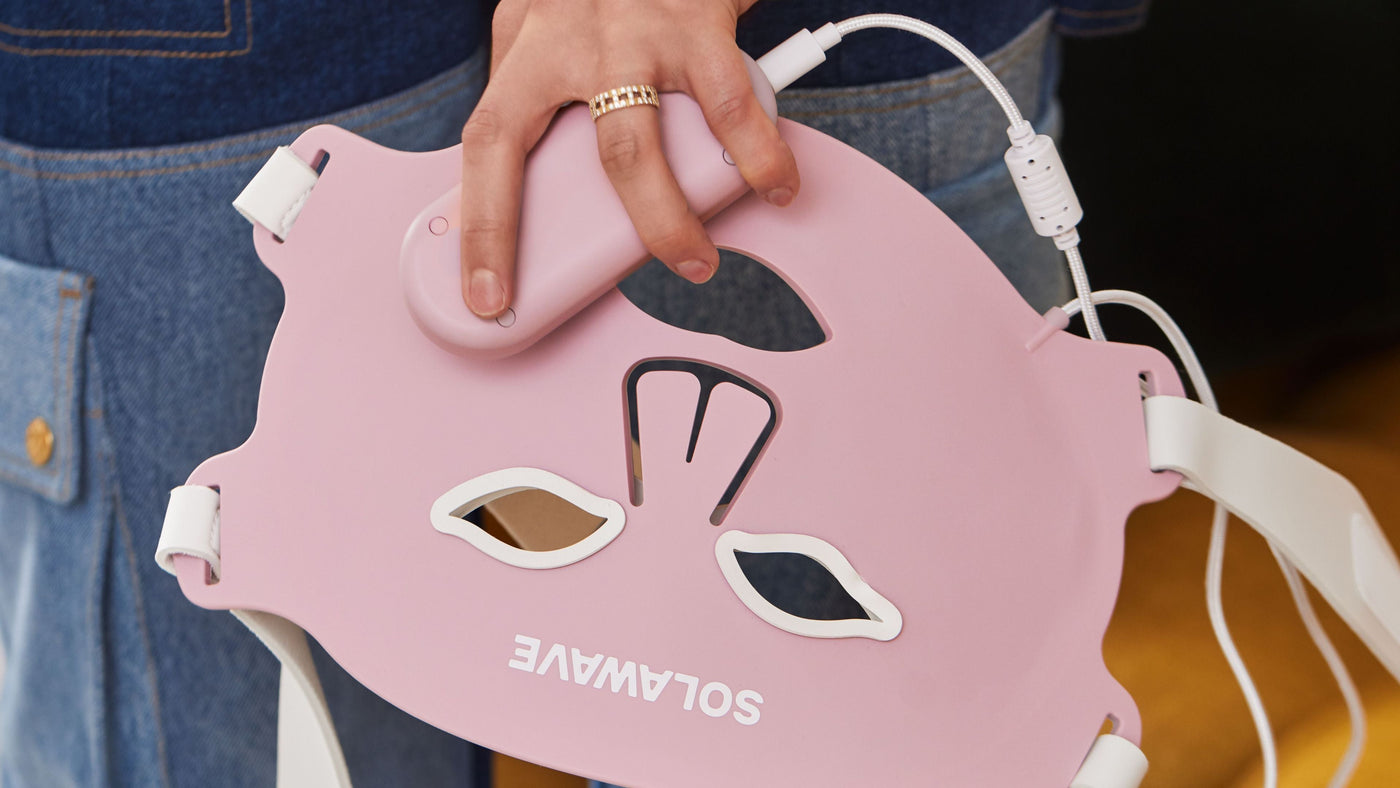
A mask with hundreds of LEDs delivers more even coverage across the face than a sparse array, which matters for diffuse sun damage that isn't confined to one spot. Solawave's Wrinkle Retreat Pro packs 320 LEDs across four wavelengths, which is the kind of density that closes the gap between clinic treatments and at-home versions.
Dark spots on the neck and chest from decades of sun exposure need a device shaped for that area, not a face mask stretched to fit. If your hyperpigmentation shows up below the jawline, that changes which device is worth buying.
A handheld wand you'll actually pick up daily beats a mask you dread putting on. Portability and session length decide whether a device gets used three times a week or three times a month, and hyperpigmentation only fades with the former.
Serums formulated to work alongside light therapy — rather than sit on top of it as a barrier — help the device do more per session. A hyaluronic or niacinamide serum designed for light-boosting is a different product than a generic moisturizer layered on before treatment.


This is the device to reach for when hyperpigmentation covers most of the face rather than a few isolated spots. It runs 320 LEDs across red, infrared, deep red, and amber light, which is the broadest wavelength spread in Solawave's current lineup at $399. Verdict: Buy if diffuse sun damage or widespread post-acne marks are the problem, not just one or two stubborn spots.
The Radiant Renewal wand is the handheld option at $169, built for face, neck, and jawline treatment you can run daily without setting aside mask time. It's the better fit for anyone treating localized dark spots — a cheek, a jawline patch — rather than the whole face. Verdict: Buy for daily spot-treatment and portability.
At $38, this hyaluronic serum is formulated to work with the wand rather than sit as a separate skincare step. It won't correct pigmentation on its own, but pairing it with the wand is the difference between running the device on dry skin and running it on skin primed to absorb the light. Verdict: Consider as an add-on, not a standalone fix.
Most hyperpigmentation guides only talk about the face, but sun damage on the décolletage often shows up earlier and darker than on the cheeks because that skin gets less sunscreen attention over the years. Solawave's Neck & Chest Pro mask exists specifically for that area. Verdict: Consider if your dark spots are on the chest or neck, where a face mask won't reach.
| Pick | Best for | Wavelengths | Price | Verdict |
|---|---|---|---|---|
| Wrinkle Retreat Pro Mask | Widespread facial hyperpigmentation | Red, infrared, deep red, amber | $399 | Buy |
| Radiant Renewal Wand | Localized dark spots, daily use | Red light therapy | $169 | Buy |
| LightBoost Hyaluronic Serum | Boosting absorption during treatment | N/A (formula) | $38 | Consider |
| Neck & Chest Pro Mask | Décolletage sun damage | LED light therapy | $349 | Consider |
Does red light therapy work for hyperpigmentation?
Red light therapy can help fade hyperpigmentation by reducing the inflammation that triggers excess melanin production, particularly for post-acne marks and sun spots. Results build gradually with consistent use, not after a single session.
How long until you see results treating dark spots with red light therapy?
Most people using red light therapy for hyperpigmentation notice gradual changes over several weeks of consistent sessions in 2026, not overnight. Skin turnover takes time, so daily or near-daily use matters more than session length.
Is red light therapy safe for all skin tones?
Red and near-infrared light therapy is generally considered safe across skin tones because it doesn't rely on selective heat targeting the way some laser treatments do. Anyone with an active skin condition should still check with a dermatologist first.
Can you use red light therapy for melasma?
Red light therapy is used for melasma, but melasma reacts differently to heat and light than typical sun-triggered dark spots. Start conservatively and watch for any darkening before committing to daily sessions.
Is red light or blue light better for pigmentation?
Red light is the better choice for hyperpigmentation because it targets inflammation and melanin regulation, while blue light is formulated for acne-causing bacteria. The two solve different problems even though they're often sold in the same device.
Should you use SPF after red light therapy sessions?
Yes, sunscreen matters just as much after a light therapy session as any other day, since unprotected sun exposure is the main driver of new hyperpigmentation. Red light therapy corrects existing dark spots; it doesn't prevent new ones without SPF.
How often should you use a red light mask for dark spots?
Most red light therapy protocols for hyperpigmentation call for near-daily use, since the treatment is cumulative rather than immediate. Skipping several days in a row slows visible progress.
What's the difference between an LED mask and a handheld wand for hyperpigmentation?
An LED mask like the Wrinkle Retreat Pro covers the entire face at once, which suits widespread pigmentation, while a handheld wand like the Radiant Renewal lets you concentrate light on specific spots. Choose based on whether your dark spots are scattered or localized.
The part of this category people skip is the neck and chest. Sun damage on the décolletage often shows up years before facial hyperpigmentation because it gets a fraction of the sunscreen attention the face does, which is exactly why a dedicated mask for that area exists instead of just telling people to stretch a face mask lower. Going into the rest of 2026, treating hyperpigmentation as a whole-skin problem — face, neck, and chest together — is the difference between a plan that works and one that leaves half the damage untouched.
 Acne
Acne
 Acne
Acne