Rated 4.7 out of 5 stars
4.7 / 5


726,000+ customers
Free 60-Day Returns
1-Year Warranty
726,000+ customers
Free 60-Day Returns
1-Year Warranty
It sounds like a contradiction. Acne is supposed to be an oily skin problem, right? So how can dry skin possibly cause breakouts? Turns out, it can. And if you've been dealing with flaky patches and pimples at the same time, you're not imagining things.
Yes, and it's more common than most people think. The connection comes down to your skin barrier, the outermost layer of skin that acts as a protective shield. When that barrier is healthy, it keeps moisture in and irritants out. When it's compromised, everything starts to go sideways.
A 2024 review published in the journal Frontiers in Medicine explored the relationship between skin barrier impairment and acne vulgaris. The research found that a damaged skin barrier plays a significant role in the development and worsening of acne, and that repairing it should be a key part of any treatment strategy.
Think of it this way. When your skin is dry and the barrier is weakened, your body interprets that as a threat. So it does what it knows how to do. It ramps up oil production to compensate. That excess sebum mixes with dead skin cells that aren't shedding properly because of the dryness, and together they clog pores. Clogged pores become the perfect breeding ground for acne-causing bacteria.
So the breakouts you're seeing aren't happening despite the dryness. They're happening because of it.
This is where a lot of people get stuck. You notice breakouts, so you reach for the strongest spot treatment you can find. Drying acids. Stripping cleansers. Aggressive masks. And for a day or two, the pimple seems to shrink.
But those same harsh ingredients are also stripping your skin barrier even further. They pull out moisture, disrupt the lipid layer, and leave your skin drier than before. Your skin responds by producing even more oil. More oil means more clogged pores. More clogged pores mean more breakouts. It's a cycle that feeds itself.
If you've ever wondered why you're still breaking out with a good skincare routine, this barrier damage cycle is often the answer. Your routine might actually be too aggressive for what your skin needs right now.
A compromised skin barrier doesn't always announce itself with a neon sign. But there are patterns worth paying attention to.
Your skin might feel tight and dry after washing, even with a gentle cleanser. You might notice flaky patches alongside oily spots, especially in the T-zone. Redness and sensitivity that seem to come out of nowhere are another common signal. And breakouts in areas that don't usually give you trouble.
The tricky part is that these symptoms overlap with other conditions, which is why so many people misdiagnose their own skin. They see pimples and assume they need stronger acne products, when what they actually need is barrier repair and hydration.
The answer isn't to choose between treating acne and treating dryness. You need to do both at the same time. And the key is using products and technologies that address breakouts without destroying the moisture your skin desperately needs.
Start by rethinking your moisturizer. A lot of acne-prone people skip this step because they're afraid of clogging pores. But the right moisturizer actually helps prevent breakouts by keeping the barrier intact and reducing the overproduction of sebum.
The LightBoost Face & Neck Rich Cream is specifically formulated for this balancing act. It's non-comedogenic, so it won't clog pores. It's fragrance-free, vegan, cruelty-free, and dermatologist-tested. The formula includes vegan collagen to support elasticity and hydration, multi-peptides to visibly smooth the skin, and Pro-Vitamin D to reinforce the skin barrier and help maintain moisture. It's the kind of product that gives your skin what it needs without adding anything that could trigger a new round of breakouts.
For lightweight hydration that layers beautifully under your moisturizer, the LightBoost Wand Activating Serum delivers deep moisture with hyaluronic acid and peptides. It plumps and smooths skin texture while supporting the natural skin barrier. And because it's non-comedogenic, it works just as well on acne-prone skin as it does on dry skin.
This is where things get really interesting. Red light therapy doesn't just address one symptom. It works at the cellular level to support the skin's natural repair processes, which makes it relevant for both concerns at once.
When skin absorbs red light at 630nm, the light energy is taken up by cytochrome c oxidase, an enzyme inside the mitochondria. This triggers increased production of ATP, the molecule that powers cellular function. With more cellular energy available, your skin repairs and regenerates faster. Inflammatory pathways are modulated, reducing redness and irritation. And circulation improves, delivering more nutrients to skin tissue.
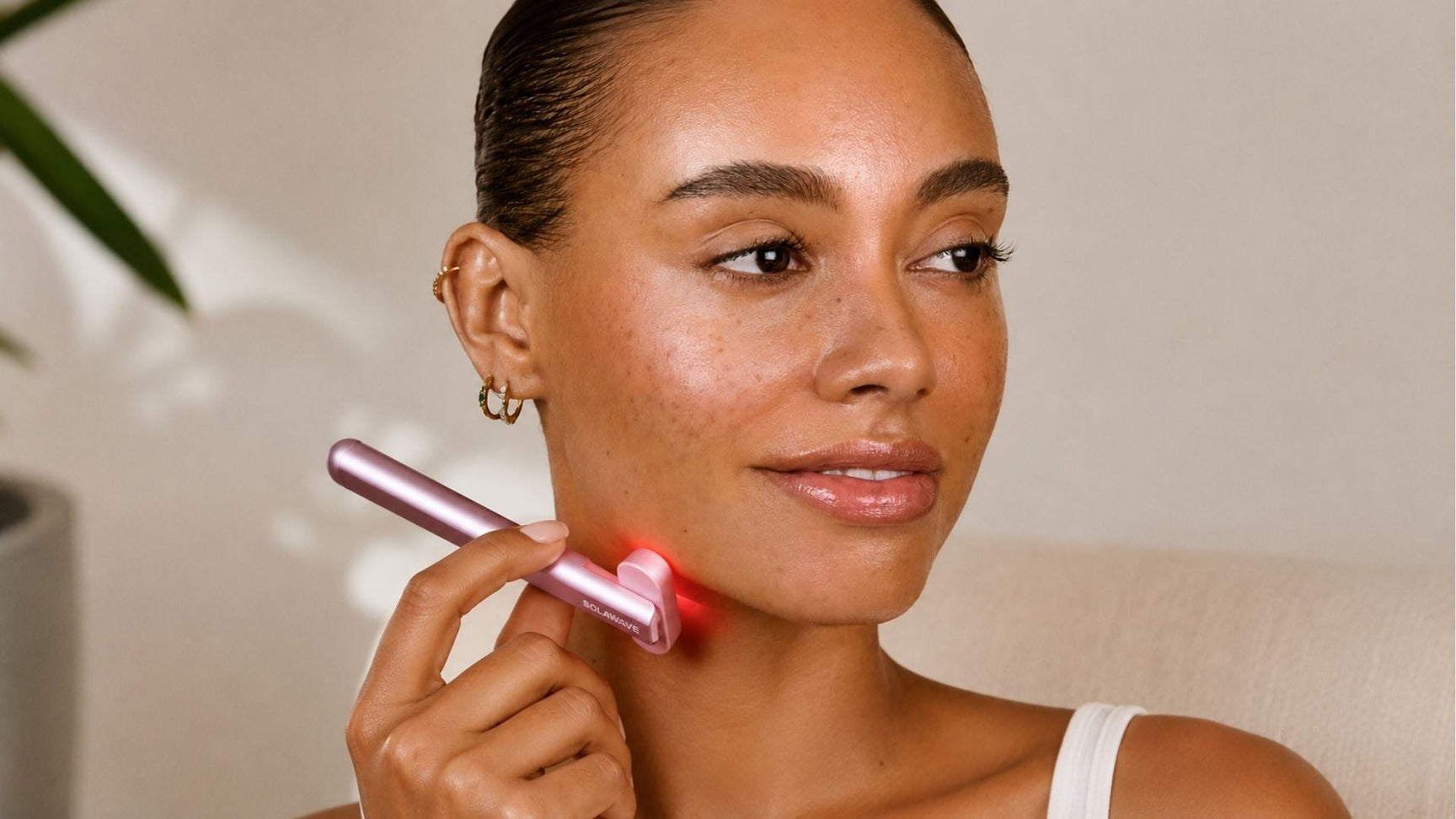
For active breakouts, the Solawave Bye Acne spot treatment pairs blue light therapy at 415nm with red light at 630nm. Blue light eliminates the P. acnes bacteria that cause inflammatory acne, while red light calms the surrounding inflammation. Neither wavelength dries out the skin, which is critical when you're already dealing with barrier damage.
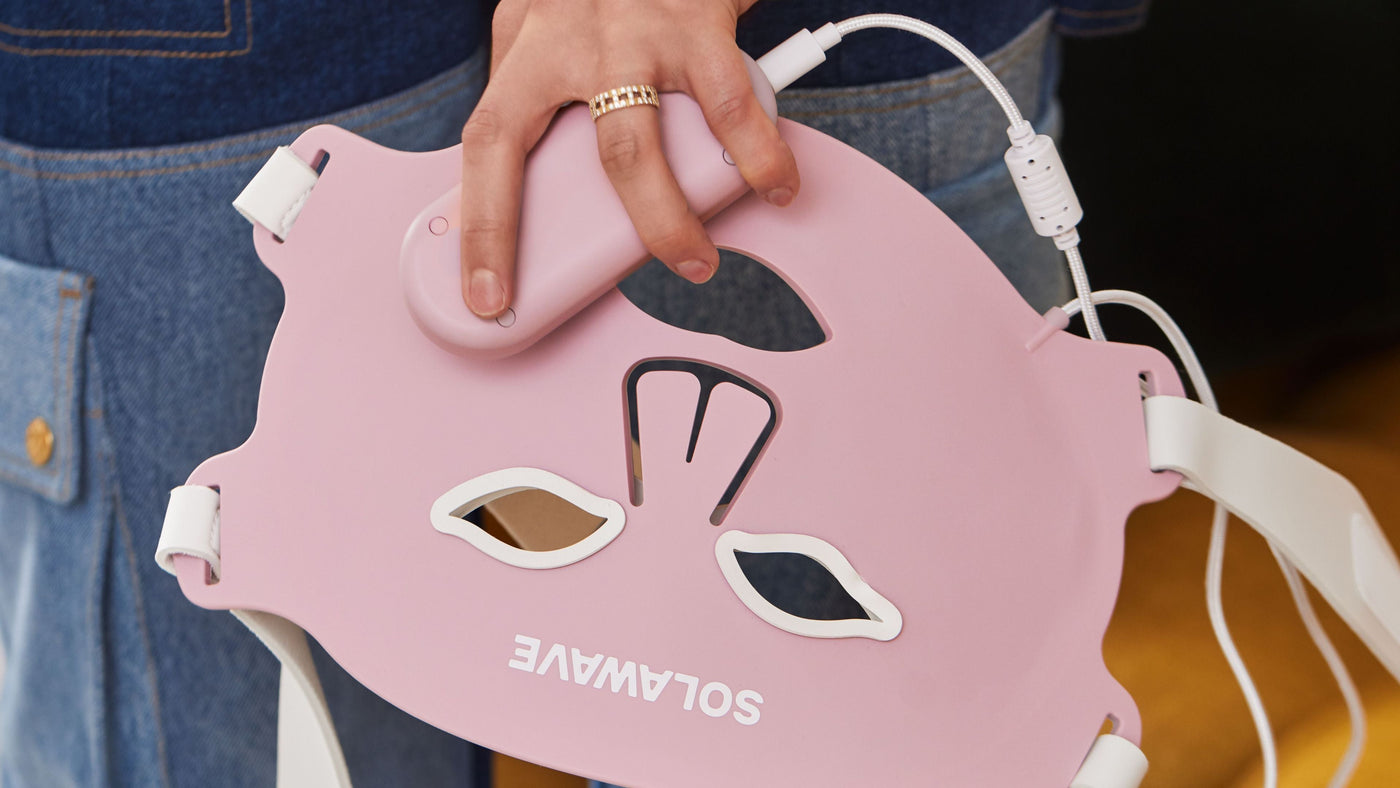
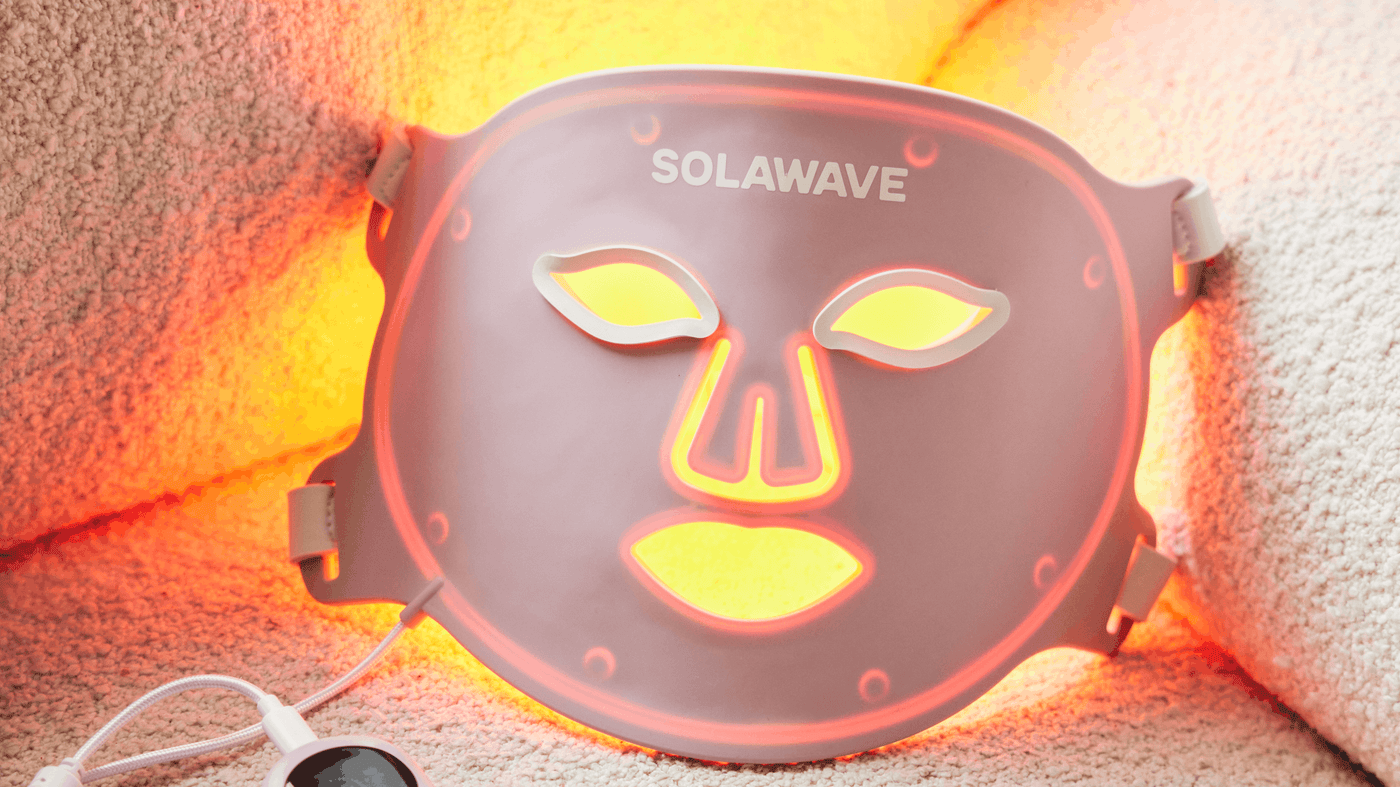
And for overall skin health, the Solawave Wrinkle Retreat Pro LED Face Mask delivers four therapeutic wavelengths across 320 LEDs in just 3 minutes per session. Red and deep red light support collagen and elasticity. Amber light calms redness and evens tone. Near-infrared light penetrates deepest to support circulation and tissue repair. In an independent 56-day clinical study of 30 participants, 100% showed visible improvement in skin texture, which matters just as much for dry, breakout-prone skin as it does for aging skin.
If your skin is both dry and breaking out, simplicity is your friend. Here's a framework that supports barrier repair while keeping breakouts in check.
Cleanse gently. Skip anything that leaves your skin feeling tight or squeaky clean. That "clean" feeling is actually your barrier being stripped.
Apply the LightBoost Wand Activating Serum for deep, lightweight hydration. Use it with the 4-in-1 Skincare Wand to boost absorption with galvanic current and red light therapy.
Follow with the LightBoost Face & Neck Rich Cream to lock in moisture and strengthen your skin barrier.
Treat active breakouts with the Bye Acne spot treatment. Three minutes of targeted blue and red light. No drying acids. No irritation.
Use consistently, and your skin can start to find its balance. The barrier gets stronger. Oil production normalizes. And breakouts become less frequent because the root cause is being addressed, not just the symptoms.
Dry skin and acne aren't opposites. They're often two sides of the same barrier problem. Solve for the barrier, and you solve for both.
Results may vary. Individual results are not guaranteed.
Yes. When the skin barrier is compromised, your skin overproduces oil to compensate for lost moisture. That excess sebum combines with dead skin cells to clog pores and trigger breakouts.
This is a sign of a damaged skin barrier. Your skin is losing moisture through the weakened barrier while ramping up oil production to try to protect itself, creating both dryness and excess shine.
No. Skipping moisturizer can make acne worse by further weakening the skin barrier. Choose a non-comedogenic formula like the LightBoost Face & Neck Rich Cream that hydrates without clogging pores.
Red light at 630nm supports cellular repair and reduces inflammation without stripping moisture. Blue light at 415nm targets acne-causing bacteria directly. Neither wavelength disrupts the skin barrier.
Yes. Red light therapy is non-invasive, UV-free, and pain-free. It targets mitochondria rather than melanin, making it safe for all skin types and tones, including sensitive and compromised skin.
Consistency matters. With regular use of barrier-supportive products and light therapy 3 to 5 times per week, most people begin noticing improvements in skin texture and breakout frequency within several weeks.
 Acne
Acne
 Acne
Acne