Rated 4.7 out of 5 stars
4.7 / 5


726,000+ customers
Free 60-Day Returns
1-Year Warranty
726,000+ customers
Free 60-Day Returns
1-Year Warranty
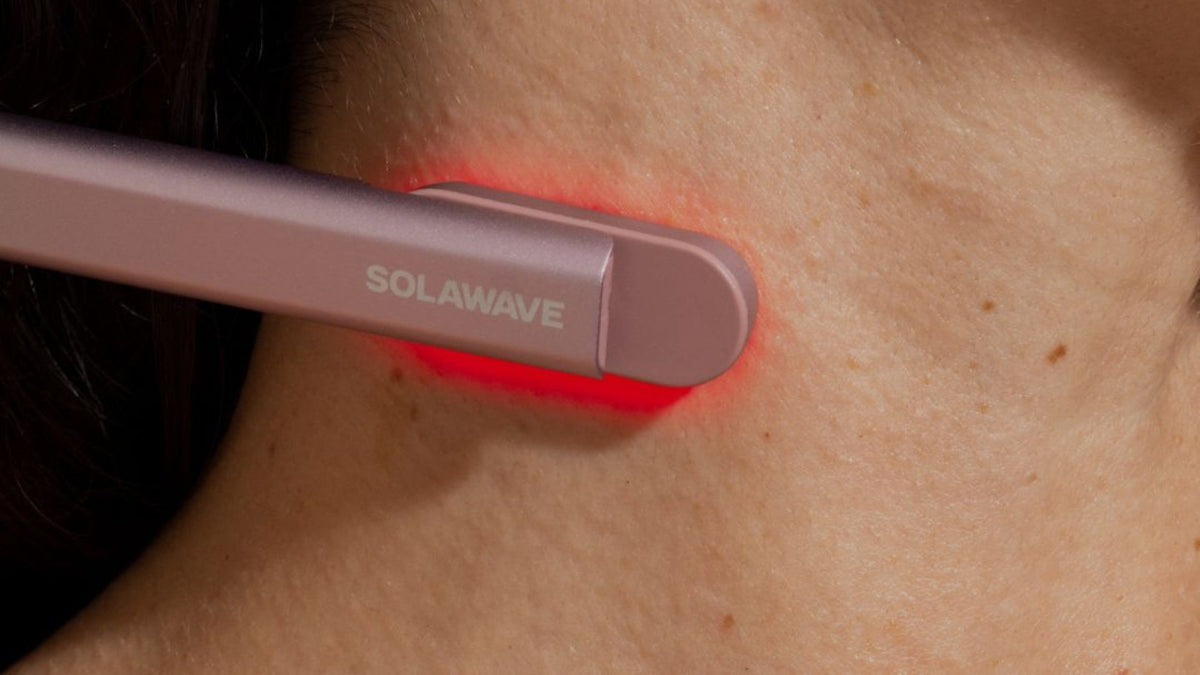
If you've ever looked at your LED face mask and wondered what those amber-colored lights are actually doing, you're not alone. Most of the conversation around light therapy focuses on red and near-infrared wavelengths. And for good reason. They're the heavy hitters for collagen support and deep-tissue rejuvenation. But 605nm light therapy fills a gap that red light simply wasn't designed to address. It's the wavelength your skin needs for the concerns you can see on the surface right now.
Let's start with the basics. Amber light therapy uses LED light at approximately 605 nanometers, which falls between the visible red and yellow portions of the light spectrum. You might also hear it called yellow light therapy for skin, though "amber" is the more precise term for the specific wavelength used in professional-grade skincare devices.
So what does amber light do for skin that sets it apart?
It comes down to where each wavelength works. Red light at 630nm and deep red at 660nm penetrate into the mid-to-deep dermis, where they interact with mitochondria to support collagen production and cellular energy. Near-infrared at 830nm goes even deeper, supporting circulation and tissue repair beneath the visible skin layers.
Amber light at 605nm operates in the superficial dermis and epidermis, the outermost layers of the skin. This is where redness, dullness, uneven tone, and visible puffiness live. Red light reaches past these layers to do its deeper work. Amber light stays right where these surface-level concerns originate.
Think of it this way. Red light is building the foundation beneath your skin. Amber light is addressing what you see in the mirror today.
This is one of the most common questions people ask, and the answer is yes. One of the primary benefits of amber light therapy for skin is its ability to calm visible redness and reduce the appearance of inflammation.
LED light therapy has been used in clinical and dermatological settings for decades, and different wavelengths target different skin responses. Amber light specifically helps modulate the skin's inflammatory pathways at the surface level. This makes it particularly useful for people dealing with reactive skin, post-treatment redness, or the kind of low-grade irritation that makes skin look perpetually flushed or uneven.
Research published in Photobiomodulation, Photomedicine, and Laser Surgery has explored how specific LED wavelengths, including those in the amber range, interact with skin biology to support calming and recovery processes. The mechanism is gentle, non-invasive, and UV-free, which means it doesn't carry the risks associated with lasers or IPL treatments.
For anyone with a darker skin tone who has avoided light-based treatments due to concerns about hyperpigmentation, this distinction matters. Amber light, like red light, targets cellular processes rather than melanin. It is safe and effective across all Fitzpatrick skin types, from I through VI.
Calming redness is just one piece of the picture. Here's what 605nm light therapy also brings to the table.
Reviving dull, tired-looking skin. Amber light promotes visible circulation in the superficial layers of the skin, helping to bring back that healthy, alive quality that dull skin lacks. If your complexion looks flat or grayish, especially in the morning or after a long day, this is the wavelength working to wake it up.
Evening out skin tone. Uneven tone, blotchiness, and discoloration are surface-level concerns that respond to surface-level treatment. Amber light works in the epidermis where these visible irregularities occur, helping to create a more uniform, balanced complexion over consistent use.
Reducing visible puffiness. By supporting microcirculation in the outer skin layers, amber light helps reduce the appearance of puffiness, particularly around the face and under the eyes.
Research on the biological effects of light continues to expand our understanding of how different wavelengths support distinct skin functions. Amber sits in a unique position because it addresses the visible, immediate concerns that often bother people most, even when their deeper skin health is already being supported by other wavelengths.
Not all amber or yellow-looking LEDs are created equal. The specific wavelength matters because it determines penetration depth and which biological processes are activated.
At 605nm, amber light reaches the epidermis and superficial dermis with enough energy to interact with skin cells at those layers without penetrating too deep. This is why it excels at addressing surface concerns like redness and tone irregularity, while red and near-infrared wavelengths handle the deeper structural work.
Understanding the full spectrum of LED light therapy helps explain why single-wavelength devices can only do so much. A device that offers only red light at 630nm is doing important work for collagen support, but it's leaving redness, dullness, and uneven tone on the table. Those are amber light's territory.
Beyond skincare, UC Davis research has even explored how amber light exposure influences mood and stress, suggesting that this wavelength interacts with the body in ways that go beyond the visible skin surface.
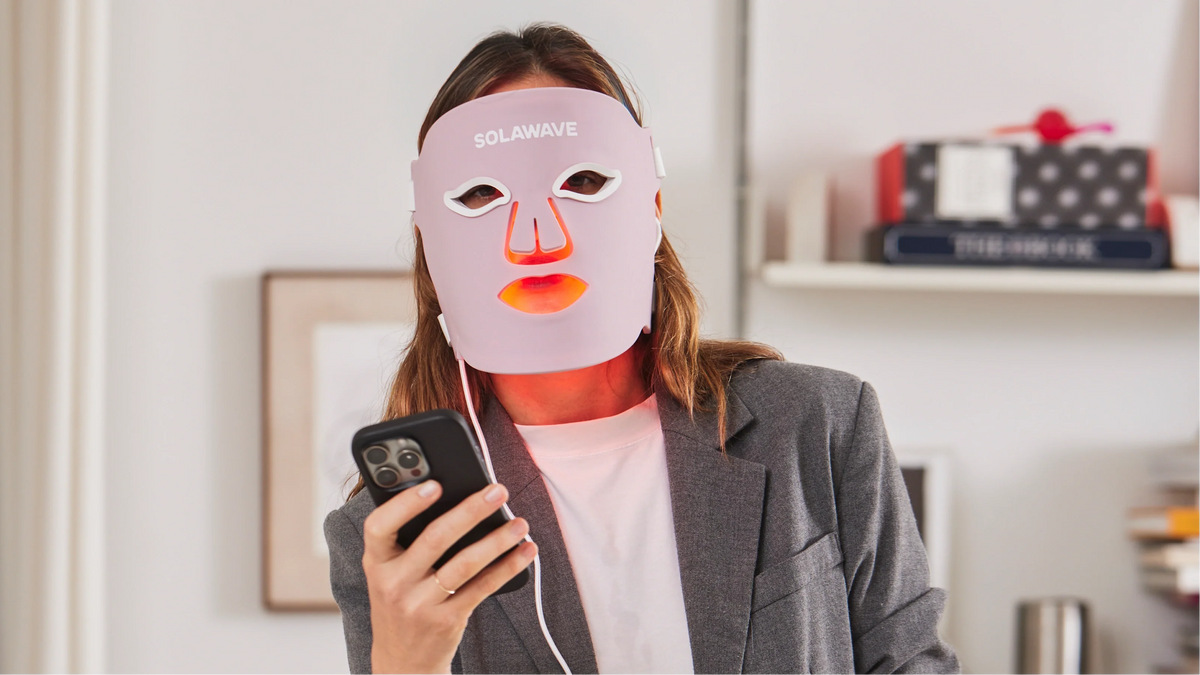
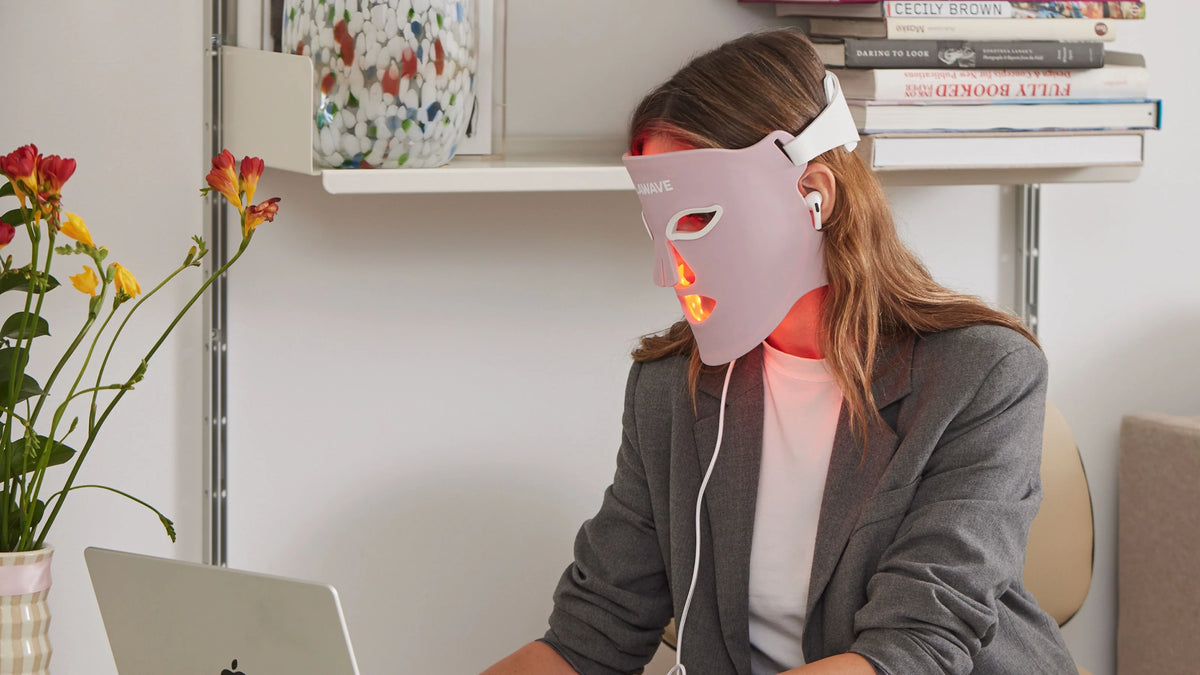
This is where the multi-wavelength approach becomes a real advantage. The Wrinkle Retreat Pro LED Face Mask doesn't isolate one wavelength and hope for the best. It delivers four therapeutic wavelengths simultaneously through 320 dual-core LEDs.
Red at 630nm and deep red at 660nm handle the deeper collagen and elasticity support. Near-infrared at 830nm goes deepest for circulation, tissue repair, and cellular renewal. And amber at 605nm works the surface, calming redness, reviving dullness, evening tone, and reducing visible puffiness.
All four wavelengths fire together in every 3-minute session, 3 to 5 times per week. Edge-to-edge coverage means no blind spots on the face. The mask is FDA-cleared, made from soft medical-grade silicone, and holds a charge for up to a month.
The same quad-wavelength configuration appears in the Neck and Chest Pro Light Therapy Mask as well, delivering amber light to the delicate skin below the jawline, which is often the first area to show redness, sun damage, and uneven discoloration.
This layered approach means you're not choosing between deep skin support and surface-level improvement. You're getting both in a single session. That's what separates a multi-wavelength device from a single-wavelength one. And it's why amber light at 605nm is the piece of the puzzle that makes the full picture work. All Solawave devices are FDA-cleared, clinically tested, and backed by a 60-day money-back guarantee.
Explore the full Solawave device lineup to find the right multi-wavelength treatment for your skin goals.
Results may vary. Individual results are not guaranteed.
Amber light therapy at 605nm is used to calm visible redness, revive dull skin, even out skin tone, and reduce the appearance of puffiness. It works in the superficial layers of the skin where these surface-level concerns originate.
Amber light therapy operates at approximately 605 nanometers, which falls between the red and yellow portions of the visible light spectrum. This wavelength targets the epidermis and superficial dermis.
Yes. Amber light at 605nm helps calm the appearance of redness and inflammation by working in the outermost skin layers where these visible concerns occur. It is gentle, non-invasive, and UV-free.
They are closely related. "Yellow light therapy skin" treatments and amber light therapy both refer to wavelengths in the 570nm to 620nm range. Solawave uses 605nm specifically, which is calibrated for optimal skin tone and redness benefits.
Absolutely. Amber light targets cellular processes, not melanin. This makes it safe and effective across all Fitzpatrick skin types from I through VI, with no risk of burns or hyperpigmentation.
Each wavelength targets a different layer of the skin and triggers a different biological response. Amber handles surface concerns like redness and dullness, while red and near-infrared work deeper for collagen support, elasticity, and tissue repair. Together, they deliver comprehensive results in a single session.