Rated 4.7 out of 5 stars
4.7 / 5


726,000+ customers
Free 60-Day Returns
1-Year Warranty
726,000+ customers
Free 60-Day Returns
1-Year Warranty
You've probably seen IPL mentioned on your dermatologist's treatment menu or spotted it in a beauty article about clearing sun damage. But what actually happens during an IPL session, and is it the right fit for your skin? Let's break it down.
Intense pulsed light therapy, commonly called IPL, is a non-invasive, in-office skin treatment that uses high-intensity pulses of broad-spectrum visible light to improve the color and texture of your skin. It was first developed in 1992 to treat vascular lesions and has since expanded to address a wide range of skin concerns.
Unlike lasers, which deliver a single wavelength of light, IPL devices emit multiple wavelengths in each pulse. This broad-spectrum approach allows IPL to target several skin issues simultaneously, from sun damage and age spots to redness and broken capillaries.
IPL is sometimes referred to as a "photofacial" or "photorejuvenation" treatment, and it's typically performed by a board-certified dermatologist, plastic surgeon, or licensed aesthetician under medical supervision. According to UT Southwestern Medical Center, IPL photofacials are a nonsurgical treatment option commonly used on the face, neck, chest, and hands.
The science behind IPL is rooted in a principle called selective photothermolysis. In simple terms, the device sends pulses of light energy into the skin, and specific molecules in your skin called chromophores absorb that light.
The two primary chromophores IPL targets are melanin (the pigment responsible for brown spots and discoloration) and hemoglobin (the molecule in red blood cells that gives broken capillaries and rosacea their visible redness). When these molecules absorb the light energy, they convert it into heat. That controlled heat damages the targeted cells, and your body's natural healing process clears them away over time.
This is why IPL is particularly effective for pigmentation-related concerns. The treated spots may initially darken before they flake off, revealing more even-toned skin underneath. Research published in the Journal of Clinical and Aesthetic Dermatology has also shown that IPL can promote new collagen formation, contributing to improved skin texture and firmness over time.
A comprehensive study on long-term IPL therapy confirmed that IPL's broad-spectrum emission in the 500 to 1200nm range enables it to simultaneously target both vascular dilation and pigment irregularities through selective photothermolysis.
IPL is a versatile treatment. It's most commonly used for sun damage and photoaging, but dermatologists also use it for age spots and brown discoloration, broken blood vessels and spider veins, redness from rosacea, acne and acne scars, freckles, fine wrinkles, and uneven skin tone.
Most treatment plans involve five to six sessions spaced two to four weeks apart. Each session typically lasts 15 to 30 minutes depending on the treatment area, and recovery is minimal. Some redness and slight swelling are common immediately after, but most people return to their normal routine the same day.
This is where it gets important. IPL is not equally safe for everyone.
Because IPL targets melanin as one of its primary chromophores, people with higher levels of melanin in their skin face increased risk during treatment. IPL therapy guidelines note that in patients with darker skin types, the melanin in the epidermis may absorb too much of the delivered light energy, leading to unintended thermal injury instead of treating the target concern.
Ideal candidates for IPL are typically those with lighter to medium skin tones, classified as Fitzpatrick skin types I through III. People with Fitzpatrick skin types IV through VI face a significantly elevated risk of burns, post-inflammatory hyperpigmentation, and in rare cases, scarring. According to UT Southwestern Medical Center, patients with darker skin tones or conditions like melasma may not be good candidates for IPL.
This is a critical distinction. If you have a deeper skin tone, IPL may not be the safest option for you, and it's essential to discuss alternatives with your dermatologist.
This is the question that trips up a lot of people, because both IPL and LED light therapy use light on the skin. But they work in fundamentally different ways and serve different purposes.
IPL uses high-intensity, broad-spectrum light that generates heat through selective photothermolysis. It targets and destroys specific cells by heating chromophores like melanin and hemoglobin. This makes it effective for pigmentation and vascular issues but also means it carries risk of burns, especially for darker skin tones.
LED light therapy, also known as photobiomodulation, takes a completely different approach. Instead of destroying cells with heat, LED devices use specific, narrow wavelengths of light at low intensity to energize cells from within. Red light at 630nm, for example, is absorbed by cytochrome c oxidase, an enzyme in the mitochondria. This triggers increased production of ATP (adenosine triphosphate), the energy currency that powers cellular regeneration.
The result is that fibroblast cells produce more collagen and elastin. Skin cells repair and regenerate faster. Inflammatory pathways are modulated. And circulation improves, delivering more nutrients to skin tissue.
Here's the key difference that matters most. Because LED red light therapy targets mitochondria and not melanin, it does not carry the same risks as IPL for darker skin tones. Red light is safe and equally effective across all Fitzpatrick skin types, from I through VI. No heat damage. No burns. No risk of hyperpigmentation.
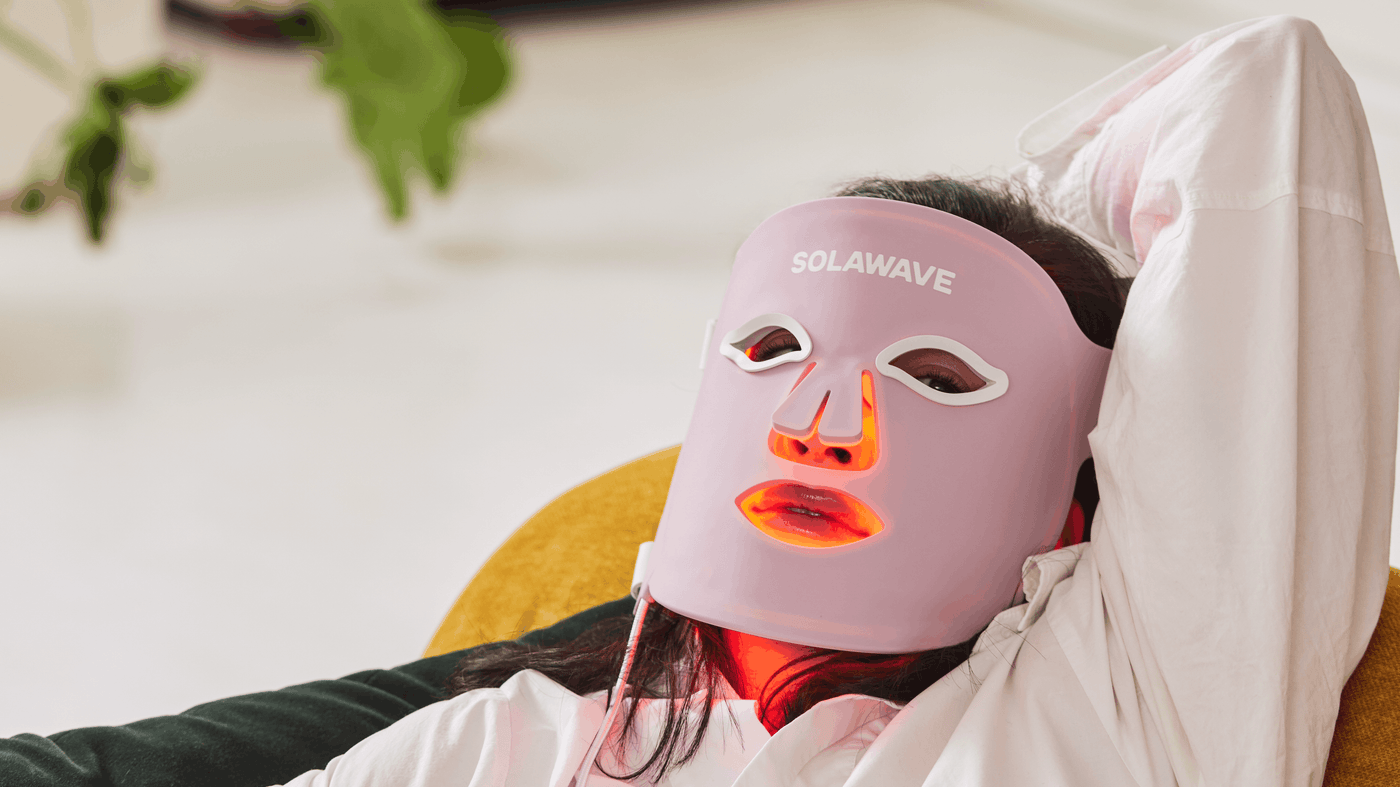
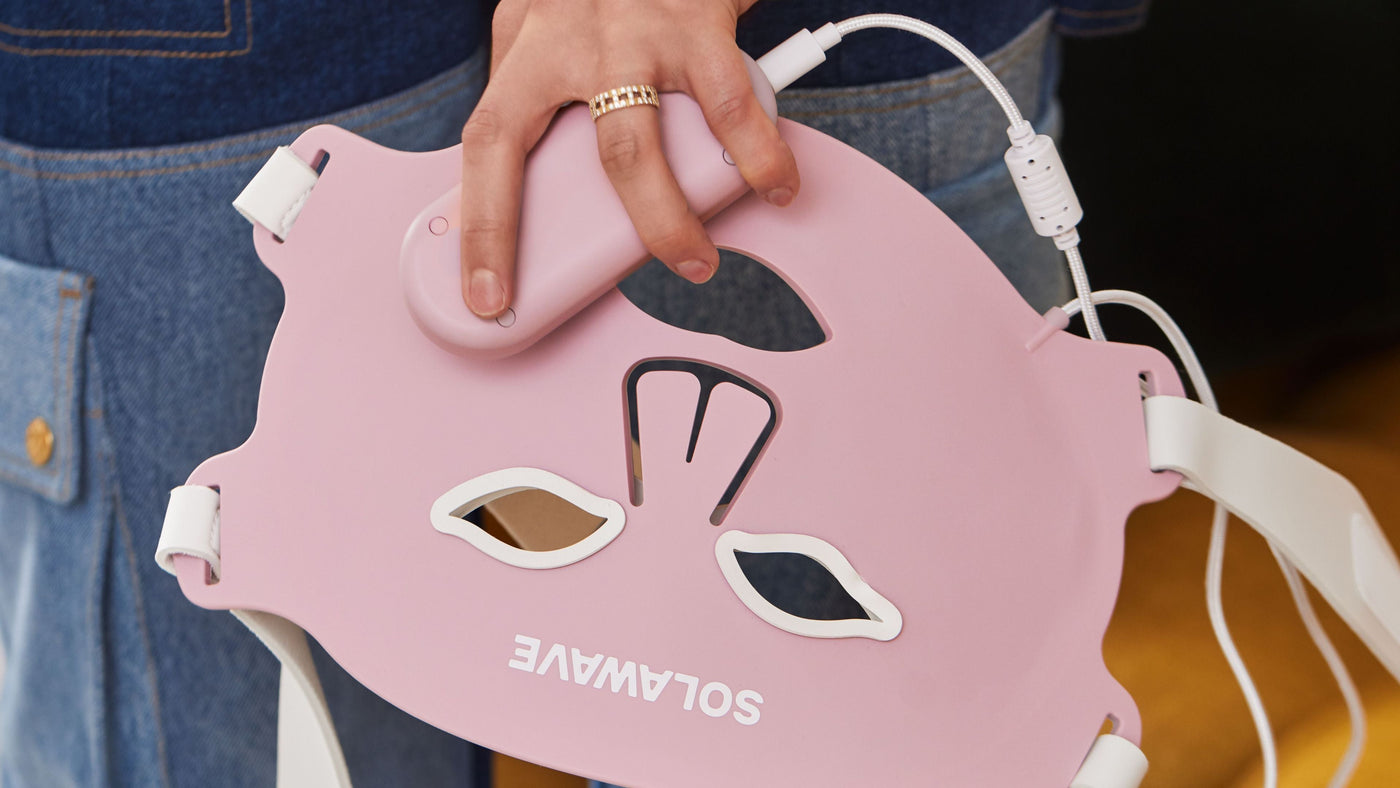
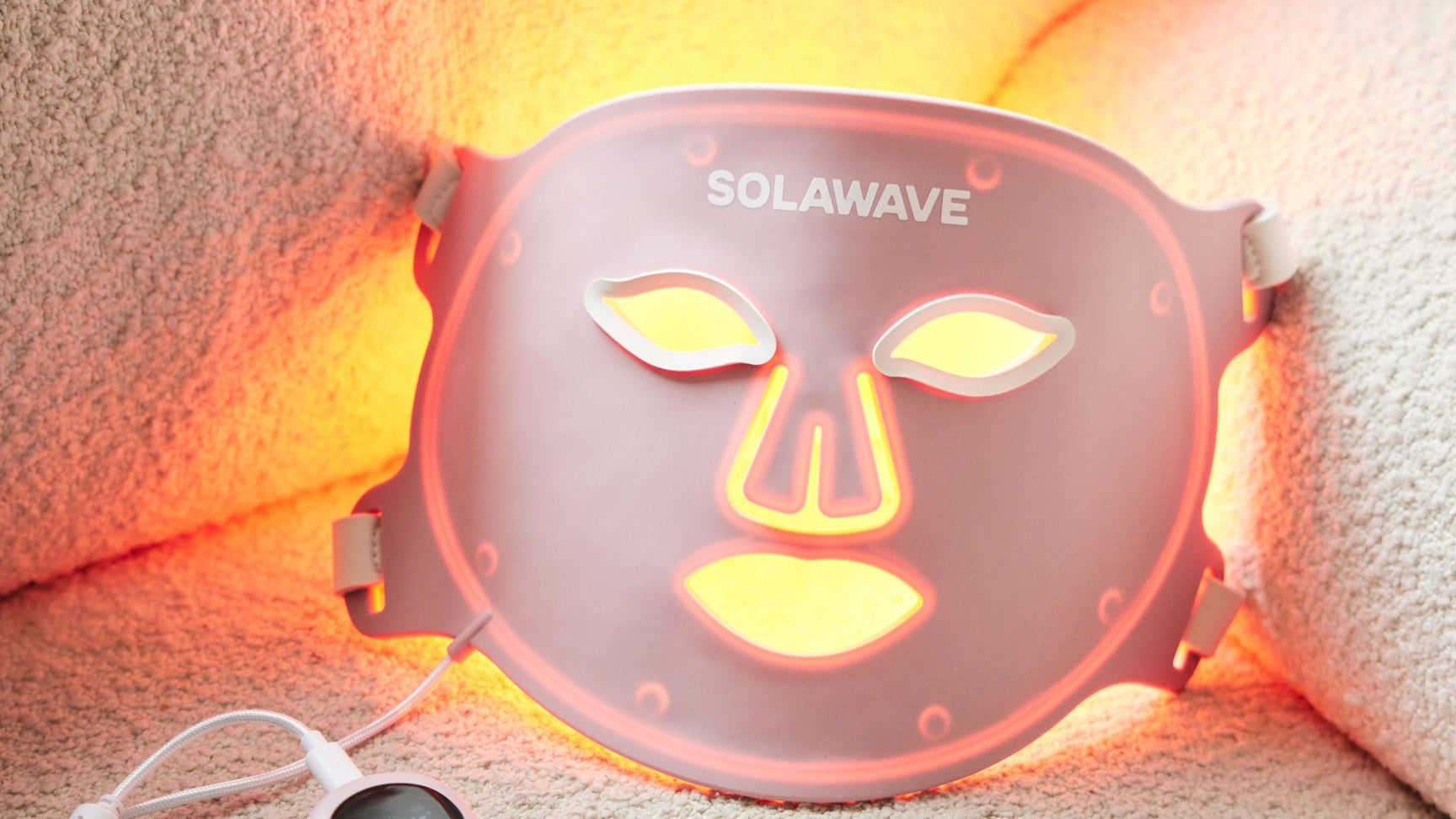
This is exactly the science behind Solawave's FDA-cleared devices. The Wrinkle Retreat Pro LED Face Mask delivers 320 dual-core LEDs across four therapeutic wavelengths, including red at 630nm, deep red at 660nm, near-infrared at 830nm, and amber at 605nm. Each wavelength targets a different depth of skin for comprehensive, full-face rejuvenation in just 3 minutes per session.
And the 4-in-1 Skincare Wand combines red light therapy with galvanic current, therapeutic warmth, and facial massage for targeted, zone-by-zone precision treatment. All four technologies work together to visibly smooth fine lines, de-puff, and boost radiance in just 12 minutes.
IPL and LED light therapy aren't competitors. They're different tools for different goals.
If you're dealing with stubborn sun damage, deep pigmentation, or visible broken blood vessels and you have lighter skin, IPL performed by a qualified dermatologist can deliver targeted results.
But if you're looking for a daily, at-home ritual that supports collagen production, smooths fine lines, reduces puffiness, and creates a healthy, radiant glow with zero downtime, zero UV exposure, and zero risk across all skin tones, that's where Solawave's clinically tested, FDA-cleared devices fit in. They're backed by independent clinical studies, 27+ beauty awards, and a 60-day money-back guarantee.
Results may vary. Individual results are not guaranteed.
IPL is most commonly used for sun damage, age spots, broken blood vessels, rosacea, acne scars, and uneven skin tone. It's performed in-office by a dermatologist, typically over five to six sessions spaced two to four weeks apart.
Most patients describe IPL as feeling like a rubber band snapping against the skin. A topical numbing cream is often applied before treatment. Recovery is minimal, with mild redness and swelling lasting only a few hours.
IPL carries elevated risks for Fitzpatrick skin types IV through VI, including burns and post-inflammatory hyperpigmentation. Dermatologists generally recommend alternative treatments for darker skin tones.
IPL uses high-intensity broad-spectrum light that generates heat to destroy specific cells. LED light therapy uses low-intensity, specific wavelengths to energize cells at the mitochondrial level without heat damage, making it safe for all skin tones.
Professional-grade IPL requires in-office treatment by trained providers. For at-home light therapy, FDA-cleared LED devices like Solawave's Wrinkle Retreat Pro Face Mask offer a safe, clinically tested alternative.
Solawave recommends using its LED devices 3 to 5 times per week. The Wrinkle Retreat Pro Face Mask takes just 3 minutes per session, and the 4-in-1 Skincare Wand takes 12 minutes for a full-face treatment.
 News
News