Rated 4.7 out of 5 stars
4.7 / 5


726,000+ customers
Free 60-Day Returns
1-Year Warranty
726,000+ customers
Free 60-Day Returns
1-Year Warranty
You've probably noticed them without knowing their name. Those two lines that run from the sides of your nose to the corners of your mouth. They show up when you smile, laugh, or talk. And at some point, they stop disappearing when your face relaxes. Welcome to nasolabial folds.
Nasolabial folds are the creases that extend from the outer edges of your nostrils down to the corners of your mouth. You might know them as smile lines or laugh lines. According to the Cleveland Clinic, almost everyone has them. They are a completely normal part of facial anatomy, not a medical condition or a disease.
In younger skin, these lines typically appear only during facial expressions and then smooth out at rest. But over time, they can become deeper, more permanent creases that are visible even when your face is completely relaxed. That transition from dynamic lines (visible only when you move) to static lines (visible all the time) is what makes so many people notice them seemingly overnight.
The folds themselves are made up of dense bundles of fibrous tissue and muscle. They sit at the boundary between two different zones of the face, where the cheek meets the upper lip area. This structural position is part of what makes them so stubborn. They aren't just surface wrinkles. They're tied to deeper changes in the skin, fat, muscle, and even bone underneath.
Several factors work together to make smile lines more pronounced over time. Understanding what's happening beneath the surface helps explain why a single cream or quick fix rarely addresses the full picture.
Starting in your mid-20s, your body produces roughly 1% less collagen each year. Collagen and elastin are the structural proteins that keep skin firm, bouncy, and resilient. As their levels decline, skin gradually loses its ability to snap back after facial movements. The result is creasing and folding that becomes permanent over time.
One of the biggest contributors to deepening nasolabial folds is something that happens beneath the skin entirely. The fat pads in your mid-face, which sit high on the cheeks when you're young, gradually shift downward due to gravity. According to anatomical research published in PMC, this descent is compounded by the weakening of connective tissue and ligaments that normally hold facial fat in place. When cheek fat slides downward, it bunches up against the fibrous boundary near the mouth, creating a deeper, more visible fold.
This is also why significant weight loss, including from GLP-1 medications, can sometimes accelerate the appearance of nasolabial folds. When facial volume decreases quickly, the skin that was stretched over fuller cheeks can lose its structural support.
Here's a factor most people don't think about. The bones in your face actually change shape as you age. Starting around age 30, the bone around the base of the nose and the mid-face begins to thin and recede. This weakens the foundation that supports your skin and soft tissue from underneath, contributing to a more sunken mid-face and deeper folds.
UV radiation breaks down collagen and elastin fibers faster than natural aging alone. Photoaging makes the skin thinner, less elastic, and more prone to creasing. Consistent sun protection is one of the most effective ways to slow the progression of nasolabial folds.
Every smile, laugh, and conversation contracts the muscles around your mouth thousands of times. Over years and decades, those repeated movements wear grooves into the skin. It's the same reason crow's feet form around the eyes and forehead lines develop across the brow.
This is where things get interesting. While deep, long-established nasolabial folds involve structural changes that topical products alone can't fully address, there are real, science-backed ways to smooth fine lines without injections and visibly improve the appearance of the skin around the mouth and nose.
The key is targeting what's happening at the cellular level.
Red light therapy uses specific wavelengths of LED light, particularly at 630nm, to penetrate the skin and interact with the mitochondria inside your cells. When mitochondria absorb red light, they produce more ATP, which is the energy molecule that powers cellular functions like collagen synthesis and tissue repair.
More cellular energy means fibroblasts (the cells responsible for making collagen and elastin) can do their job more efficiently. Over time, this supports visibly firmer, smoother skin in the areas where you use the treatment consistently.
The Solawave 4-in-1 Skincare Wand combines red light therapy at 630nm with three additional technologies that work together. Galvanic current drives hydrating serum actives deeper into the skin for enhanced absorption. Therapeutic warmth supports circulation and reduces the visible appearance of puffiness. And facial massage stimulates lymphatic drainage, helping the skin look more lifted and sculpted.
For nasolabial folds specifically, the wand's precision design lets you target the exact zones where smile lines form, spending focused time on the creases running from nose to mouth. Pair it with the LightBoost Wand Activating Serum, which delivers hyaluronic acid and peptides directly to the treatment area for deep hydration and visible plumping.
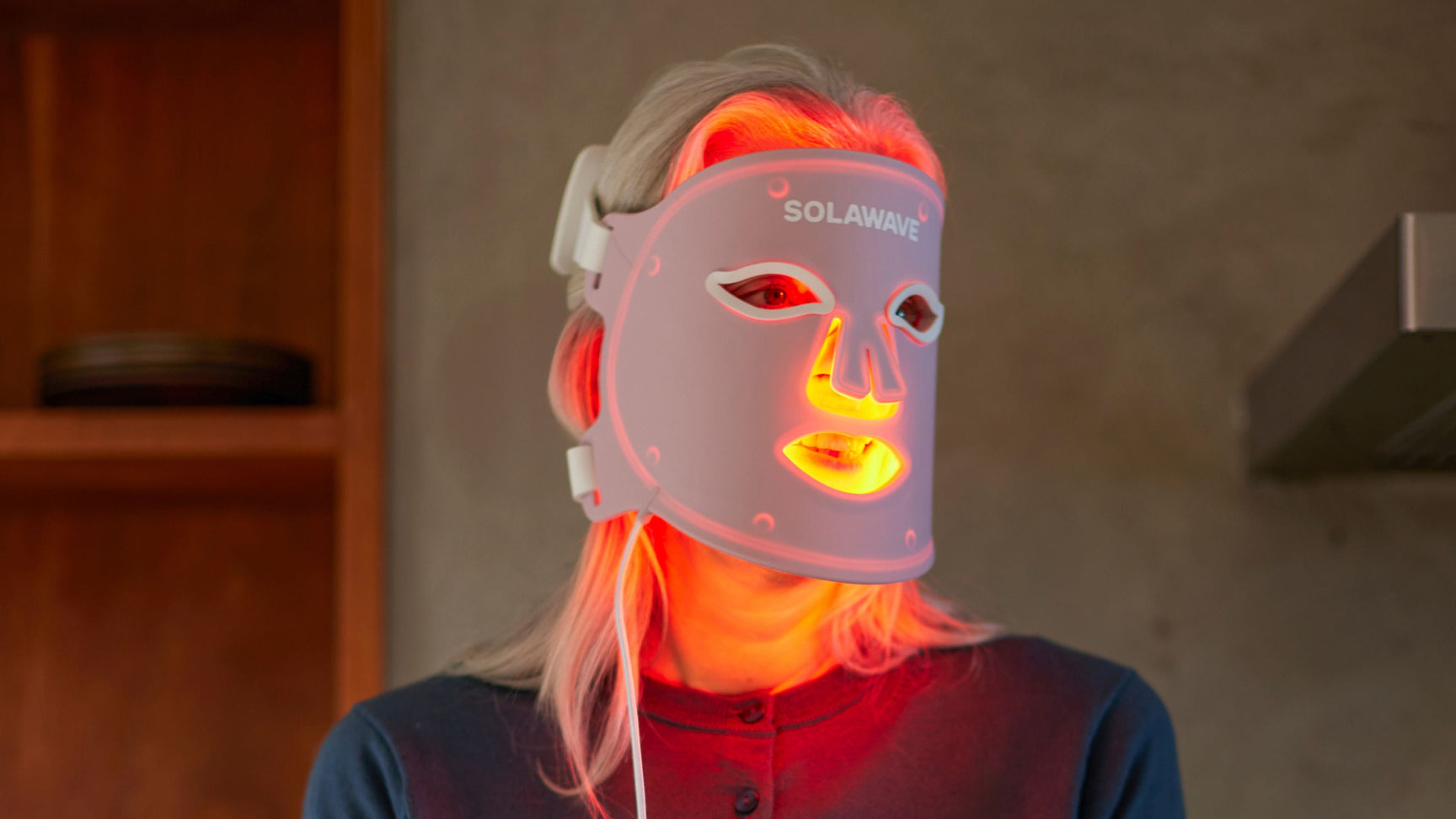
If you're looking for broader coverage, the Wrinkle Retreat Pro LED Face Mask delivers four therapeutic wavelengths across the entire face in just 3 minutes per session. With 320 dual-core LEDs and zero blind spots, it reaches every area where fine lines and wrinkles tend to develop, including around the mouth and the lip line area.
Solawave devices are FDA-cleared, clinically tested, and backed by independent studies. They're also safe for all Fitzpatrick skin types (I through VI) because red light targets mitochondria, not melanin. No UV. No irritation. No downtime.
Consistency matters more than intensity when it comes to using red light therapy for wrinkles. Use your device 3 to 5 times per week and give your skin 8 weeks to show visible improvement. The changes happen at the cellular level first, so patience and routine are your best allies.
And remember, nasolabial folds are a normal part of being human. The goal isn't to erase every sign that you've ever laughed or smiled. It's to support your skin so it stays healthy, resilient, and vibrant for the long run.
Results may vary. Individual results are not guaranteed.
Nasolabial folds are the creases that run from the sides of the nose to the corners of the mouth. They are a normal anatomical feature, commonly called smile lines or laugh lines, and they tend to deepen with age.
Most people begin noticing deeper nasolabial folds in their 30s and 40s as collagen production slows, facial fat pads shift downward, and skin loses elasticity. Sun exposure and genetics can accelerate this timeline.
Red light therapy at 630nm supports collagen production at the cellular level, which can help visibly smooth fine lines and improve skin firmness over time. It works best with consistent use as part of a regular skincare routine.
Not exactly. Unlike fine surface wrinkles, nasolabial folds are structural creases involving deeper changes in skin, fat, muscle, and bone. They are more complex than typical wrinkles and require approaches that address skin health from within.
It can. Significant or rapid weight loss, including from GLP-1 medications, can reduce facial volume and leave the skin with less structural support. This can make existing nasolabial folds appear more prominent.
Yes. Red light therapy targets mitochondria inside skin cells, not melanin. This makes it safe and effective for all Fitzpatrick skin types from I to VI, with no UV exposure, no irritation, and no downtime.
 News
News