Rated 4.7 out of 5 stars
4.7 / 5


726,000+ customers
Free 60-Day Returns
1-Year Warranty
726,000+ customers
Free 60-Day Returns
1-Year Warranty
You've probably tried a dozen serums that promised to "boost cellular renewal" or "energize your skin from within." But have you ever stopped to ask what that actually means? What's really happening inside your skin cells when something works versus when it doesn't?
The answer lives inside your mitochondria. And understanding it changes how you think about every skincare decision you make.
Mitochondrial skincare isn't just another buzzword. It's a fundamental shift in how science understands skin aging, and red light therapy is the technology that makes it actionable at home.
Every cell in your skin contains hundreds of mitochondria, tiny organelles that function as your body's power generators. Their job is to produce adenosine triphosphate, or ATP, the energy molecule that drives virtually every biological process in your skin. Collagen production. Cell turnover. DNA repair. Wound healing. All of it runs on ATP.
A peer-reviewed study published in Cell Death & Disease established that mitochondria are the primary organelle affected during both chronological and UV-induced skin aging. The researchers noted that skin's constant renewal depends on the rapid proliferation of progenitor cells, and the energy for that renewal comes from mitochondrial respiration.
Here's the problem. As you age and accumulate sun exposure, your mitochondria become less efficient. They produce less ATP and more reactive oxygen species (ROS), which are essentially metabolic waste products that damage cell structures. Less energy plus more damage equals the visible signs of aging you see in the mirror. Fine lines. Loss of firmness. Dull, uneven tone. Slower healing.
This is why cellular skincare matters so much. If your mitochondria aren't functioning well, no amount of topical product can fully compensate.
This is where red light therapy cellular science gets really interesting. And really specific.
When red and near-infrared light at therapeutic wavelengths penetrate your skin, they don't just sit on the surface. They reach the mitochondria inside your cells and are absorbed by an enzyme called cytochrome c oxidase, a key component of the mitochondrial electron transport chain.
According to research published in the Journal of Photochemistry and Photobiology, this absorption triggers a cascade of biological responses. It increases ATP production, creates a brief and beneficial burst of reactive oxygen species that activates cellular repair pathways, and boosts nitric oxide release to improve circulation.
In plain terms, red light therapy power comes from its ability to re-energize your cells from the inside out. It doesn't mask symptoms. It supports the biological machinery that keeps skin firm, smooth, and resilient.
A separate review in Photomedicine and Laser Surgery confirmed that low-intensity light therapy appears to modulate cellular physiology through existing reduction/oxidation (redox) mechanisms, promoting both proliferation and cellular homeostasis. Translation? Red light helps your cells work the way they're supposed to.
Most serums, creams, and treatments work on the skin's surface. They deliver hydration, temporarily plump, or chemically exfoliate. These can all be helpful, but they operate above the problem.
A cellular anti-aging treatment like red light therapy works differently because it targets the root cause. When your mitochondria are producing adequate ATP, your fibroblast cells naturally generate more collagen and elastin. Your skin cells repair and turn over faster. Inflammatory pathways quiet down. Circulation improves.
Cleveland Clinic notes that red light therapy is thought to work by acting on mitochondria, and with more cellular energy available, cells can do their work more efficiently, including repairing skin, boosting new cell growth, and enhancing skin rejuvenation.
UCLA Health's review of red light therapy adds that researchers have confirmed its ability to stimulate collagen production, increase fibroblast activity, and reduce inflammation. The FDA has cleared several red light devices for home use in treating aging skin.
This is what makes red light therapy genuinely different. You're not adding something artificial to your skin. You're supporting what your skin already knows how to do.
Not all light is created equal. The therapeutic benefits depend entirely on the wavelength and its ability to reach the right depth in your skin.
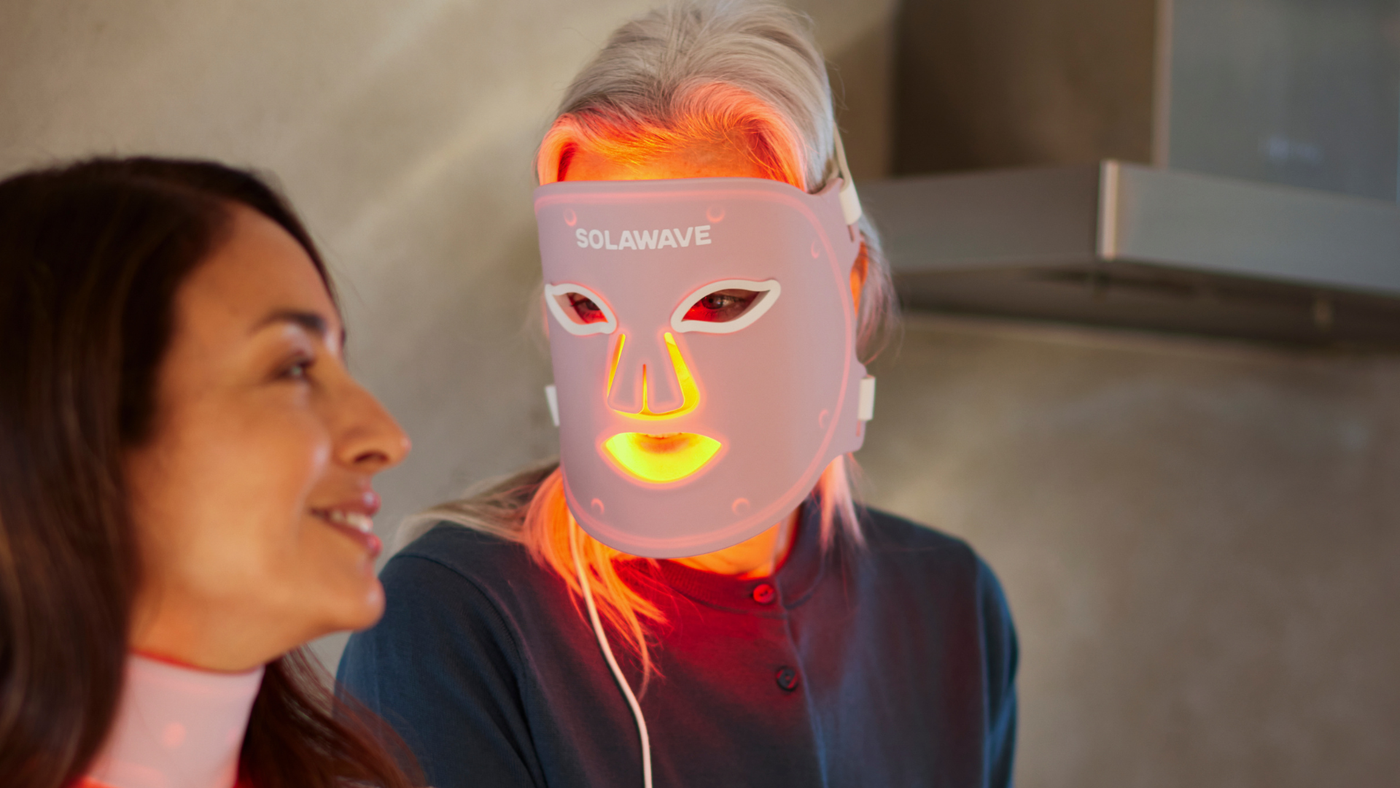
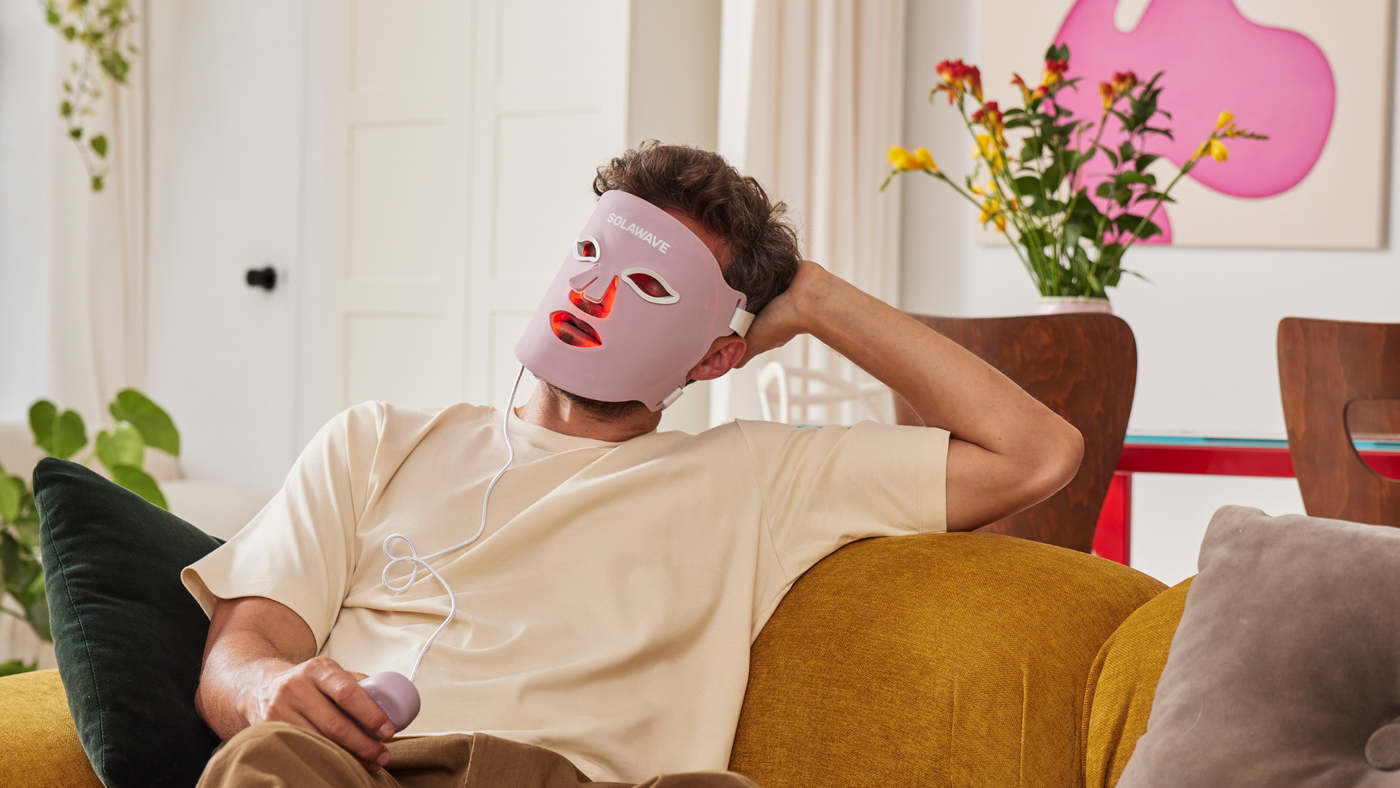
Research has identified specific ranges that interact most effectively with cytochrome c oxidase. The Solawave Wrinkle Retreat Pro LED Face Mask uses four clinically validated wavelengths working together.
Red light at 630 nm penetrates the surface-to-mid dermis and supports collagen and elastin production. Deep red at 660 nm reaches further to target signs of aging and support elasticity. Near-infrared at 830 nm achieves the deepest penetration, supporting circulation, tissue repair, and cellular renewal. Amber light at 605nm works on the superficial layers to calm redness and even skin tone.
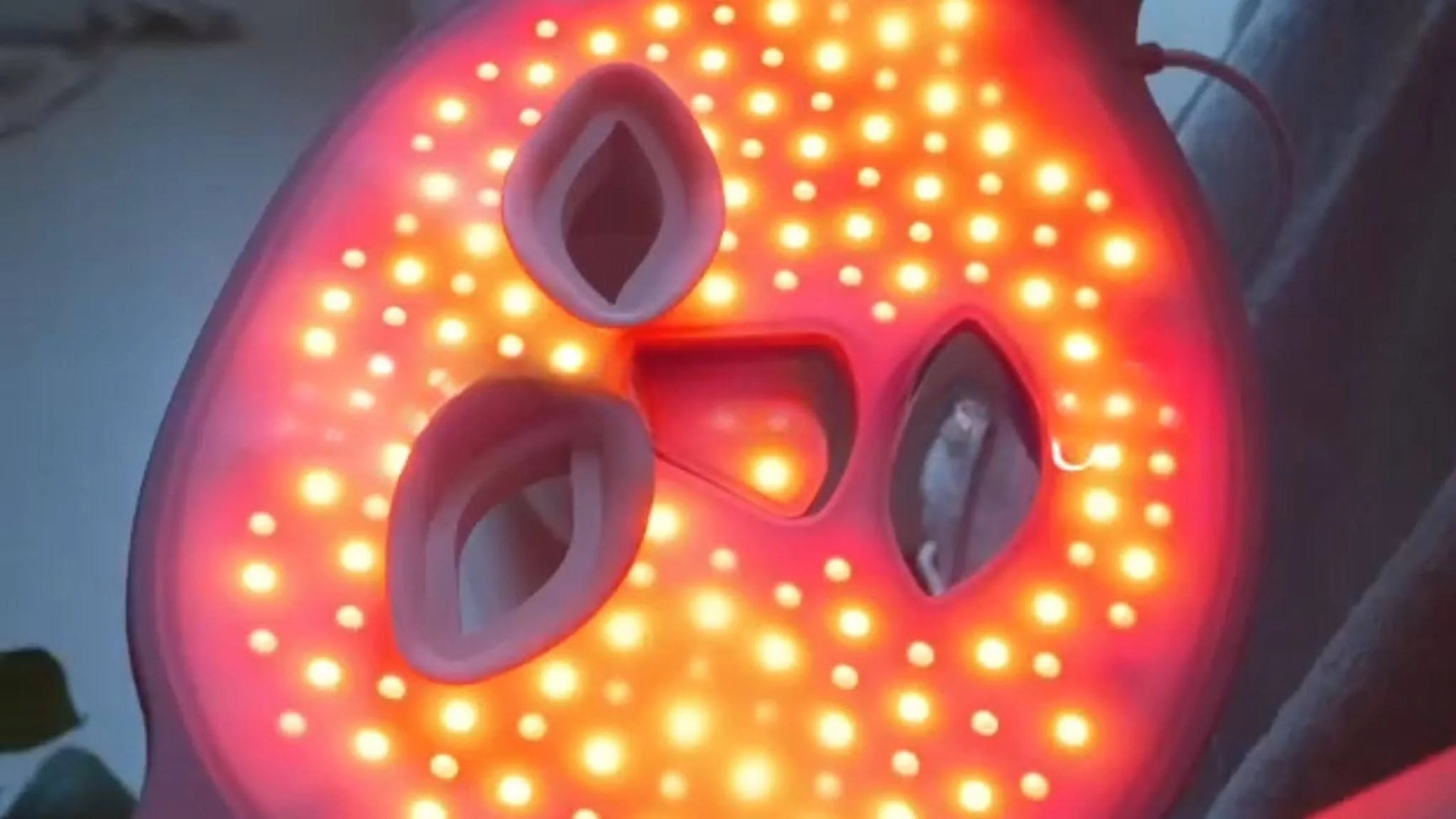
With 320 dual-core LEDs and a total irradiance of 65 mW/cm², the mask delivers edge-to-edge coverage in just 3 minutes per session.
For targeted, zone-by-zone treatment, the 4-in-1 Skincare Wand pairs red light therapy at 630 nm with galvanic current, therapeutic warmth, and facial massage. It's particularly effective for addressing specific areas like smile lines, under-eye puffiness, and jawline definition.
The Neck & Chest Pro Light Therapy Mask extends the same quad-wavelength technology to the areas that age fastest but get treated last.
One of the most important aspects of red light therapy in cellular science is what it doesn't target. Unlike lasers and IPL treatments that interact with melanin, red light targets mitochondria. Every skin cell has mitochondria, regardless of melanin content.
That means red light therapy is safe and equally effective across all Fitzpatrick skin types, from I to VI. No UV exposure. No risk of burns or hyperpigmentation. No downtime.
All Solawave devices are FDA-cleared, clinically tested, and backed by a 60-day money-back guarantee and 1-year warranty. They're also FSA/HSA eligible, because healthy skin is a health investment.
The science of cellular skincare isn't new. It's rooted in decades of research, from NASA's original light therapy experiments to peer-reviewed studies in journals like Cell Death & Disease and Photomedicine and Laser Surgery. What's new is that you can access it at home, in 3 minutes, without an appointment.
That's the real red light therapy power. Not hype. Not trends. Just your cells, doing what they were built to do, with the energy to actually do it.
Results may vary. Individual results are not guaranteed.
Mitochondrial skincare focuses on supporting the mitochondria inside your skin cells, which produce the energy (ATP) that powers collagen production, cell turnover, and repair. Red light therapy is the primary technology used to boost mitochondrial function.
Red and near-infrared light are absorbed by cytochrome c oxidase, an enzyme in the mitochondria. This absorption increases ATP production, which fuels natural skin regeneration, collagen synthesis, and repair processes.
Yes. Peer-reviewed studies published in journals like Cell Death & Disease and Photomedicine and Laser Surgery confirm that red light therapy stimulates mitochondrial activity, increases ATP, and supports collagen production and tissue repair.
Most skincare products work on the skin's surface. Red light therapy works beneath the surface by energizing mitochondria, supporting the biological processes that keep skin firm, smooth, and healthy from the inside out.
Absolutely. Red light targets mitochondria, not melanin, making it safe and equally effective for all Fitzpatrick skin types (I through VI) with no risk of burns or hyperpigmentation.
Solawave recommends using devices 3 to 5 times per week. The Wrinkle Retreat Pro Face Mask takes just 3 minutes per session, while the 4-in-1 Skincare Wand takes 12 minutes for a full-face treatment.