Rated 4.7 out of 5 stars
4.7 / 5


726,000+ customers
Free 60-Day Returns
1-Year Warranty
726,000+ customers
Free 60-Day Returns
1-Year Warranty
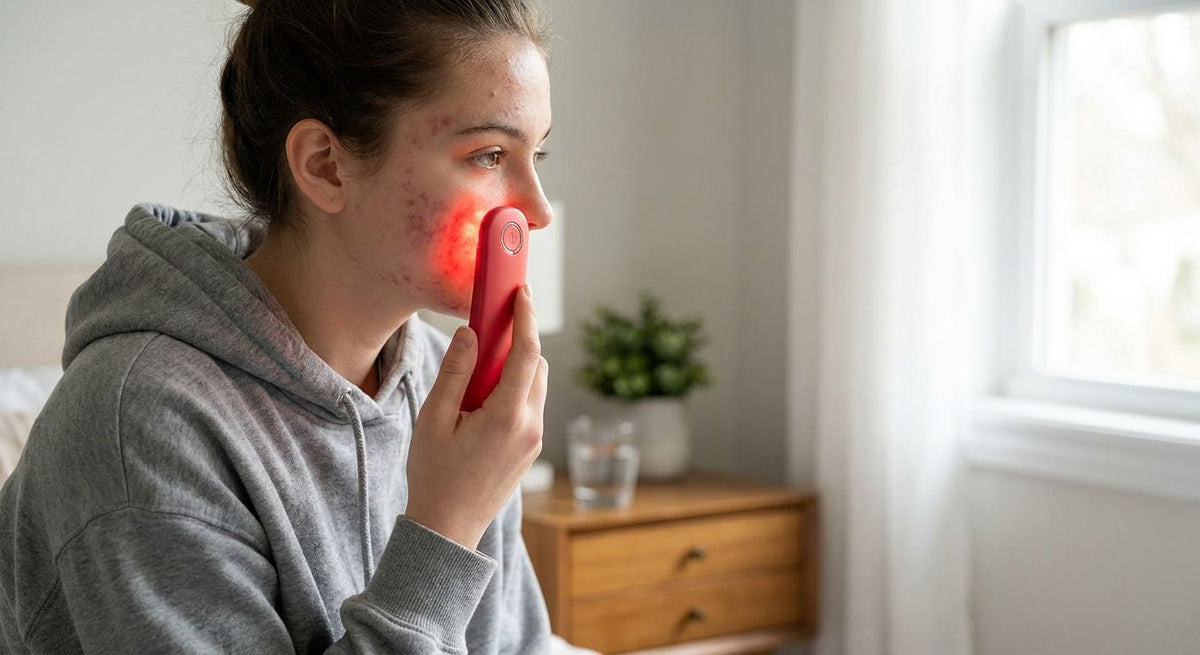
Teenage acne doesn't behave like adult acne, and it doesn't respond to devices built for adult concerns either. Picking the wrong red light therapy device for a teenager wastes money, wastes patience, and can leave breakouts worse than when you started.
Acne in teenagers is driven by hormone surges hitting oil glands that are still recalibrating, which is a different mechanism than the collagen breakdown red light therapy typically targets in adult skincare. Blue light wavelengths (typically 405-420nm) kill acne-causing bacteria on the surface, while red light (630-660nm) calms the inflammation underneath. A device built only for wrinkles skips the blue light entirely, which means it's doing half the job for a teenager's skin. Blue and red light combined treats breakouts at the source instead of just reducing redness after the fact, which is the gap most acne-prone teens run into with borrowed devices from a parent's skincare shelf.
Solawave built its FDA-cleared lineup around that distinction, and in 2026 the company's devices carry recommendations from 750+ doctors and medical experts across the red light therapy category. That clinical backing matters more for teenage skin than for a 45-year-old's fine lines, because parents are the ones vetting safety before letting a device anywhere near a 14-year-old's face.
This guide is for parents buying a first at-home acne device for a teenager between roughly 13 and 19, and for older teens researching their own options before asking mom or dad to pay. It assumes mild-to-moderate acne — scattered breakouts, some blackheads, occasional cystic spots — not severe nodular acne, which belongs with a dermatologist before any at-home device enters the picture.
FDA clearance means a device has cleared a specific regulatory bar for safety and the claims it makes, which matters more when the user is a minor. Any device you're considering for a teenager should say "FDA-cleared" explicitly, not "FDA-registered" or "clinically inspired" — those are softer claims that mean less.
Red light alone reduces inflammation, but it doesn't touch the bacteria driving active breakouts. For teenage acne specifically, a device combining blue and red wavelengths does more in less time than a red-only mask, because it's hitting both sides of the problem in one session.
Teenagers do not stick with 15-minute nightly routines. A device that gets the job done in 3 minutes fits into a school-night schedule; one that demands a quarter hour before bed gets used twice and then forgotten in a drawer.
A $399 LED face mask is a big bet on a 15-year-old's follow-through. Starting with a lower-cost, targeted device lets you confirm the teen will actually use it before scaling up to a full-face mask down the road.
Teenage skin is often more reactive than adult skin — more oil, more sensitivity to new products, faster breakout response to irritation. A device engineered for gentler use reduces the odds of a new red mark replacing an old one.
Acne-prone skin and shared bathrooms are a bad combination if a device isn't wiped down between sessions. Alcohol-based cleaning wipes made for the device's surface matter here in a way they don't for, say, a hairbrush.
Solawave Bye Acne 3-Minute Spot Treatment — the fast fix. At $69, this FDA-cleared device combines blue and red light therapy in a single 3-minute session aimed at mild-to-moderate breakouts, not full-face coverage. For a teenager dealing with a handful of active spots rather than widespread acne, the short session time is the whole pitch — it fits before school without a fight. Buy for occasional-breakout teens who need something fast and targeted.
Solawave 4-in-1 Radiant Renewal Skincare Wand — the safe all-rounder. At $169, the Radiant Renewal Skincare Wand is FDA-cleared for the face, neck, and jawline and combines red light therapy with additional modalities in one handheld tool. It costs more than a spot treatment but covers the whole face, which matters once breakouts spread beyond a few isolated spots. Buy for teens with broader acne-prone skin, not just occasional spots.
LightBoost Hyaluronic Serum — the pairing pick. At $38, this FDA-cleared gel serum is formulated to work alongside the Solawave wand rather than stand alone, and hyaluronic acid doesn't clog pores the way heavier creams can. It's not a fix by itself — it's the difference between a wand session that leaves skin tight and one that doesn't. Consider it once the wand is already in rotation, not as a first purchase.
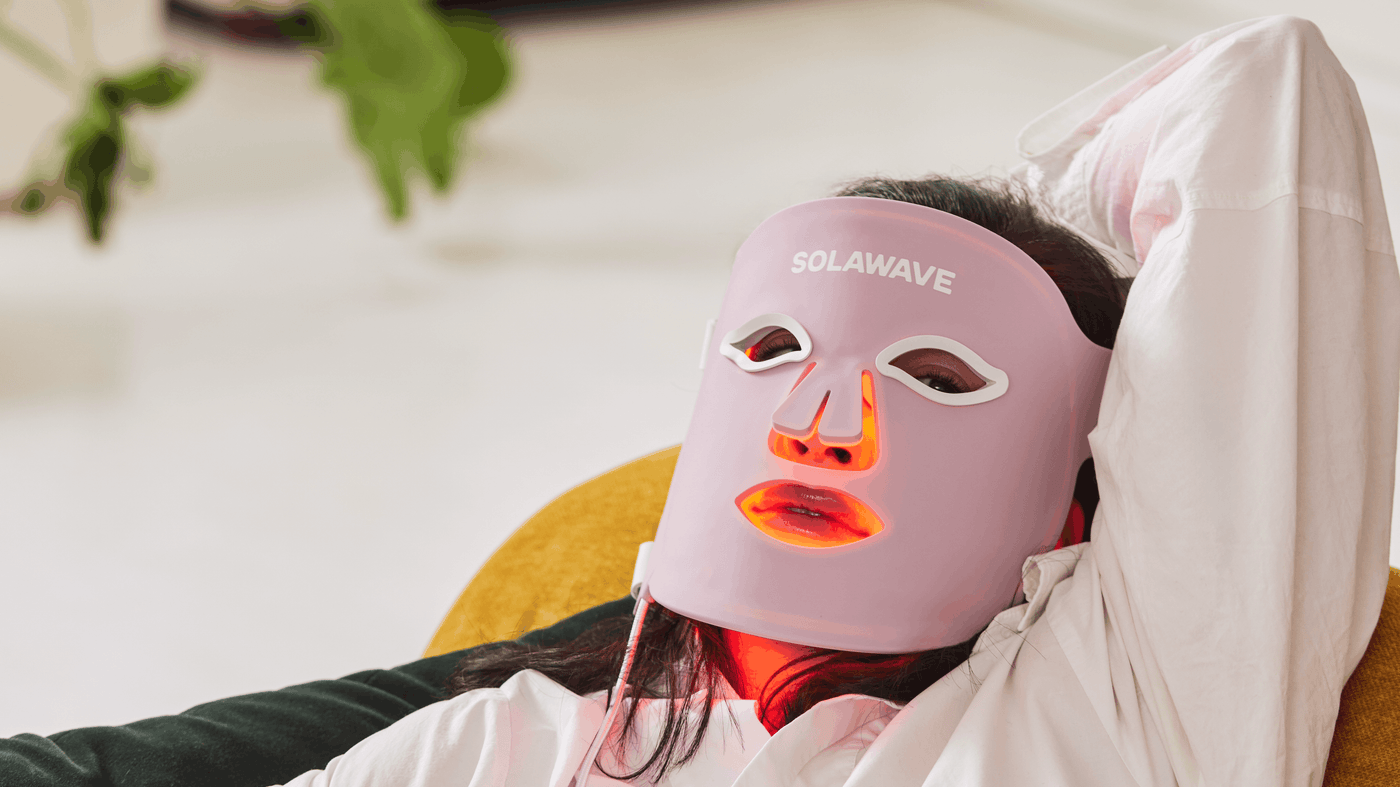
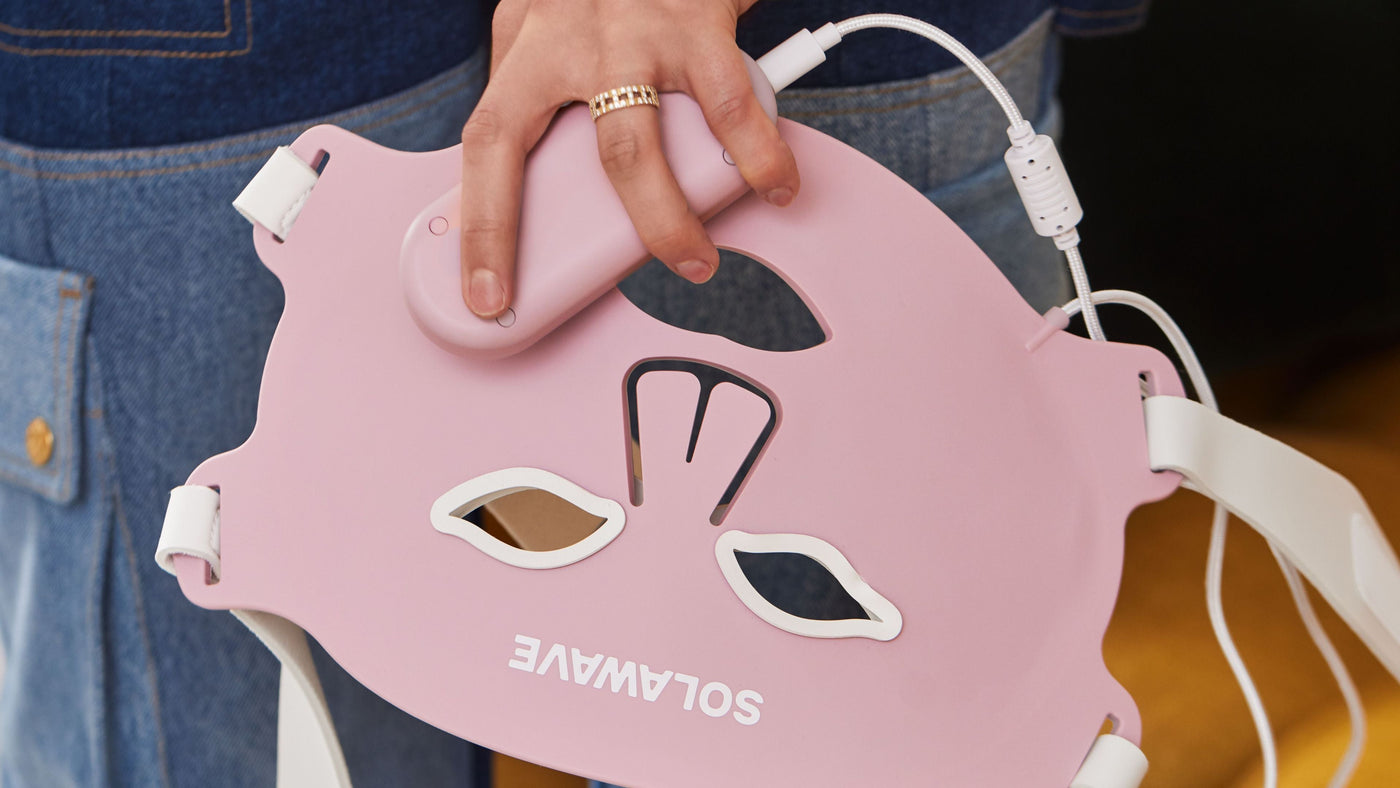
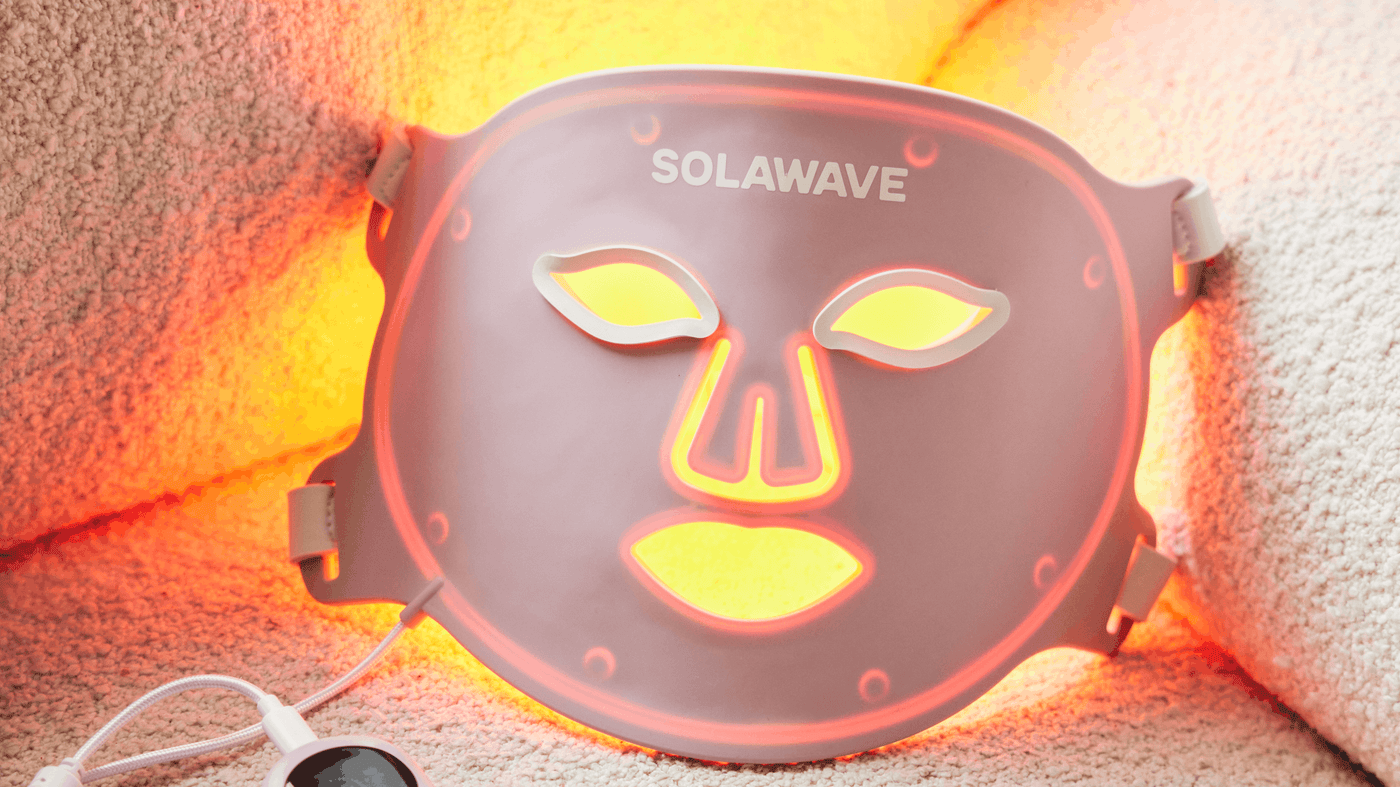
Wrinkle Retreat Pro LED Face Mask — the overkill pick. At $399 with 320 LEDs across four wavelengths, this mask is engineered for collagen and fine lines, not active breakouts. It's a well-built device, but it's solving a problem a 16-year-old doesn't have yet. Skip it for teenage acne specifically — revisit this category once anti-aging becomes the actual concern, years from now.


Full-face anti-aging masks as a first purchase. A $399 device built for collagen and wrinkles is the wrong entry point for a teenager whose only concern is breakouts — it's paying for wavelengths that don't apply yet.
Red-only devices with no blue light option. Red light calms inflammation after the fact; it doesn't touch the bacteria causing the breakout. For active acne, that's an incomplete tool.
Skipping device hygiene entirely. Acne-prone skin plus an unwiped device surface is a recipe for the exact bacterial spread you're trying to treat. A device that never gets cleaned between uses can undo the treatment's benefit.
| Device | Price (2026) | Best For | Session Time | Verdict |
|---|---|---|---|---|
| Bye Acne Spot Treatment | $69 | Occasional active breakouts | 3 minutes | Buy |
| Radiant Renewal Skincare Wand | $169 | Broader acne-prone skin | Under 5 minutes per session | Buy |
| LightBoost Hyaluronic Serum | $38 | Pairing with wand sessions | N/A (topical) | Consider |
| Wrinkle Retreat Pro Face Mask | $399 | Anti-aging, not acne | 10 minutes | Skip |
If the device you're considering doesn't mention blue light anywhere in its description, it's not built for active breakouts — it's built for something else.
Is red light therapy safe for teenage acne?
FDA-cleared red and blue light devices are considered safe for teenage skin when used as directed, and Solawave's lineup carries FDA clearance across its acne-focused devices. Check the device listing for explicit FDA-cleared status before buying, not softer terms like 'FDA-registered.'
What's the best red light therapy for teenage acne in 2026?
For occasional breakouts, a fast spot treatment like Solawave's Bye Acne at $69 fits a teen's schedule better than a full-face mask. For broader acne-prone skin, a handheld wand like the $169 Radiant Renewal covers more area in one session.
How is red light therapy different from blue light therapy for acne?
Red light reduces inflammation in the skin's deeper layers, while blue light targets the surface bacteria that cause breakouts. Acne devices that combine both wavelengths address more of the problem than a red-only device.
How often should a teenager use a red light therapy device?
Most FDA-cleared spot treatments and wands are designed for daily or near-daily short sessions rather than occasional use. A 3-minute daily habit beats a 15-minute session used once a week.
Can red light therapy replace acne medication for teens?
Red light therapy devices are designed for mild-to-moderate acne management, not as a replacement for prescribed treatment in moderate-to-severe cases. Severe or cystic acne should involve a dermatologist alongside any at-home device.
Do red light therapy devices work on hormonal acne?
They reduce inflammation and surface bacteria linked to hormonal breakouts, but they don't change hormone levels driving the acne itself. Consistent use manages flare severity rather than eliminating the underlying cause.
Is it safe to pair a serum with a red light therapy wand for teens?
Lightweight, non-comedogenic serums formulated for use with a specific wand, like a hyaluronic acid gel, generally won't clog pores the way heavier creams can. Add a serum after the device is already part of the routine, not as the first purchase.
How much does red light therapy for teenage acne cost in 2026?
Targeted spot treatments start around $69, while full-face handheld wands run closer to $169 in 2026. Full LED face masks built for broader anti-aging use cost significantly more, often $399 and up, and aren't necessary for acne alone.
The detail most parents miss: the device's wavelength mix matters more than its price tag. A $399 mask with the wrong wavelengths for acne does less for a teenager's breakouts than a $69 spot treatment built specifically for blue-and-red acne targeting. Match the tool to the actual skin problem before matching it to the biggest number on the price tag.
 Acne
Acne