Rated 4.7 out of 5 stars
4.7 / 5


726,000+ customers
Free 60-Day Returns
1-Year Warranty
726,000+ customers
Free 60-Day Returns
1-Year Warranty
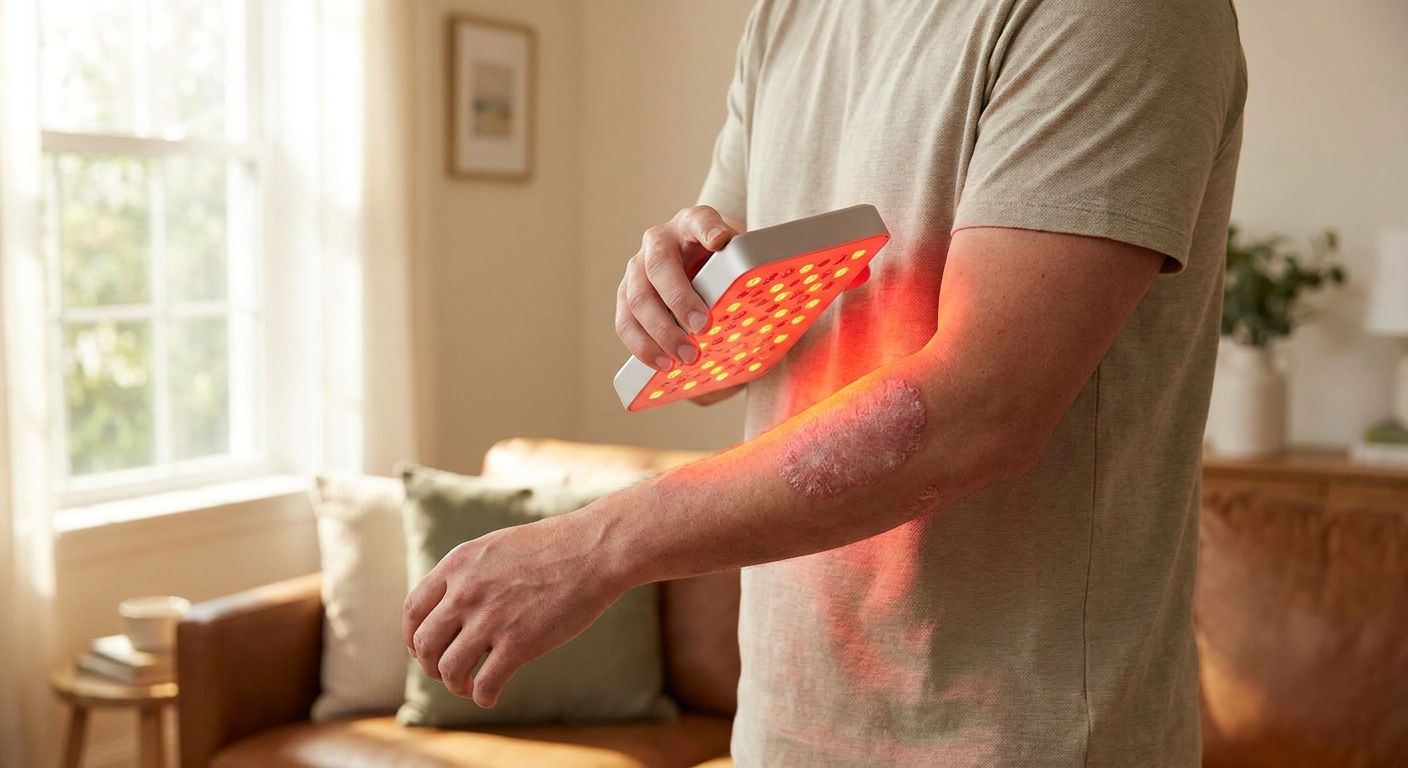
Red light therapy shows up constantly in psoriasis forums, but most at-home LED devices aren't built or cleared to treat plaques — this guide separates what red light can realistically do for flare-associated skin discomfort from what actually needs a dermatologist and narrowband UVB.
Psoriasis flares are inflammatory, and the medical treatment that actually clears plaques is narrowband UVB phototherapy, delivered at roughly 311-313nm — a UV wavelength, not red light. Red and near-infrared light sit in a completely different range, typically 630-660nm for red and 810-850nm for near-infrared, and their studied effects are on collagen stimulation, surface redness, and general skin comfort, not psoriatic plaque reduction.
That distinction matters because a lot of skincare marketing blurs the line between "light therapy" and "phototherapy," and people with psoriasis are often searching for anything that might calm a flare. Solawave sells FDA-cleared red light therapy devices for wrinkles, acne, and dark spots — none of them are cleared to treat psoriasis, and no reputable brand should claim otherwise in 2026.
This guide is for someone managing psoriasis under a dermatologist's care who wants to know whether an at-home red light device can help with the skin redness, texture, or self-consciousness that comes with a flare — not someone looking to replace prescribed treatment. If you're dealing with active plaques on your scalp, elbows, or knees, a facial LED mask isn't the tool; talk to your dermatologist about phototherapy or topical options first.
Check the specific indication, not just the phrase "FDA-cleared." A device cleared for wrinkles and acne is not cleared for psoriasis, and marketing copy that implies otherwise is a red flag on any brand's site in 2026.
A legitimate red light therapy device lists its wavelengths in nanometers — commonly 630-660nm red and 810-850nm near-infrared. If a product just says "phototherapy" without a number, you can't tell whether it's red LED or UV, and that difference is the whole point for psoriasis-prone skin.
Most consumer LED masks are built for the face and neck. Psoriasis flares frequently hit the scalp, elbows, and knees, areas a face mask simply doesn't cover, so match the device to where you actually need comfort, not where the marketing points you.
Any serum or cream paired with a light device should be fragrance-conscious and free of harsh actives if your skin is already sensitized from a flare. Look at ingredient lists the same way you'd check a new moisturizer during a flare-up.
Red light therapy benefits build with regular, short sessions rather than occasional long ones. A device you'll actually use most days beats a more powerful one that sits in a drawer.
Psoriasis-prone skin has a compromised barrier, so any device that touches your face repeatedly needs to be sanitized between uses to avoid introducing irritation or infection risk.
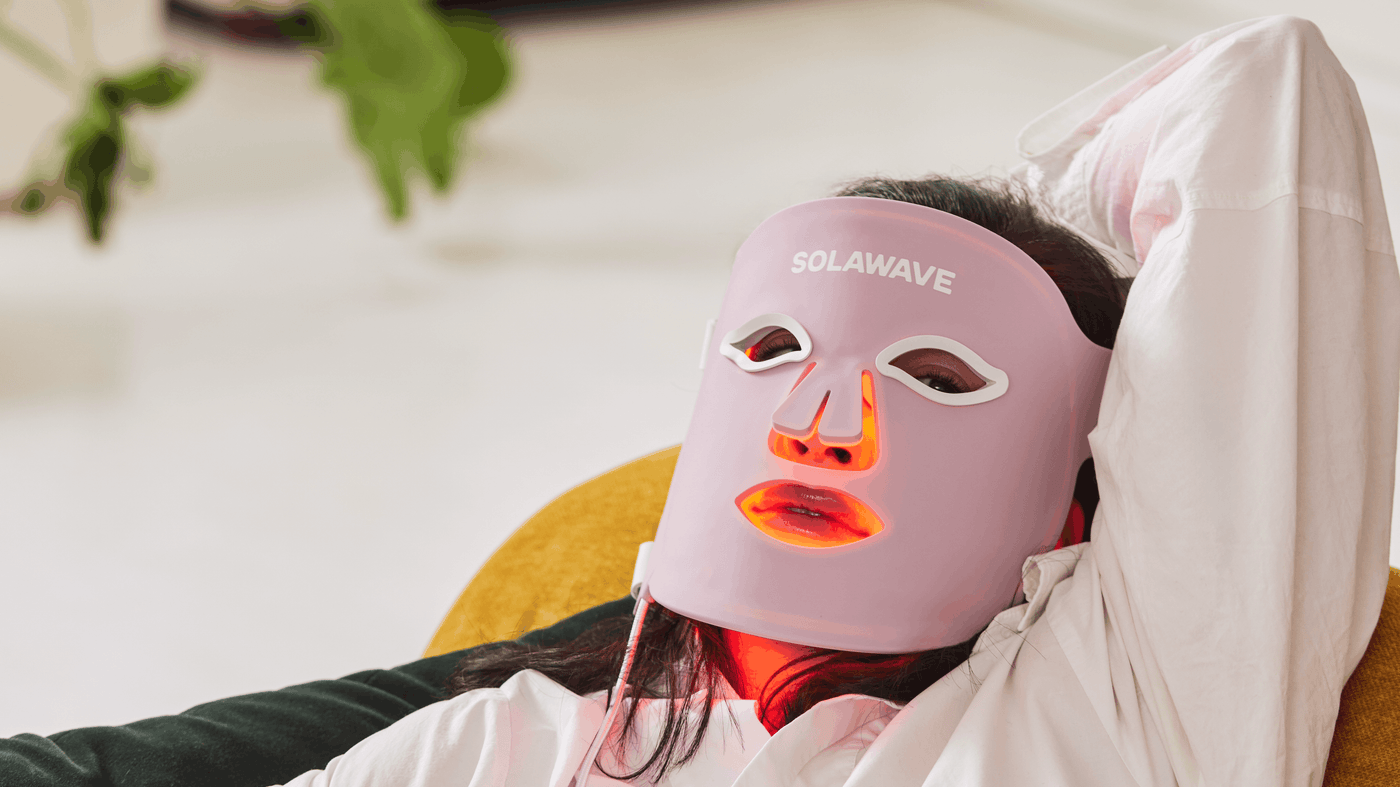
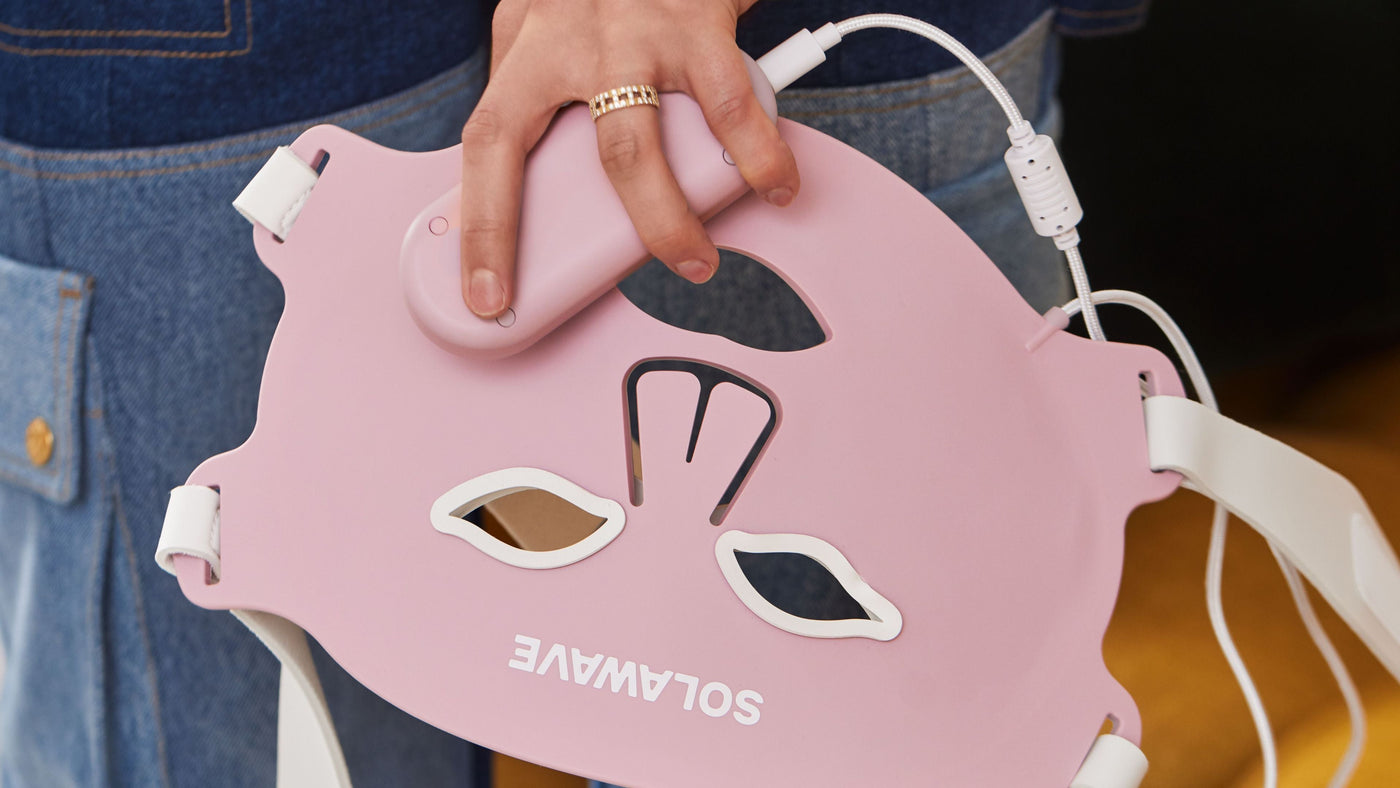
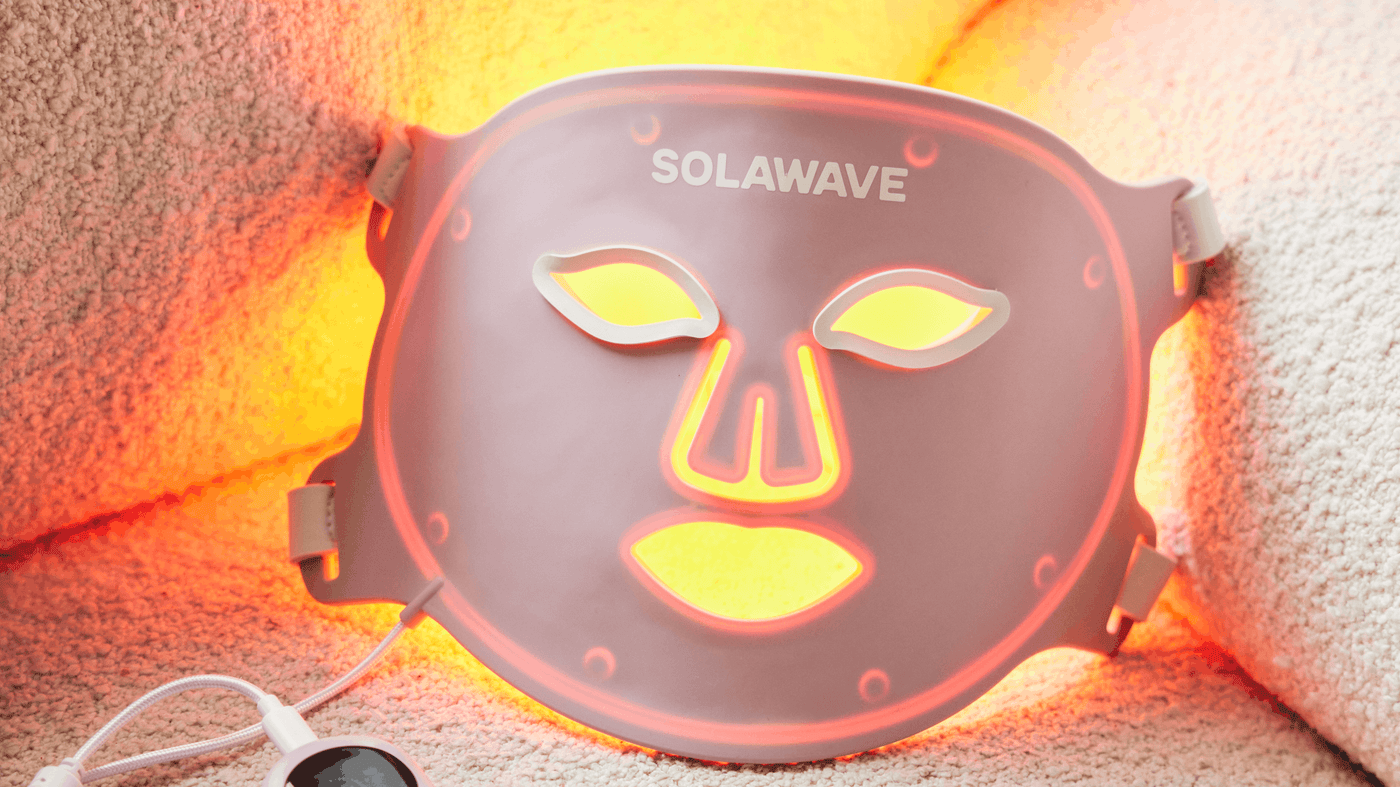
The safe pick: Wrinkle Retreat Pro LED Face Mask — This mask runs 320 LEDs across four wavelengths (red, infrared, deep red, and amber) and is FDA-cleared for wrinkles, acne, and dark spots at $399. It's built for full-face coverage sessions, which makes it a reasonable comfort tool for facial redness between flares, but it is not indicated for psoriasis and shouldn't be marketed or used as one. Buy if you want a full-face routine and understand the clearance boundary; Skip if you're looking for plaque treatment.
The targeted option: 4-in-1 Radiant Renewal Skincare Wand — At $169, this handheld wand lets you spot-treat specific areas of facial redness rather than covering the whole face, which matters if only part of your skin feels irritated during a flare. It combines red light therapy with additional modes in a single device. Buy for targeted, lower-cost sessions; it pairs with the Radiant Renewal Skincare Wand as an entry point before committing to a full mask.
The support layer: LightBoost Face & Neck Cream — At $52, this cream is formulated to enhance LED mask sessions rather than treat psoriasis itself. If your skin is flare-sensitive, patch test any new cream first regardless of what it's paired with. Consider it as a companion product, not a standalone fix.
The hygiene essential: Device Cleaning Wipes — At $15, these alcohol-based wipes sanitize any LED device between sessions, which matters more when your skin barrier is already stressed by a flare. Buy this alongside any device purchase; it's the cheapest way to reduce irritation risk from device reuse.


| Product | Price | FDA Clearance | Best for | Verdict |
|---|---|---|---|---|
| Wrinkle Retreat Pro LED Face Mask | $399 | Wrinkles, acne, dark spots | Full-face redness comfort | Buy |
| 4-in-1 Radiant Renewal Skincare Wand | $169 | Wrinkles, acne, dark spots | Targeted spot treatment | Buy |
| LightBoost Face & Neck Cream | $52 | Enhances LED sessions | Companion hydration | Consider |
| Device Cleaning Wipes | $15 | N/A (hygiene product) | Sanitizing between uses | Buy |
| Unbranded UV "phototherapy" lamp | Varies | Undisclosed | Nothing safe | Skip |
Does red light therapy treat psoriasis?
Red light therapy is not FDA-cleared to treat psoriasis in 2026 — the clinical standard for plaque reduction is narrowband UVB phototherapy at 311-313nm, a UV wavelength distinct from red or near-infrared light.
Is red light therapy safe to use during a psoriasis flare?
Talk to your dermatologist before adding any new device during an active flare, since sensitized skin reacts differently to heat, pressure, and topical products used alongside a session.
What's the difference between red light therapy and UVB phototherapy?
Red light therapy uses visible red (630-660nm) and near-infrared (810-850nm) wavelengths aimed at skin comfort and collagen, while UVB phototherapy uses a UV wavelength around 311-313nm specifically studied for psoriasis plaque clearance.
Can Solawave devices treat psoriasis plaques?
No — Solawave's red light therapy devices, including the Wrinkle Retreat Pro LED Face Mask, are FDA-cleared for wrinkles, acne, and dark spots, not psoriasis.
How much does an at-home red light therapy device cost in 2026?
Consumer red light devices range from handheld wands around $169 to full LED masks around $399, based on current Solawave pricing.
Where does psoriasis typically flare, and does that affect which device to buy?
Psoriasis commonly affects the scalp, elbows, and knees, areas most facial LED masks don't cover, so a face-focused device is only relevant if your flare involves facial skin.
Do I need a dermatologist's approval before using red light therapy alongside psoriasis treatment?
Yes — check with your dermatologist before layering any new light device or topical onto an existing prescribed psoriasis treatment plan to avoid interactions or irritation.
The most overlooked detail in this entire category is wavelength disclosure — a legitimate red light therapy device will always state its nanometer range on the product page, and a psoriasis-specific "phototherapy" claim without that number is the single fastest way to spot a device that's either mislabeled or outright UV.
 Acne
Acne