Rated 4.7 out of 5 stars
4.7 / 5


726,000+ customers
Free 60-Day Returns
1-Year Warranty
726,000+ customers
Free 60-Day Returns
1-Year Warranty
Melasma doesn't respond to skincare the way acne or fine lines do, and the wrong red light therapy device for melasma-prone skin can mean months of consistent use with nothing to show for it.
Melasma is a chronic pigmentation condition driven mainly by hormones, UV exposure, and heat — not by clogged pores or slow cell turnover the way acne or dullness is. That distinction matters when you're shopping for a device in 2026, because a lot of at-home light therapy marketing lumps every skin concern into one "glow up" pitch.
Professional treatments like laser resurfacing and intense pulsed light can actually trigger rebound pigmentation in melasma-prone skin, especially in medium-to-deep skin tones. Red light therapy sits in a different category: it's generally used to support collagen and calm inflammation rather than ablate the skin, which is why it's worth understanding before you add it to a melasma routine.
None of this means red light therapy for melasma is a cure. It means the device you pick, and how you pair it with SPF and dermatologist care, decides whether it helps or just sits in a drawer by March.
This guide is for people managing melasma — patches on the cheeks, forehead, upper lip, or jawline — who want an at-home red light therapy routine that supports skin health without adding heat or irritation to already reactive pigmentation. If you're using Solawave's red light therapy devices alongside a dermatologist's treatment plan, or you're evaluating your first device, the criteria below apply directly to you. This isn't for anyone chasing a same-week fix — melasma management is a long game, and any device claiming otherwise is overselling.
Melasma-prone skin needs red and near-infrared wavelengths, not blue light, which is formulated for acne-causing bacteria and does nothing for pigmentation. Check the product listing for stated wavelength ranges before you check anything else — LED count and price are secondary.
Heat is one of the known triggers for melasma flare-ups, so a device that warms the skin noticeably during use is a risk, not a feature. Devices designed to stay at a low, consistent temperature are the safer category for this specific condition.
FDA clearance tells you a device met a specific safety and efficacy bar for a stated use — usually wrinkles, fine lines, or overall skin appearance — not melasma specifically. Read what the clearance actually covers rather than assuming it applies to pigmentation.
Melasma rarely shows up in one neat spot. A full-face mask makes sense if patches span cheeks and forehead; a handheld wand makes more sense for a localized upper-lip or jawline pattern where you don't want to treat skin that doesn't need it.
Serums formulated to work alongside a light therapy device — with ingredients like niacinamide, which has a long track record for supporting an even-looking tone — add a layer that the device alone doesn't cover. This isn't a melasma treatment claim; it's about giving reactive skin a gentler routine overall.
A 20-minute mask session sounds fine in theory but gets skipped by week three. A 3-5 minute wand routine you'll actually do daily beats a longer protocol you abandon by the second week of 2026.
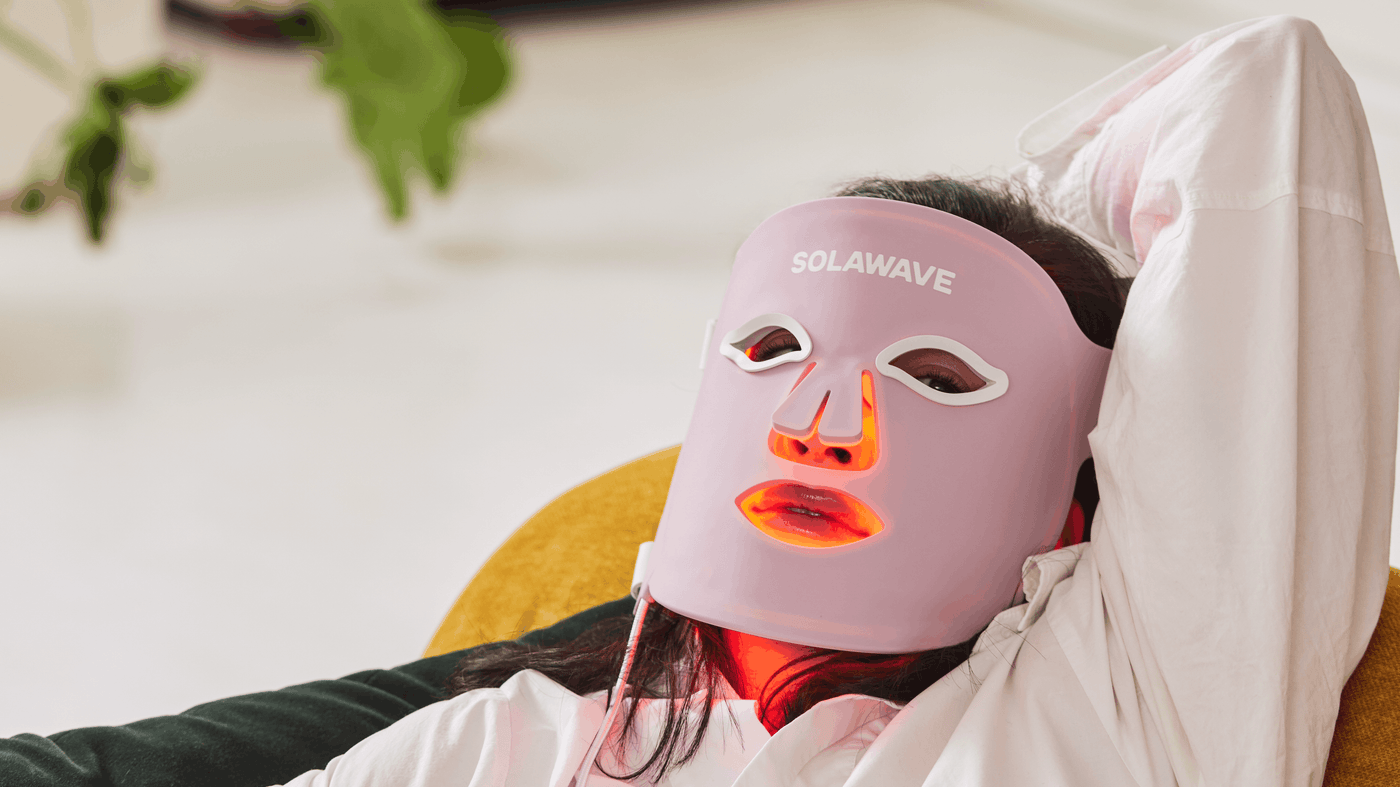
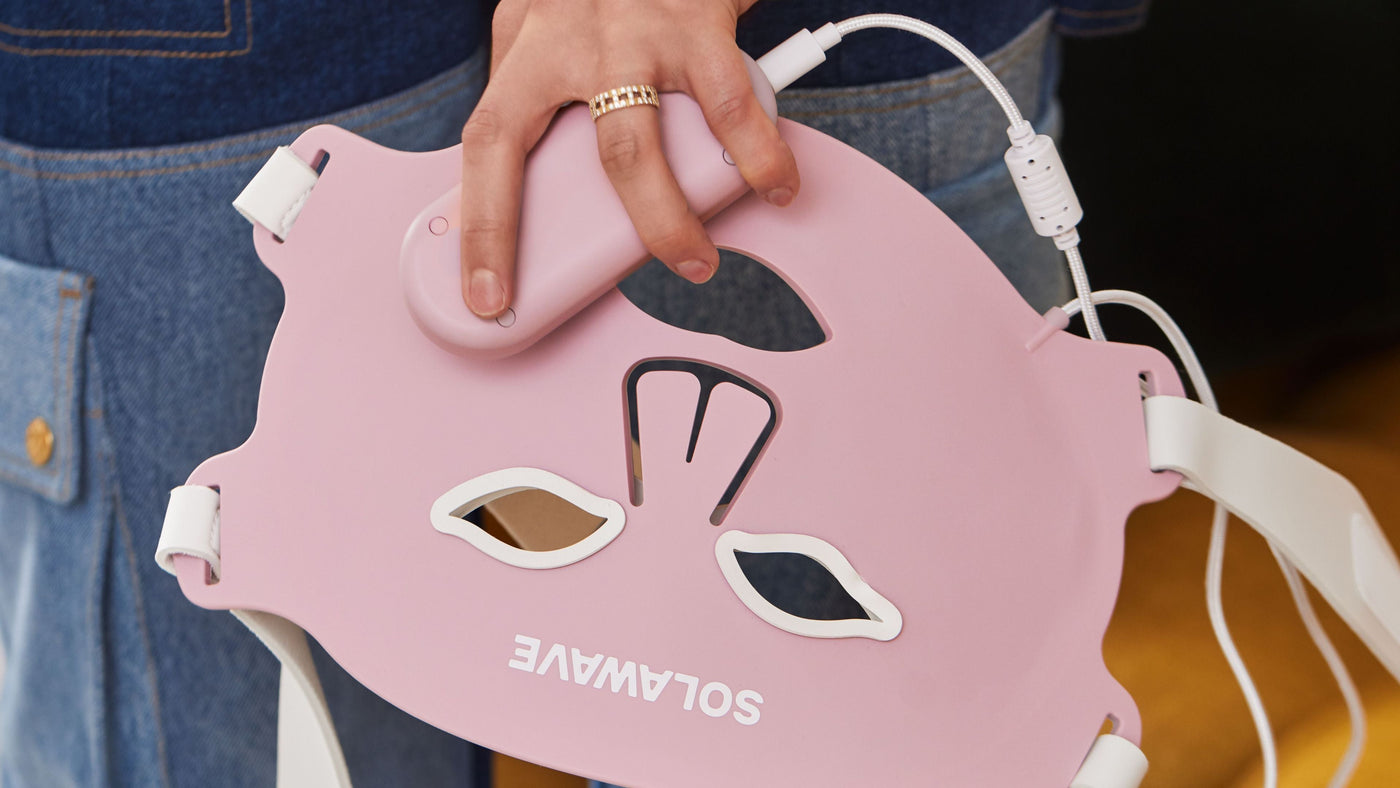
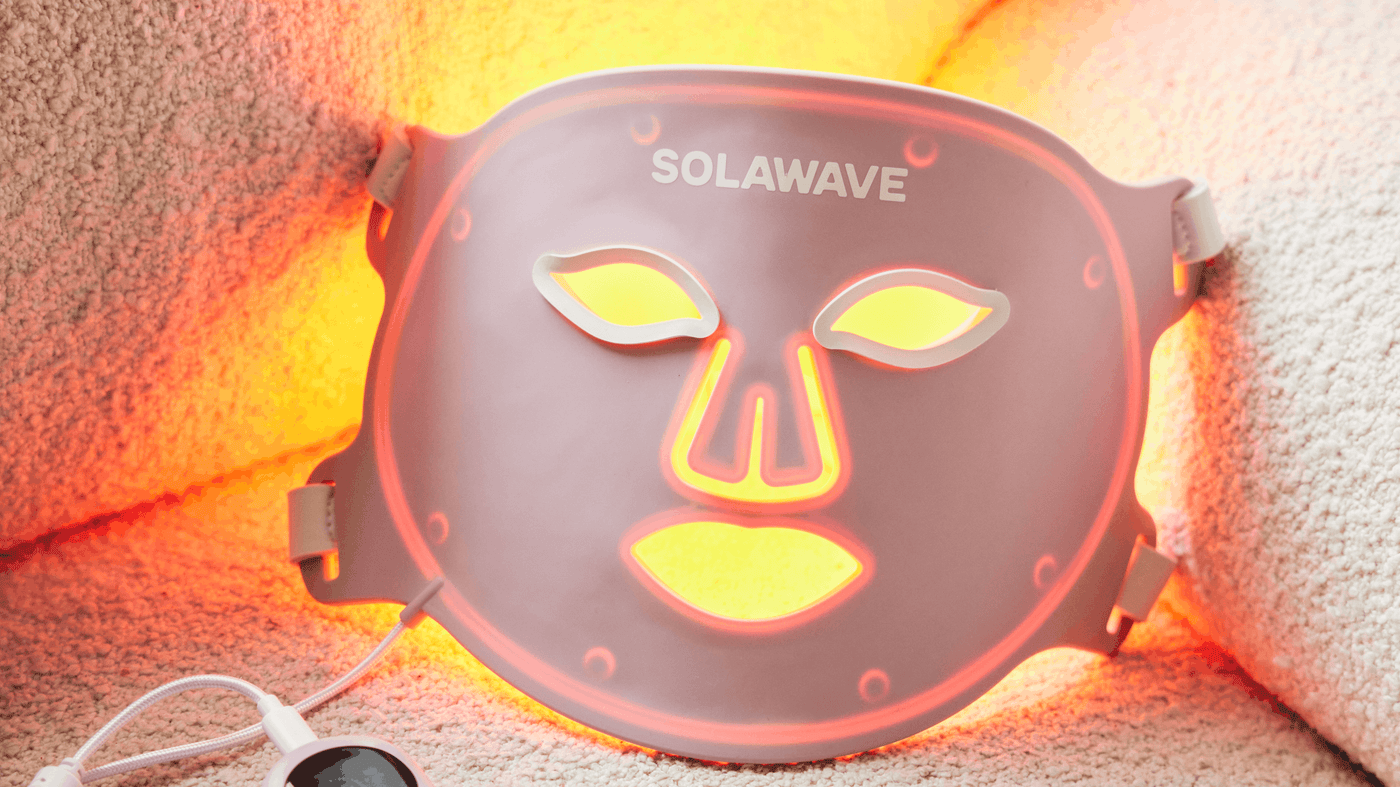
The full-face pick: Solawave Wrinkle Retreat Pro. This FDA-cleared LED face mask packs 320 LEDs across red, infrared, deep red, and amber light — built for whole-face coverage rather than spot treatment. At $399, it's the right call if your melasma spans cheeks, forehead, and jawline and you want one session to cover all of it. Verdict: Buy if your pigmentation is broad; Skip if you only have one small patch, since you'll be paying for coverage you don't need.
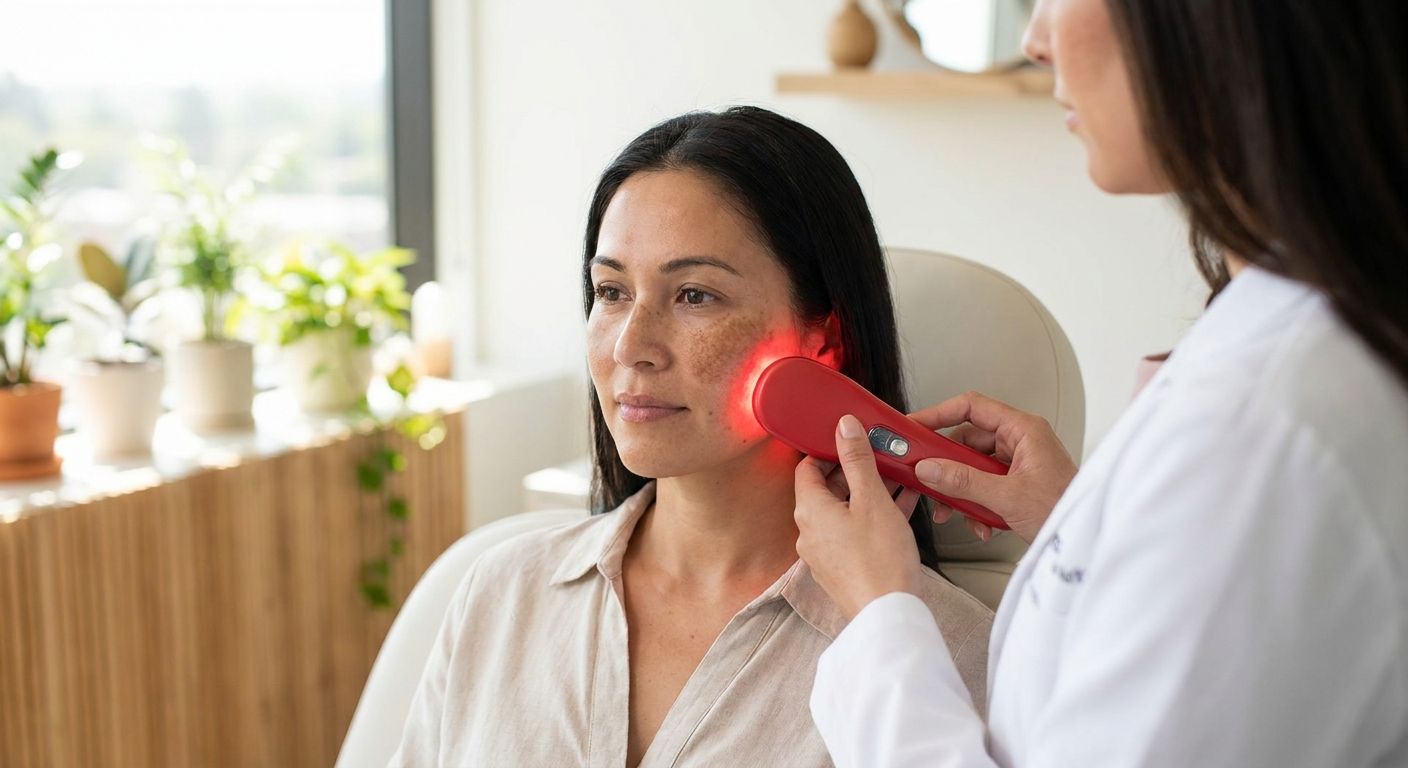
The targeted pick: Solawave Radiant Renewal Wand. At $169, this handheld device treats a specific area in a few minutes a day — the better fit for an isolated upper-lip or jawline patch, or for layering red light therapy into a routine without committing to a full mask. Verdict: Buy for localized melasma; it's also the lower-cost entry point if you're testing whether red light therapy fits your routine before spending on a mask.
The pairing pick: Solawave LightBoost Niacinamide Face & Neck Serum. Niacinamide is one of the more studied ingredients for supporting an even-looking tone, and this serum is formulated to work alongside Solawave's light therapy devices rather than replace them. Verdict: Consider as an add-on once your device routine is locked in — it's not a stand-alone melasma fix.
The décolletage option: Neck & Chest Pro Light Therapy Mask. Melasma less commonly extends to the chest, but for those it does affect, this FDA-cleared mask is built specifically for that area rather than repurposing a face device. Verdict: Consider only if your pigmentation pattern actually reaches the chest — otherwise it's an unnecessary purchase.


| Device | Best for | Session time | Price | Verdict |
|---|---|---|---|---|
| Wrinkle Retreat Pro | Broad facial pigmentation | Several minutes daily | $399 | Buy |
| Radiant Renewal Wand | Localized patches | Under 5 minutes daily | $169 | Buy |
| Neck & Chest Pro | Décolletage pigmentation | Several minutes daily | $349 | Consider |
| LightBoost Niacinamide Serum | Pairing with device routine | Applied post-session | $56 | Consider |
Is red light therapy safe for melasma?
Red light therapy is generally considered lower-risk than heat-based treatments like IPL or laser for melasma-prone skin, since it doesn't rely on intense heat that can trigger rebound pigmentation. It's still worth patch-testing and checking with a dermatologist before starting a routine, since melasma reacts individually to different triggers.
Can red light therapy make melasma worse?
Red and near-infrared light therapy itself isn't a known melasma trigger the way heat and UV exposure are, but any device that heats the skin noticeably during use carries more risk. Choosing a low-heat device and pairing it with daily SPF reduces that risk further.
What's the best red light therapy device for melasma?
For broad facial pigmentation, a full-face mask like Solawave's Wrinkle Retreat Pro covers the most ground in one session. For a single patch on the upper lip or jawline, a handheld wand like the Solawave Radiant Renewal is the more practical, lower-cost option.
Is blue light therapy bad for melasma?
Blue light therapy is formulated to target acne-causing bacteria and isn't built to address pigmentation, so it's simply the wrong tool for melasma rather than a harmful one. Red and near-infrared wavelengths are the relevant category to look for instead.
How often should I use red light therapy for melasma?
Daily short sessions tend to be more sustainable than longer, less frequent ones — a 3-5 minute wand routine you actually keep up beats a 20-minute mask session you skip by week three. Follow the specific device's usage guidance for exact timing.
Does red light therapy replace dermatologist treatment for melasma?
No. Red light therapy for melasma works best as a supporting piece of a routine that includes daily SPF and, for most people, a dermatologist-guided treatment plan. Treat it as an add-on, not a substitute.
How much does a red light therapy device for melasma cost in 2026?
Handheld wands like the Solawave Radiant Renewal start around $169 in 2026, while full-face LED masks like the Wrinkle Retreat Pro run $399. Pairing serums typically add $40-$56 to the routine.
Can I use red light therapy with hydroquinone or other melasma treatments?
Many people layer red light therapy sessions with topical melasma treatments prescribed by a dermatologist, applying the device on clean skin and following with prescribed products afterward. Check with your dermatologist about timing and any specific product interactions.
The detail most people skip: melasma triggered or worsened by heat means a device's temperature during use matters more than its LED count or price tag. A $399 mask that runs warm can undo more progress than a $169 wand that stays cool — check heat behavior before you check anything else on the spec sheet in 2026.
 Acne
Acne