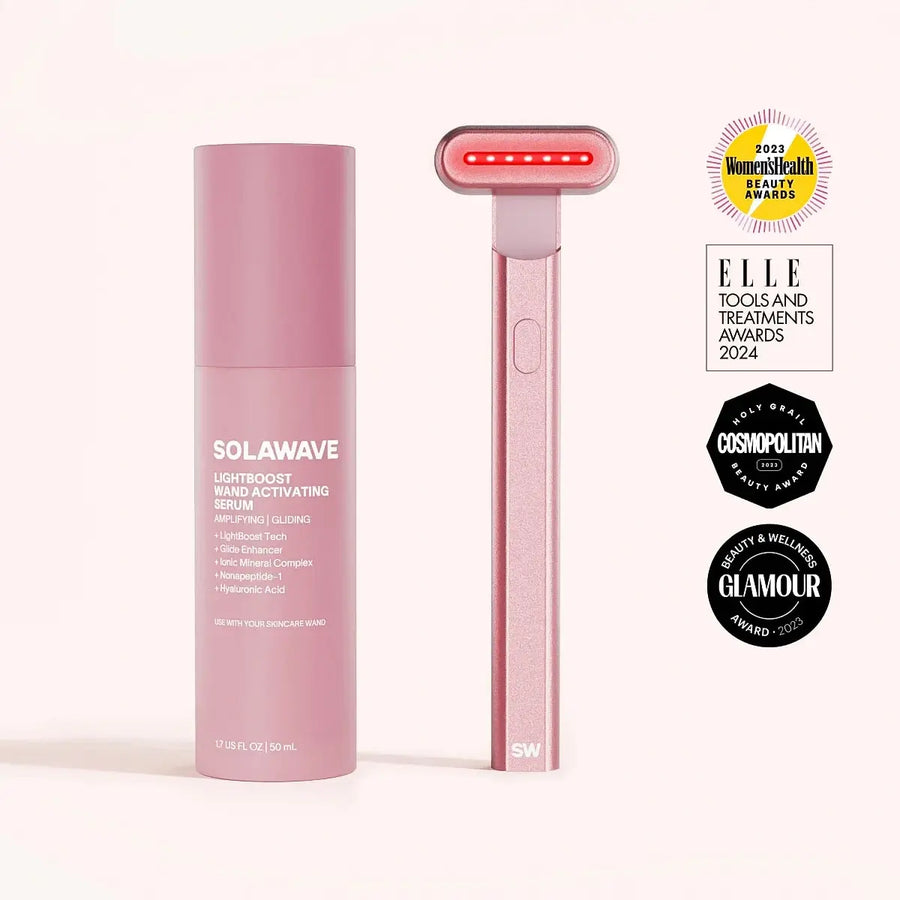
At-home facial treatments have come a long way. What once meant a sheet mask and a hope for the best now includes FDA-cleared light therapy and galvanic current technology you can use on your own time. No waiting rooms, no recovery days, and no guessing if it's working.
Whether you want to smooth fine lines, reduce puffiness, or give your skin a firmer, more toned look, the right tools can help you build a routine that fits into your life and keeps up with your goals.
What Does Facial Toning Even Mean?
Facial toning is all about helping your skin look firmer, more lifted, and more defined over time. Think of it like giving your skin a workout. Instead of weights, you're using light energy and gentle electrical currents that work beneath the surface.
Red light therapy supports collagen production, which helps skin stay firm and smooth. Galvanic current drives hydrating serums deeper into the skin, so your products work harder than they would on their own. When these two technologies are used together, they help promote a more sculpted, refreshed look with consistent use.
Why Are At-Home Facial Treatments So Popular Now?
A few years ago, getting a professional facial treatment meant booking an appointment weeks out and spending hundreds of dollars per session. Now, FDA-cleared devices bring that same technology home for a one-time cost.
Here's what makes at-home treatments a strong option for most skin types and tones.
- They save time. Most treatments take just 3 to 12 minutes.
- They're non-invasive. No needles, no downtime, no irritation.
- They work across all skin tones. Red light targets cells, not melanin, so it's safe for every Fitzpatrick skin type.
- They fit any schedule. Morning, night, weekday, weekend. You choose.
Clinically tested devices have shown results like visibly reduced fine lines, brighter skin, and improved texture in as few as 8 weeks of regular use. Results vary, so consistency is key.
What Should You Look for in a Facial Treatment Device?
Not every device is built the same. When choosing an at-home facial treatment tool, a few things matter most.
FDA Clearance
This confirms a device has been reviewed for both safety and effectiveness. It's one of the clearest signals that a product is backed by real science, not just marketing.
Multiple Technologies in One
Some devices combine red light therapy with galvanic current, therapeutic warmth, and facial massage. This kind of multi-tech approach helps promote better absorption of your serums, supports circulation, and encourages a lifted, toned appearance in one session.
Clinical Backing
Look for devices that share their clinical study results openly, including sample size and study length. Independent third-party testing adds another layer of trust.
How Does a Facial Toning Routine Look?
A solid at-home facial toning routine doesn't need to be long or complicated. Here's a simple approach that works well.
- Step 1: Start with clean skin. Remove makeup and any heavy products so your device can make direct contact.
- Step 2: Apply a water-based serum. If you're using a device with galvanic current, this step is essential. The serum acts as a conductive medium and helps active ingredients absorb deeper.
- Step 3: Use your device. Follow the treatment zones and time guidelines. Most sessions run between 3 and 12 minutes depending on the device and area.
- Step 4: Follow up with your favorite moisturizer or cream to lock in hydration.
Use this routine 3 to 5 times per week for the best results. Most clinical studies show visible improvements starting around the 4- to 8-week mark with regular use.
How Do Professional Treatments Compare to At-Home Options?
Professional facials and at-home devices both use proven technologies like light therapy. The difference comes down to cost, convenience, and commitment.
A single in-office session can cost $150 to $500 or more. At-home devices are a one-time purchase, and many come with risk-free return policies and warranties so you can try them with confidence.
Professional treatments can deliver stronger results per session. But consistent at-home use over time has been shown to support similar benefits, especially for fine lines, firmness, and overall skin tone. For many people, combining the two works best.
Who Can Benefit from Facial Treatment Devices?
These tools are designed for a wide range of skin types, tones, and concerns. They can help support results for anyone looking to address fine lines and wrinkles, uneven skin tone, loss of firmness, puffiness around the jawline and under-eye area, dull or tired-looking skin, and neck and chest aging.
Because red light therapy works at the cellular level and does not target melanin, it's a safe and effective option across all skin tones, including deeper complexions that can be more sensitive to laser or IPL treatments.
Frequently Asked Questions
Is facial toning safe for sensitive skin?
Yes. Red light therapy and galvanic current are non-invasive and gentle. There's no UV exposure, no harsh chemicals, and no downtime. These treatments are safe for all skin types, including sensitive skin.
How long does it take to see results from at-home facial treatments?
Most people start noticing smoother, firmer-looking skin within 4 to 8 weeks of consistent use, about 3 to 5 sessions per week. Individual results vary based on skin type and routine.
Can I use a facial treatment device with my existing skincare products?
Devices with galvanic current need a water-based serum to function properly. Oil-based products can block the current. Check your device's guidelines and use a compatible serum for the best results.
What's the difference between galvanic current and microcurrent?
Galvanic current uses a steady electrical flow to push serums deeper into the skin for better absorption. Microcurrent sends tiny pulses to stimulate facial muscles. These are two different technologies with different purposes.
Do at-home devices work on the neck and chest too?
Yes. Some devices are specifically designed for the neck and chest, which tend to show signs of aging earlier because the skin there is thinner and more exposed. Targeted masks and portable tools both help address these areas.


 Celebrity Fave


 Awarded #1 LED Mask


 Fan Favorite