Rated 4.7 out of 5 stars
4.7 / 5


726,000+ customers
Free 60-Day Returns
1-Year Warranty
726,000+ customers
Free 60-Day Returns
1-Year Warranty
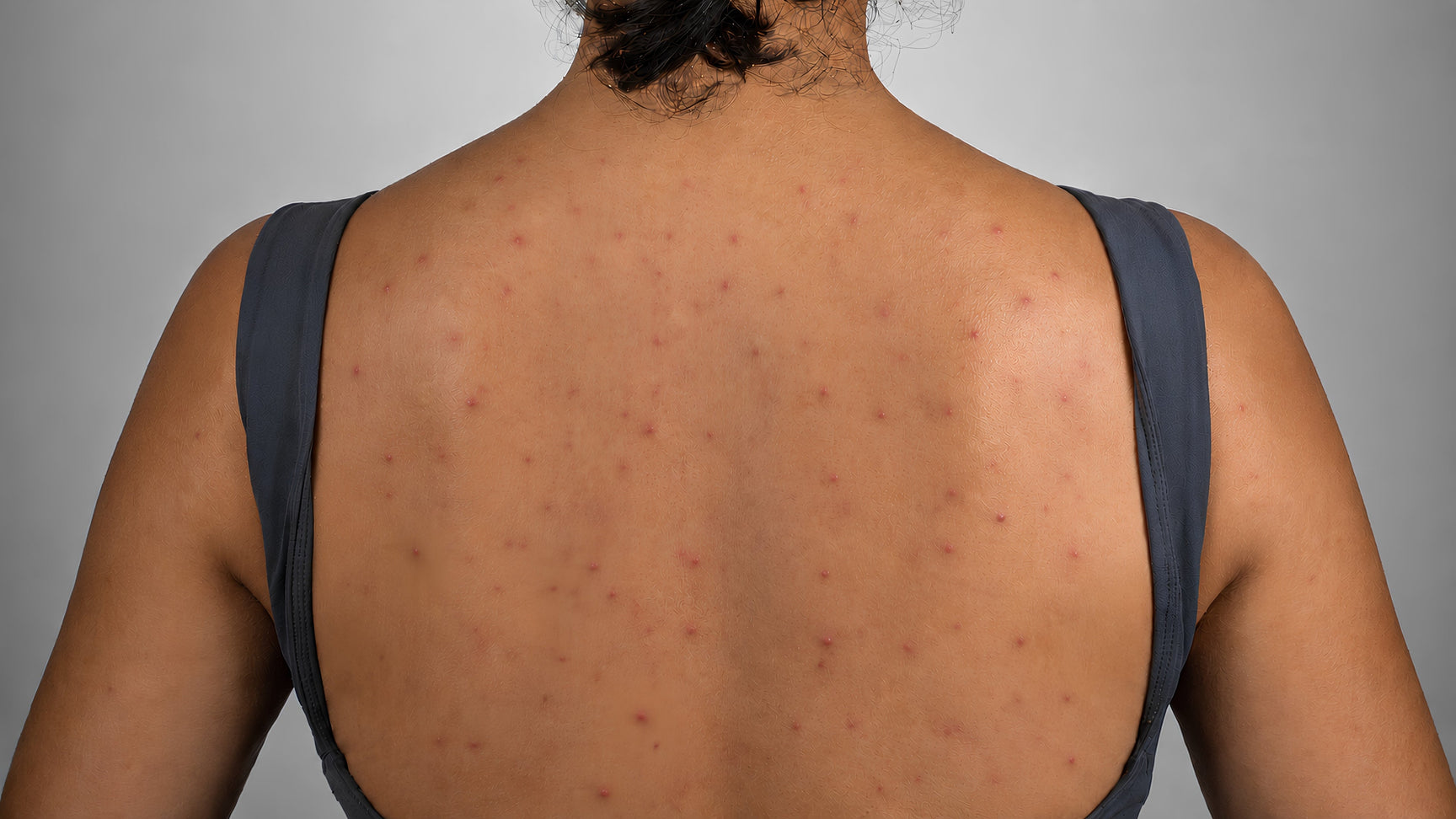
Back acne is one of those skin concerns that doesn't get nearly enough attention. It hides under your clothes, shows up uninvited at the pool, and rarely responds to the same treatments that work on your face. If you've been wondering whether red light therapy for back acne is worth trying, the research is encouraging.
Before diving into the solution, it helps to understand what's happening on your back. The skin on your back is thicker than facial skin and packed with sebaceous glands that produce oil. When excess oil, dead skin cells, and acne-causing bacteria build up inside pores, the result is inflammation, breakouts, and sometimes painful cystic lesions.
Back acne is driven by the same three core factors as facial acne. Excess sebum production, bacterial overgrowth (specifically Propionibacterium acnes), and inflammation. The challenge is that traditional topical treatments like benzoyl peroxide and salicylic acid can be difficult to apply evenly across your back. They can also cause dryness, irritation, and peeling on an area that's already hard to reach.
That's where light-based treatments come in. And specifically, that's where the question gets interesting. Does red light therapy help back acne?
The short answer is yes, research supports it. Red light therapy, also known as photobiomodulation, uses specific wavelengths of LED light to interact with skin cells at a biological level. When skin absorbs red light at 630nm, it triggers a response in the mitochondria, the energy centers inside each cell. This leads to increased production of ATP (adenosine triphosphate), the molecule that fuels cellular function and repair.
For acne specifically, this process does a few important things. It modulates inflammatory pathways, helping calm the redness and swelling around active breakouts. It supports faster cell turnover, which can help acne lesions resolve more quickly. And it supports the skin's natural repair process, which is valuable for reducing the marks that acne leaves behind.
A clinical trial published in the Journal of Drugs in Dermatology evaluated red light therapy at 630nm on patients with mild to moderate acne vulgaris. The results were significant. Acne lesions decreased from an average of 27.7 to 6.3 after treatment, a statistically meaningful reduction that confirmed the safety and effectiveness of red wavelength light therapy for acne.
If you're wondering whether at-home LED devices can deliver real results, a systematic review published in JAMA Dermatology by Mass General Brigham researchers provides some compelling answers. The review analyzed data from six randomized controlled trials involving 216 participants and found that at-home red and blue LED devices produced a significant reduction in both inflammatory and non-inflammatory acne lesions compared to control groups.
The researchers noted that side effects were minimal, with only occasional reports of mild dryness. Their conclusion was clear. At-home LED devices can be considered a safe and effective option for treating mild-to-moderate acne, either as a complementary tool or as an alternative for people who experience side effects from conventional medications.
A separate review published in the Journal of Clinical and Aesthetic Dermatology also confirmed that light-based therapies are safe, effective, and associated with minimal complications when used appropriately, and are increasingly being combined with other treatments to optimize results.
To understand red light therapy back acne treatment, it helps to look at how light interacts with the biological processes behind breakouts.
Red light at 630nm penetrates into the dermis, where it's absorbed by cytochrome c oxidase, an enzyme in the mitochondria. This absorption boosts cellular energy production, which amplifies the body's natural healing and anti-inflammatory responses. For inflamed acne lesions, this means less redness, less swelling, and faster recovery.
Blue light at 415nm works differently. It targets the epidermis, where it destroys Propionibacterium acnes bacteria, the primary bacterial contributor to inflammatory acne. It also helps reduce excess sebum production. When red and blue light are used together, you get a one-two approach. Blue light addresses the bacterial root cause while red light calms the inflammation and supports healing.
As Harvard Medical School explains, red light therapy stimulates mitochondria to reduce inflammation and boost collagen production. For acne, this means not only addressing active breakouts but also supporting the skin's ability to heal and recover from past ones.
The American Academy of Dermatology notes that blue, red, and combined blue-red light devices can treat pimples, and that the FDA has approved at-home visible-light LED devices for consumer use. They also confirm that infrared light is FDA-approved for treating pimples that develop on the back.
Traditional back acne treatments come with trade-offs. Topical creams are hard to apply evenly on your own back. Oral medications can carry systemic side effects. And professional treatments require repeated office visits.
Red light therapy for back acne offers a different approach. It's non-invasive, pain-free, and doesn't dry out or irritate the skin. It doesn't target melanin, which means it's safe for all Fitzpatrick skin types from I to VI, with no risk of burns or hyperpigmentation in darker skin tones.
For anyone already dealing with post-inflammatory hyperpigmentation from healed breakouts, which is common with back acne, red light therapy's ability to support cellular repair and reduce inflammation makes it an especially appealing option.
It's worth noting that consistency matters. Light therapy devices need to be used multiple times per week over several weeks to deliver visible results. This isn't a one-and-done fix, but a steady, science-backed ritual that compounds over time.
Building red light therapy into your back acne routine doesn't have to be complicated.
Wash your back with a gentle, non-comedogenic cleanser before treatment to remove oil and debris.
Use your light therapy device 3 to 5 times per week. The research consistently shows that regular, repeated treatments deliver the best outcomes.
Look for lightweight, non-pore-clogging formulas that won't interfere with light therapy. Solawave's LightBoost products are formulated to complement light therapy sessions, and the Bye Acne spot treatment combines blue light (415nm) and red light (630nm) specifically for targeting active breakouts without drying out the skin.
If your back acne is severe or cystic, light therapy can be a powerful complement to a broader treatment plan. A dermatologist can help you determine the best combination approach for your specific skin.
For a deeper dive into how red light therapy supports clearer skin, check out Solawave's guides on red light therapy for acne and why it might be your new best friend.
Red light therapy for back acne is backed by real science, supported by clinical studies, and available right at home. It's gentle, non-invasive, and works for every skin tone. Not a miracle overnight fix, but a consistent, evidence-based approach to calmer, clearer skin.
Results may vary. Individual results are not guaranteed. Consult your dermatologist for persistent or severe acne concerns.
Yes. Research shows that red light at 630nm reduces inflammation and supports skin healing, both of which are key to managing acne. Clinical studies have demonstrated significant reductions in acne lesions with consistent red light therapy use.
Most studies show visible improvement after several weeks of consistent use. The best results typically appear weeks after completing a treatment course, so patience and regular use are important.
Yes. Red light therapy targets mitochondria, not melanin, making it safe and effective across all Fitzpatrick skin types (I through VI) with no risk of burns or hyperpigmentation.
In most cases, yes. Research supports using light therapy alongside other treatments. However, it's best to consult your dermatologist, especially if you're using retinoids or light-sensitive medications.
Red light (630nm) reduces inflammation and supports healing, while blue light (415nm) destroys acne-causing bacteria and reduces excess oil production. Combined, they address both the cause and the symptoms of breakouts.
Most experts and device guidelines recommend using light therapy 3 to 5 times per week for consistent results. Regular use over multiple weeks is key to seeing meaningful improvement.