Rated 4.7 out of 5 stars
4.7 / 5


726,000+ customers
Free 60-Day Returns
1-Year Warranty
726,000+ customers
Free 60-Day Returns
1-Year Warranty

You have seventeen products in your bathroom cabinet. You use maybe eight of them regularly. Three are expired. Two you bought because of a viral video and used exactly once. And despite all this investment, your skin looks... fine. Just fine.
If this sounds familiar, you're overdue for a skincare routine audit. Not a gentle reassessment, but a thorough, honest evaluation of what you're putting on your face, why you're doing it, and whether any of it actually works. This skincare reset guide will walk you through the process of stripping your routine down to essentials and rebuilding something that delivers real results.
Most skincare routines grow organically over time, accumulating products based on trends, recommendations, momentary concerns, and impulse purchases. This haphazard approach creates several problems.
Products get added but rarely removed. That eye cream you bought three years ago? Still sitting there, probably separated and definitely expired. The essence your friend swore by? Used twice, forgotten, taking up space.
Ingredient overlap wastes money. You might be using three products that all contain niacinamide, paying triple for a single benefit.
Conflicting ingredients cancel each other out or irritate. Layering multiple actives without understanding how they interact can leave skin worse than if you'd done nothing.
Routine complexity kills consistency. When your morning routine takes twenty minutes, you start skipping steps. When you skip steps, you wonder why products aren't working. When products don't work, you buy more products. The cycle continues.
According to dermatological research, simplified routines that prioritize barrier health often outperform complex regimens. Your skin doesn't need more. It needs better.
The first step to simplify your skincare routine is understanding exactly what you have. This requires physical action, not just mental review.
Take every skincare product you own and place it on a table or counter. Everything. The products in your bathroom, the backups in your closet, the samples in your travel bag, the impulse buys still in their shipping boxes. All of it.
This visual confrontation with your collection is often shocking. Most people significantly underestimate how many products they own.
Group products by function:
Cleansers include oil cleansers, water-based cleansers, micellar water, and cleansing balms.
Toners and essences cover hydrating toners, exfoliating toners, essences, and first treatment essences.
Serums and treatments encompass vitamin C serums, retinol products, niacinamide serums, hyaluronic acid serums, peptide serums, and specialty treatments.
Moisturizers include day creams, night creams, gel moisturizers, and barrier creams.
Eye products cover eye creams, eye serums, and eye masks.
Sun protection includes mineral SPF, chemical SPF, and tinted SPF.
Masks and weekly treatments include sheet masks, clay masks, sleeping masks, and exfoliating treatments.
Devices include cleansing brushes, LED devices, microcurrent tools, and gua sha stones.
Now assess each product's viability.
Look for expiration dates printed on packaging. Many products have a PAO (period after opening) symbol showing how many months the product lasts once opened, usually 6M, 12M, or 24M.
Check for changes in texture, color, or smell. Separated formulas, unusual odors, or color shifts indicate a product has turned.
Consider when you opened it. If you can't remember, that's probably a sign it's been too long.
Be ruthless here. Expired skincare at best does nothing and at worst causes irritation or infection. Throw it away.
With your remaining products laid out, it's time for the uncomfortable part of your skincare routine audit: brutal honesty about what's actually working.
Do I use this regularly? If a product sits unused for weeks at a time, it's not part of your real routine, just your aspirational one.
Can I see or feel a difference when I use it? Not "do I hope it's doing something," but "do I have actual evidence it works?"
Does my skin feel good after using it? Products that sting, burn, or leave skin tight and uncomfortable aren't worth keeping, regardless of promised benefits.
Why did I buy this? Viral recommendation? Influencer code? Genuine need? The answer reveals whether the purchase was strategic or impulsive.
Is this duplicated by something else I own? Multiple vitamin C serums or three different retinol products mean you're paying for redundancy.
Based on your assessment, sort products into three categories.
The "definitely keeping" pile contains products you use consistently, see results from, and that make your skin feel good.
The "probably eliminating" pile contains products you rarely use, see no results from, or that irritate your skin.
The "testing required" pile contains products you're unsure about and need to evaluate more carefully.
Most people find their "probably eliminating" pile is surprisingly large. That's normal. That's the whole point.
Before rebuilding your routine, you need clarity on what you're actually trying to accomplish. This is where most skincare reset guide approaches fall short. They help you cut products, but not identify what you actually need.
Be specific and honest. Not "anti-aging" but "fine lines around eyes and loss of firmness in cheeks." Not "acne" but "hormonal breakouts along the jawline that leave dark marks."
Limit yourself to three primary concerns. Trying to address everything simultaneously leads to product overload, which is exactly what you're trying to escape.
Separate your baseline skin condition from temporary states.
Your baseline is your skin's natural tendency: oily, dry, combination, or normal. This doesn't change much over time.
Your current state reflects temporary conditions: dehydrated, sensitized, congested, irritated. These change based on environment, products, stress, and other factors.
Many people have sensitized or dehydrated skin from over-treating, not from their baseline skin type. If your skin is currently reactive and irritated, barrier repair must come before any other concern.
What routine will you actually follow? A ten-step morning routine sounds nice, but if you have fifteen minutes between waking and leaving for work, you won't do it consistently.
Be realistic about evening routine,s too. If you collapse into bed exhausted most nights, plan for that reality rather than an idealized version of yourself who does elaborate nighttime rituals.
Now you're ready to rebuild. The goal is a routine that addresses your needs with the minimum effective number of products.
Every effective routine needs cleansing to remove dirt, oil, and sunscreen. One gentle cleanser handles most situations, with an oil cleanser added for removing heavy SPF or makeup.
You need treatment to actively improve your skin. This is where you address your primary concerns, ideally with one multi-functional product or device rather than multiple single-purpose products.
Hydration and moisture support keep skin functioning properly. Dehydrated skin can't heal, can't protect itself, and shows every flaw more prominently.
Protection through daily SPF prevents most premature aging and skin damage. This isn't optional.
Here's where technology can simplify your skincare routine dramatically.
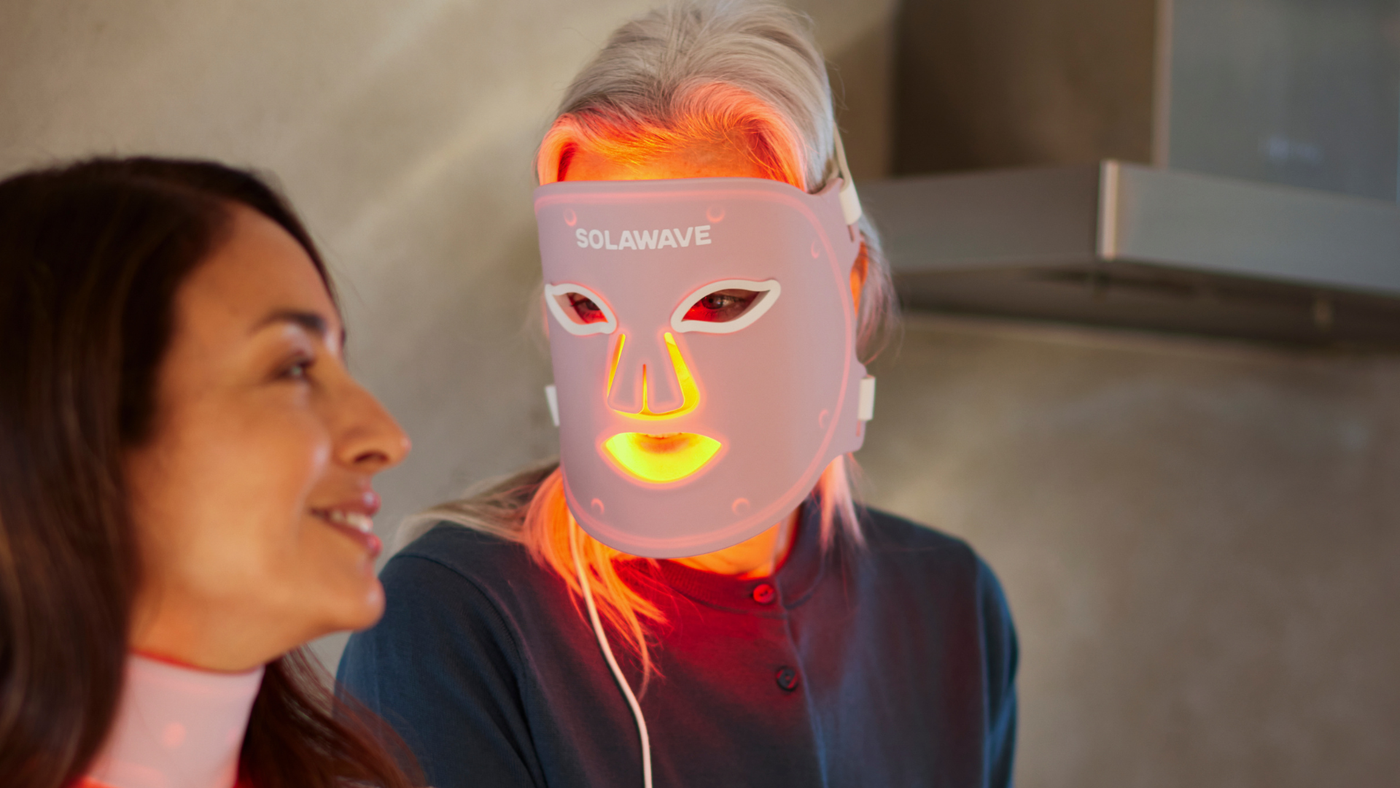
Red light therapy addresses multiple concerns simultaneously: firmness, texture, fine lines, inflammation, and overall skin health. Instead of using separate products for each concern, a single device provides broad-spectrum benefits.
The Red Light Therapy Face Mask delivers four therapeutic wavelengths (Red 630nm, Deep Red 660nm, Amber 605nm, and Near-Infrared 830nm) through 320 medical-grade LEDs. FDA-cleared and requiring just 3-minute sessions, it replaces multiple treatment products with a single, effective device.
For targeted treatment of specific areas, the red light therapy wand combines red light with facial massage, therapeutic warmth, and galvanic current. The wand requires a water-based serum like the LightBoost Activating Serum to activate all four technologies, making it both a treatment device and a hydration step in one.
Start with a gentle cleanser, or just water if your skin isn't oily in the morning.
Apply one treatment serum based on your primary concern. Vitamin C works for brightness and antioxidant protection, niacinamide for barrier support and overall health, or another targeted active if you have specific needs.
Follow with moisturizer to seal in hydration and support barrier function.
Finish with SPF 30 or higher, every single day.
That's four products maximum. Most mornings, three.
Begin with cleanser, double cleansing if you wore SPF or makeup. Use an oil-based cleanser first to break down sunscreen, then follow with your regular gentle cleanser.
Use your red light therapy device. This is your primary treatment step, supporting cellular function and addressing multiple concerns without adding product layers.
Apply one treatment product if desired. This might be retinol for anti-aging, a targeted serum for specific concerns, or nothing at all if your device provides sufficient treatment.
The LightBoost Niacinamide Face and Neck Serum provides barrier support and hydration, working well as a single evening serum.
Finish with moisturizer to support overnight repair. The LightBoost Face and Neck Cream delivers intensive hydration for nighttime recovery.
The delicate eye area deserves attention without requiring multiple products. The red light therapy eye mask provides targeted treatment, while the LightBoost Collagen Caffeine Eye Cream handles hydration and topical care in one product.
The neck and chest often get neglected, but age visibly. Extend your facial products to these areas, and consider the Neck & Chest Rejuvenating Mask for light therapy treatment of this zone.
You can't go from fifteen products to five overnight without consequences. Your skin has adapted to what you've been giving it, and sudden changes cause disruption.
Stop using products from your "probably eliminating" pile immediately. Don't phase them out, just stop. These products weren't helping anyway.
Continue your current routine with the remaining products while you acquire any new items needed for your rebuilt routine.
Begin transitioning to your new streamlined routine. If you were using multiple serums, drop to one. If you had elaborate morning rituals, simplify.
Your skin may act up during this period. This is normal. Skin that's been over-treated often goes through an adjustment phase when the assault stops.
By now, you should be fully on your simplified routine. Give it at least another four weeks before evaluating results. Skincare works slowly. Eight weeks minimum before deciding if something is or isn't working.
Not every skincare routine audit goes smoothly. Here's how to handle common problems.
If you've been over-exfoliating or using too many actives, your barrier is probably compromised. When you stop the assault, skin sometimes purges or temporarily worsens as it recalibrates. This usually resolves within 2-4 weeks. Focus on barrier support during this period.
Product attachment is real. You might feel like you're "not doing enough" with a simple routine. Remind yourself that results matter more than ritual complexity. If your streamlined routine is working, the elaborate one was unnecessary.
If your simplified routine doesn't address something important, add one targeted product rather than overhauling everything. The goal is a minimum effective routine, not a bare-minimum routine.
The skincare industry spends billions making you feel like you need more. After completing your reset, implement a waiting period before any purchase. If you still want something after 30 days, consider whether it replaces something in your current routine or adds to it. Replacement is fine. Addition should be rare.
A skincare routine audit isn't a one-time event. Build habits that prevent routine bloat from returning.
Review quarterly by setting a calendar reminder to assess your routine every three months. What's working? What isn't? What have you added that you don't need?
Require justification for any new purchase, answering what specific problem it solves, what it would replace, and whether you have something similar already.
Finish before buying by committing to using products completely before purchasing replacements. This prevents accumulation and ensures you actually evaluate what you're using.
Track results somehow, whether through photos, notes, or just mental check-ins. When you can see what works, you're less susceptible to marketing claims.
All Solawave devices are FSA/HSA eligible and recommended by dermatologists, making them a sound investment in a simplified routine that delivers results.
The most effective skincare routine isn't the most elaborate one. It's the one that addresses your actual needs with products that actually work, used consistently over time. This skincare reset guide has walked you through identifying what you have, honestly assessing what works, understanding what you need, and rebuilding a routine that serves you rather than overwhelms you. The skincare routine audit process may feel drastic, but the result is liberating: fewer products, less decision fatigue, better results, and a bathroom cabinet you can actually close. Your skin doesn't need seventeen products. It needs the right products, used the right way, consistently. Everything else is just noise.
Ready to rebuild your routine with products that work? Shop Solawave's skincare collection today.
A thorough audit once or twice a year keeps your routine streamlined and effective. Between major audits, do quick quarterly check-ins to catch any product creep before it gets out of hand. If your routine has grown by more than two products since your last audit, it's time for another review.
Expired products should be thrown away immediately. Unopened products in good condition can be given to friends, donated to shelters, or sold through resale platforms. Opened products that aren't expired but don't work for you can be repurposed for body care if appropriate, or simply discarded. Don't feel guilty about eliminating products that aren't serving you.
Some adjustment is normal, especially if you were previously over-treating your skin. However, persistent breakouts beyond 3-4 weeks suggest something in your new routine isn't working, either a product that doesn't suit you or a missing step your skin needs. Assess whether the breakouts match your historical patterns or represent something new, and adjust accordingly.
Give products 8-12 weeks of consistent use before evaluating. Take photos under consistent lighting to track changes. Ask yourself whether your skin looks or feels different, and whether the difference aligns with what the product claims to do. If you can't identify a specific benefit after three months, the product probably isn't working.
Absolutely. The key is choosing multi-functional products and technologies. Red light therapy addresses multiple concerns (firmness, texture, inflammation, overall health) simultaneously. A well-chosen serum can target more than one issue. You don't need a separate product for every concern. You need strategic products that work hard across multiple dimensions.