Does Red Light Therapy Work? An Evidence-Backed Guide
BLOG / News / Does Red Light Therapy Work? An Evidence-Backed Guide

Does Red Light Therapy Work? An Evidence-Backed Guide

Melanie Greenwall
December 13, 2025
17 MINS READ

Yes, red light therapy absolutely works for a handful of specific, proven applications. The scientific consensus is clear: when used correctly and consistently, RLT is a powerful, non-invasive tool for rejuvenating your skin, speeding up tissue repair, and calming inflammation.

Think of it less as a miracle cure and more as a biological tune-up that systematically recharges your cells from the inside out.

Your Guide to How Red Light Therapy Works

Ever wonder if the growing buzz around red light therapy is just hype or if there’s real science behind it? You’re in the right place. This guide cuts through the noise to give you a clear, actionable look at the evidence, the benefits, and the practical steps for achieving real results at home.

Imagine your body's cells are like tiny, rechargeable batteries. Over time, factors like stress, aging, and environmental damage drain their power. Red light therapy acts like a high-tech charging station for these cells.

It delivers specific wavelengths of light that your skin absorbs, reaching deep down to the mitochondria—the powerhouses inside every cell. This process, known as photobiomodulation, kicks off a powerful and beneficial chain reaction.

The Science in Simple Terms

At its core, red light therapy is about boosting cellular energy. This surge of energy gives your cells the fuel they need to perform at their best, leading to visible improvements you can actually see and feel. For anyone new to this, understanding what LED light therapy is in a broader sense can be a helpful starting point for seeing how different light colors affect our biology.

This supercharged cellular function translates into several key benefits that have been backed by solid research time and again:

  • Stimulated Collagen Production: Energized fibroblast cells get to work, producing more collagen and elastin—the proteins that give skin its firmness and bounce. This helps soften the look of fine lines and wrinkles.
  • Reduced Inflammation: The therapy helps calm redness and irritation by improving local circulation and dialing down inflammatory responses within the cells.
  • Accelerated Healing: By giving cells the energy to repair and regenerate, it can help speed up the healing of minor wounds and support muscle recovery.
  • Improved Skin Tone and Texture: Better circulation and faster cellular turnover help create a brighter, more even complexion and a smoother skin surface.

The key takeaway is this: Red light therapy isn't magic; it's targeted biology. It gives your cells the specific light energy they need to repair themselves, rejuvenate, and function at their peak.

Now that we've covered the basics, we'll dive deeper into the clinical studies behind these benefits, walk through how to choose the right device for your goals, and give you actionable protocols to get started. Get ready to discover how this technology can become a cornerstone of your wellness routine. Stick with us to learn exactly how to make it work for you.

How Light Energy Supercharges Your Cells

To understand how simple light can trigger such a profound change in your skin, we need to zoom in—way in—to the cellular level. Picture the trillions of cells in your body as tiny, individual factories. Inside each one is a power plant called the mitochondria. These little engines create the energy that fuels literally everything your body does, from healing a cut to building new skin.

As we age or deal with stress and environmental damage, these mitochondrial power plants start to run less efficiently. This is where red light therapy comes in. Think of it as a specialized tune-up that recharges these cellular engines, helping them run like new again.

The Spark That Ignites Cellular Energy

The magic happens in how specific wavelengths of red and near-infrared light interact with a key enzyme inside the mitochondria called cytochrome c oxidase. This enzyme is a crucial player in the final step of creating cellular energy.

Sometimes, a molecule called nitric oxide gets in the way, essentially clogging up the works and slowing down energy production. When photons from red light therapy penetrate your skin, they give that pesky nitric oxide an "eviction notice." This clears the path for oxygen to bind where it’s supposed to, dramatically boosting the efficiency of the entire energy-making process.

This interaction kicks off a powerful chain reaction that significantly increases the production of Adenosine Triphosphate (ATP)—the high-octane energy currency that every cell uses to power its functions. More ATP means cells have more fuel to repair damage, fight inflammation, and build essential proteins like collagen.

This visual shows the simple yet powerful flow of how light becomes cellular fuel.

A three-step diagram illustrates the red light therapy process: light transforms into cellular energy.

As the diagram shows, it all starts with targeted light, which gets absorbed by the cell and converted into usable energy. That's the fundamental answer to how red light therapy works.

From Cellular Fuel to Visible Results

This flood of cellular energy isn't just happening on a microscopic level; it's what creates the real, tangible results people are looking for. When your cells are fully charged and running at peak performance, they get much better at their jobs.

Here’s what that looks like in practice:

  • Fibroblast Cells: These are your skin's collagen factories. With more ATP, they kick into high gear, churning out more of the collagen and elastin that give your skin its firmness and bounce. This is exactly how RLT helps soften the look of fine lines.
  • Immune Cells: Cells like macrophages use the extra energy to better manage inflammation. This is what helps reduce redness, calm irritation, and speed up your skin's natural healing process.
  • Skin Cells (Keratinocytes): With more fuel in the tank, these cells can regenerate and turn over more efficiently, leading to a brighter, more even complexion and smoother texture.

This foundational science isn't some new fad. In fact, some of the most compelling early research came from an unexpected source: NASA. Back in the 2000s, NASA's pioneering work with red and near-infrared LEDs—originally developed to help grow plants in space—showed how these specific light wavelengths could boost ATP production and accelerate healing for astronauts.

Ultimately, getting results all comes down to using the right kind of light. The specific wavelengths and frequencies are what matter because they're able to penetrate the skin to the exact depth needed to activate the mitochondria without causing any harm. You can dive deeper into the science in our guide to red light therapy wavelengths and frequencies. This targeted approach is precisely what makes red light therapy such a smart and effective tool for skin rejuvenation.

The Clinical Proof for Skin Rejuvenation

Understanding how red light energizes your cells is one thing, but seeing the real-world proof is what truly builds confidence. When we look at the clinical evidence for skin rejuvenation, the data tells a compelling story. This isn't just about anecdotal success; it's about measurable, scientific validation showing red light therapy genuinely works for anti-aging.

A smiling woman receives blue light skin rejuvenation therapy from a gloved professional.

Controlled clinical trials are the gold standard for proving effectiveness, and red light therapy has been put to the test repeatedly. In these studies, researchers aren't just asking people if they feel their skin looks better. They're using sophisticated tools to measure actual changes in collagen density, skin roughness, and the depth of fine lines.

The results consistently point in one direction: significant improvement.

Translating Clinical Data into Visible Changes

The core benefit behind most anti-aging results is the stimulation of collagen. As our skin’s primary structural protein, more collagen means firmer, plumper, and more youthful-looking skin. Studies use ultrasound and other imaging techniques to physically see and measure the increase in collagen density within the dermis after a course of red light treatments.

This isn't just a minor tweak, either. Some trials report substantial increases in collagen, which directly correlates with a visible reduction in wrinkles and fine lines. This is the hard data that confirms why so many people report their skin feeling more elastic and resilient.

What does this mean for you? It means the smoother texture and firmer feel you're aiming for aren't just wishful thinking. They are the direct result of a validated biological process. Your skin is literally rebuilding its foundational structure from within, powered by light.

A landmark 2014 controlled trial provided powerful evidence. Researchers tested red and near-infrared light on skin rejuvenation and found that after 30 sessions, participants saw statistically significant improvements in skin complexion, skin feeling, roughness, and collagen density.

The data was so clear that 69% of participants in the treatment group rated their skin as 'better,' while only 4% of the control group said the same. You can explore the full results of this influential study on skin rejuvenation and collagen production to see the detailed findings for yourself.

Beyond Wrinkles: Improving Tone and Texture

While reducing wrinkles is often the main attraction, the clinical proof extends to other key aspects of skin health. Red light therapy has been shown to improve microcirculation, which helps deliver more oxygen and nutrients to your skin cells. This enhanced blood flow contributes to a brighter, more even skin tone and helps reduce the appearance of redness over time.

This boost in circulation and cellular activity also helps speed up the skin's natural repair processes. The result is a smoother overall texture and a healthy, radiant glow that's difficult to achieve with topical products alone. To learn more, check out our deep dive into the scientific studies proving RLT's effectiveness for skin.

Consistency Is the Key to Clinical-Level Results

One of the most important takeaways from all the research is the role of consistency. The impressive results seen in clinical trials weren't achieved with just one or two sessions. They were the outcome of a dedicated routine, typically involving multiple treatments per week over several weeks or months.

This is exactly why at-home devices have become so popular. They make it possible to build the consistency required for real, lasting changes without the time and expense of frequent clinic visits. By following a regular protocol, you are essentially replicating the conditions that produced such strong results in controlled scientific settings.

Ultimately, the clinical proof is clear. When used consistently, red light therapy is a highly effective, non-invasive tool for skin rejuvenation that’s backed by solid science.

Exploring Other Proven Health Benefits

While smoother, firmer skin is what brings most people to red light therapy, its benefits don't stop at the complexion. The same cellular energy boost that revitalizes your skin creates a powerful ripple effect throughout the body, supporting everything from hair growth to muscle recovery. This versatility shows just how foundational photobiomodulation is to our overall wellness.

It all comes back to the same core mechanism. By supercharging our cellular powerhouses—the mitochondria—and ramping up ATP production, red light therapy gives different types of cells the fuel they need to do their jobs better. It's a single, powerful principle with a surprisingly wide range of positive outcomes.

This just goes to show that when you ask, "does red light therapy work?" the answer extends far beyond just one area of health. It’s a multi-purpose tool for holistic well-being.

Promoting Fuller, Thicker Hair

For many of us, thinning hair is a huge concern. Red light therapy offers a promising, non-invasive solution by getting right to the root of the problem: the hair follicles. Just like it energizes skin cells, specific wavelengths of light can penetrate the scalp to stimulate the mitochondria within those follicular cells.

This process helps awaken dormant follicles and prolongs the anagen, or active growth phase, of the hair cycle. The result? Users often see an increase in both hair count and hair thickness over time. You might notice less shedding and a fuller appearance, which is why it's become such a popular complementary approach for androgenetic alopecia (pattern hair loss).

The evidence is compelling. A 90-patient study highlighted by the American Academy of Dermatology (AAD) showed that over 90% of participants saw noticeable improvements in signs of aging after just 8 LED treatments. On top of that, large randomized controlled trials on hair regrowth have found that low-level light therapy can match the effectiveness of minoxidil, with one trial even noting equivalent increases in hair thickness. You can read the full analysis of these complementary findings to learn more.

Accelerating Muscle Recovery and Repair

Anyone who's pushed through a tough workout is all too familiar with delayed onset muscle soreness (DOMS). Red light therapy can help you bounce back faster by targeting the micro-tears and inflammation that cause all that discomfort. When you apply the light to sore muscles, it helps dial down inflammatory markers and improves blood flow to the area.

This enhanced circulation brings more oxygen and nutrients to the damaged muscle tissue while helping to flush out metabolic waste. Plus, that extra ATP energy gives your muscle cells the fuel they need to repair themselves more efficiently.

For athletes or even weekend warriors, this translates into real-world benefits: less downtime between training sessions, reduced soreness, and better overall performance. It’s like giving your body’s natural recovery process a serious boost.

Speeding Up Wound Healing

The same principles that work for muscle repair also do wonders for minor cuts, scrapes, and abrasions. Red light therapy supports every single stage of the healing process.

It starts by reducing the initial inflammation, then it stimulates the formation of new blood vessels (a process called angiogenesis), and finally, it boosts the production of collagen—the essential protein needed to build new tissue and close the wound.

This triple-action approach helps create a much better healing environment, often leading to faster recovery with potentially less scarring. It’s a perfect example of how red light therapy works with your body’s own repair systems, just making them run more efficiently. By providing a clean, targeted energy source, it helps ensure your cells have everything they need to rebuild.

Your Practical Guide to At-Home Therapy

Now that you understand the science, let's talk about how to bring red light therapy into your own home. With so many devices and opinions out there, getting started can feel overwhelming. This guide is designed to cut through the noise and give you a clear, simple plan to get real results safely.

A smiling woman with short hair sits comfortably, receiving at-home red light therapy.

The single most important factor for success—the kind of success seen in clinical studies—is consistency. At-home devices are brilliant because they fit powerful technology right into your daily life, making that consistency achievable. Our goal here is to empower you to pick the right tool and build a routine that actually works.

Choosing Your At-Home Device

First things first: you need a device that fits your specific goals, lifestyle, and budget. They aren't all the same, and knowing the difference is key to making a smart choice.

Common at-home red light therapy devices fall into a few main categories:

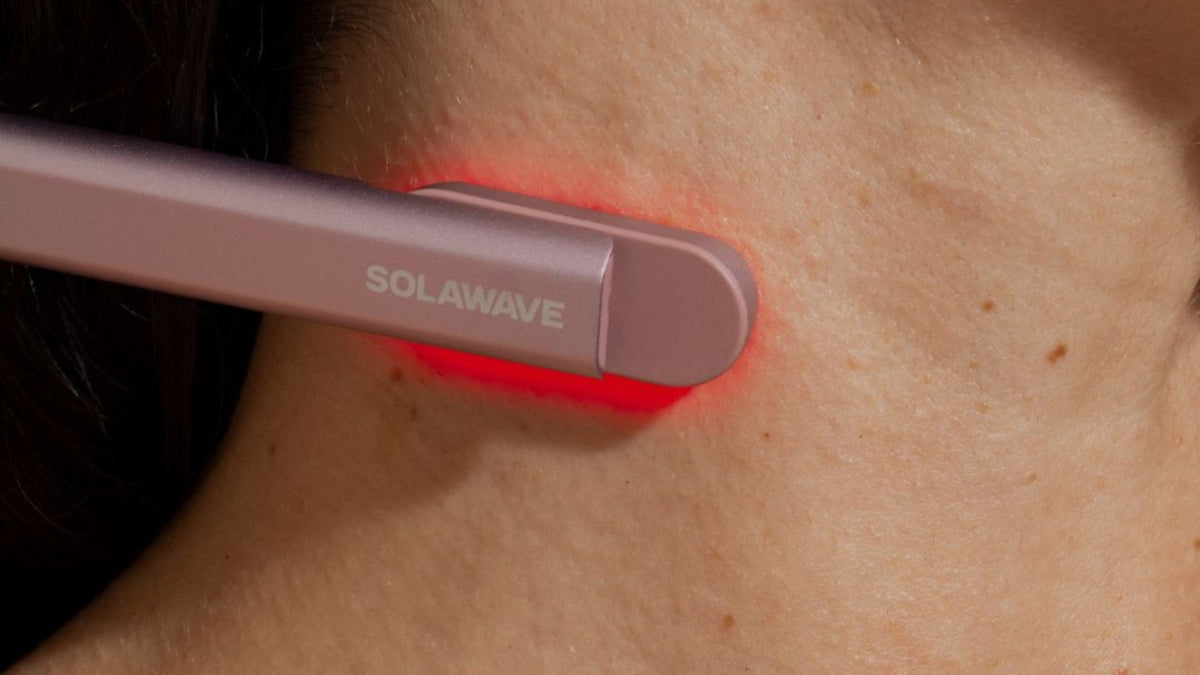
  • Wands: These are small, handheld tools perfect for targeted treatments. Think crow’s feet, the "11" lines between your brows, or smile lines. They give you pinpoint precision and control.
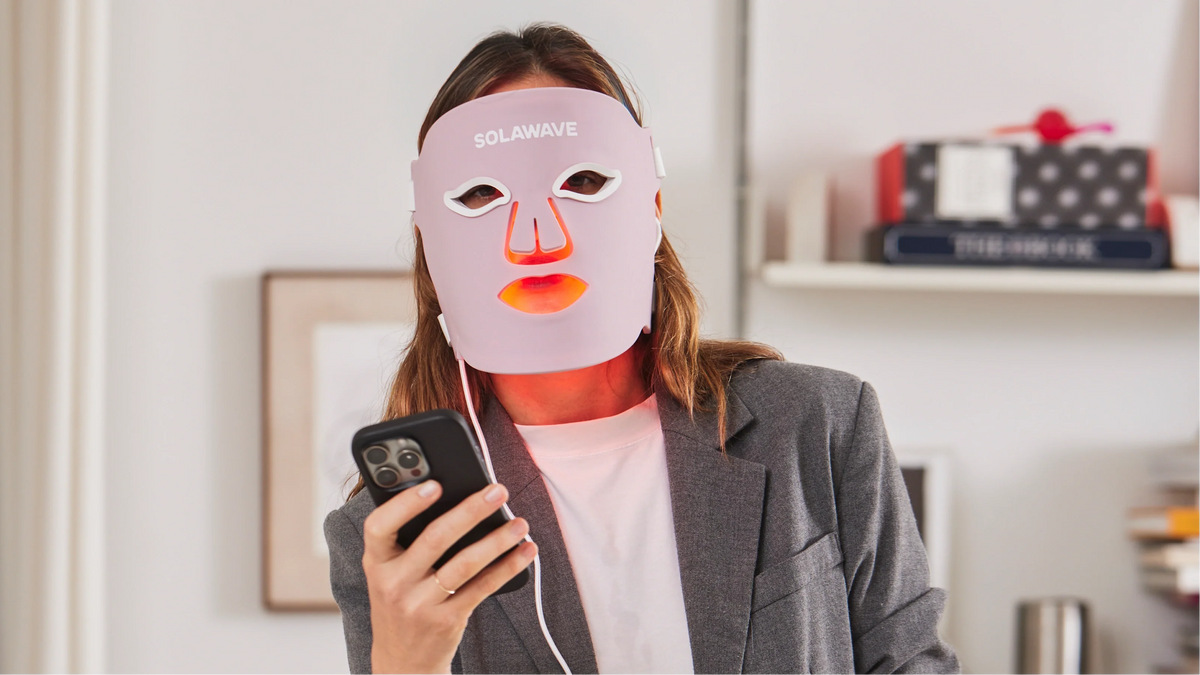
  • Masks: For full-face rejuvenation, nothing beats the convenience of a mask. They deliver even light coverage across your entire face, so you don't have to worry about missing a spot.
  • Panels: These are larger, stationary setups designed for treating bigger areas of the body, like your back, legs, or chest. They’re fantastic for tackling broader skin concerns or even muscle recovery.

Once you’ve settled on a type, look at the tech specs. The two most important things to check are the wavelengths (in nanometers, or nm) and the power density, also called irradiance (in mW/cm²). For skin health, the most proven wavelengths are in the red spectrum (630-660 nm) and near-infrared (830-850 nm).

A quality device will be transparent about these numbers. Power density is crucial—it tells you how much energy is actually reaching your cells, which directly impacts how effective your sessions will be.

Choosing the right device is a personal decision based on your primary skin goals and how much time you're willing to dedicate. To help simplify the process, here’s a quick comparison of the most common types.

Choosing Your At-Home Device

Device Type Best For Typical Session Time Pros Cons
Wands Targeted treatment of specific fine lines 3-5 mins per area Precision control, portable, great for travel Can be time-consuming for full-face treatment
Masks Full-face rejuvenation and even skin tone 3-10 mins total Hands-free, uniform coverage, efficient Less portable, focused only on the face/neck
Panels Treating large areas like the back or chest 10-20 mins total High power, versatile for body use Requires space, not portable, higher initial cost

Ultimately, the best device is the one you’ll actually use consistently. A convenient mask might be perfect for a busy parent, while a targeted wand could be ideal for someone focused on specific expression lines.

Creating Your Goal-Oriented Protocol

Got your device? Great. Now it's time to build a routine that makes sense for you. A one-size-fits-all approach just doesn't work here. Your protocol should be tailored to what you want to achieve.

Here are a few actionable examples to get you started:

  1. To Reduce Fine Lines and Firm Skin: Consistency is your best friend. Aim for a 10-15 minute session, 3-5 times per week. Hold the device close to your clean, dry skin to ensure the light penetrates deeply.
  2. To Calm Redness and Improve Tone: For this, shorter, more frequent sessions often work wonders. Try a 3-5 minute session daily to help manage inflammation without overdoing it.
  3. To Spot Treat Blemishes: Use a targeted wand directly on the spot for 2-3 minutes each day. The red light helps dial down the inflammation behind the breakout and gives your skin’s healing process a boost.

These are just starting points. Always read and follow the instructions that come with your specific device. For a more detailed walkthrough, check out our comprehensive guide on how to use red light therapy at home for skincare.

Essential Safety and Best Practices

At-home red light therapy is overwhelmingly safe and non-invasive, but a few best practices will ensure you get great results with total peace of mind.

Always look for devices that are FDA-cleared. This means the device has been reviewed for safety and is considered a low-risk product for consumers. While eye protection isn't always mandatory (especially with masks designed to be safe for eyes), it’s never a bad idea, particularly if you have sensitive eyes or are prone to light-triggered headaches.

Most importantly, be patient. While you might notice a subtle glow or reduced inflammation pretty quickly, the real magic—like new collagen production—takes time. We're talking weeks and months, not days. Sticking to your routine will always deliver better results than doing occasional, marathon sessions. If you're exploring different professional-grade systems, looking into options like Dermalux LED Light Therapy can offer more insight into how this technology is used in clinical settings.

Common Questions About Red Light Therapy

As you get ready to start your own red light therapy routine, it's normal to have a few last-minute questions. Feeling confident and informed is the first step toward getting the skin you want. Here, we'll clear up some of the most common queries so you can begin with total peace of mind.

We’ll cover everything from how long it really takes to see changes to eye safety, making sure you know exactly what to expect.

How Long Until I See Results?

This is the big one. The answer really depends on your goals, because the benefits of red light therapy are cumulative—they build on each other over time.

It’s helpful to think about the results in two phases:

  • Short-Term Glow (Days to Weeks): You might see subtle improvements pretty quickly. Many people report a temporary plumping effect and a healthy glow right after a session, thanks to a boost in circulation. In the first few weeks, you may also notice a visible drop in redness and inflammation.
  • Long-Term Changes (Weeks to Months): The real magic—like building new collagen and elastin—happens on a deeper, cellular timeline. Rebuilding your skin’s foundational support structure takes patience. Noticeable improvements in fine lines and skin firmness typically become visible after 8 to 12 weeks of consistent use.

The key takeaway here is that consistency is everything. Think of it as a workout for your skin—sticking with it 3-5 times per week is what turns those initial subtle changes into dramatic, long-term improvements.

Is Red Light Therapy Safe For My Eyes?

This is a super important and valid concern. The good news is that high-quality, at-home red light therapy devices are designed with safety as a top priority. When you're shopping for a device, one of the most critical things to look for is FDA clearance. This indicates the device has been reviewed for safety and is considered low-risk for you to use at home.

For facial devices like masks, this clearance often means they've undergone specific testing to ensure they are safe to use without goggles. That said, many people still prefer to simply close their eyes during treatment for comfort. If you have light sensitivity or are using a more powerful panel-style device, wearing the provided protective goggles is always a smart move.

Ultimately, you should always follow the specific instructions that come with your device. The manufacturer will give you the clearest guidance on eye safety for their particular product.

Can You Overdo Red Light Therapy?

It’s easy to think that if a little is good, more must be better—but that's not how red light therapy works. The relationship between the dose of light and your body's response is what scientists call a biphasic dose response.

It sounds complicated, but the concept is simple: there's a "sweet spot" for treatment time and frequency where you get the maximum benefit.

  • Under-treating means your cells don't get enough energy to kickstart positive changes.
  • Over-treating, on the other hand, can actually cancel out the benefits. Too much light can lead to diminishing returns, where your cells become less responsive, and you won't see the results you're hoping for.

This is exactly why following the manufacturer’s guidelines is so critical. Sessions are typically recommended for just 3-15 minutes, a few times a week, because they’re designed to hit that perfect therapeutic window. More isn't better; consistent, correct use is better. Sticking to the recommended protocols ensures you’re giving your cells exactly what they need to thrive without overwhelming them.


Ready to see what a consistent, science-backed routine can do for your skin? The devices at Solawave are FDA-cleared and designed to deliver professional-level results in just minutes a day. Discover the right tool for your goals and start your journey to brighter, smoother skin. Explore our collection today.

Article created using Outrank

Share: