Rated 4.7 out of 5 stars
4.7 / 5


726,000+ customers
Free 60-Day Returns
1-Year Warranty
726,000+ customers
Free 60-Day Returns
1-Year Warranty
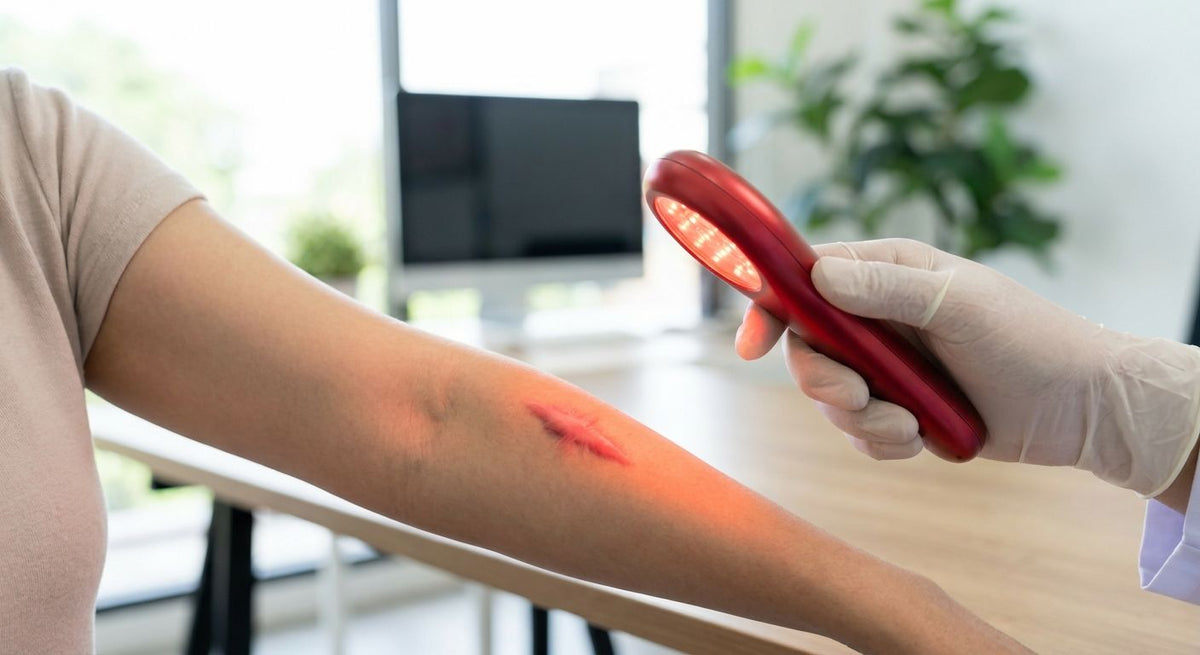
Keloid scars raise a different question than the usual "does red light therapy work" search: can an LED mask or wand help skin that's already prone to overgrown, thickened scar tissue, or will it make things worse? This guide breaks down what red light therapy for keloid scars can realistically do, who it's for, and which at-home devices make sense to pair with dermatologist-directed keloid treatment in 2026.
Keloids form when scar tissue keeps growing past the edges of the original wound — a cut, a piercing, a cystic acne breakout, a surgical incision. They're more common on the chest, shoulders, ears, and jawline, and they show up more often in melanin-rich skin. That last part matters for device selection: LED light therapy doesn't carry the same skin-tone restrictions that some laser treatments do, which is one reason it gets asked about so often for scar-prone skin.
What red light therapy does have research behind it for is skin tone, inflammation, and collagen support in general skincare use — not keloid dissolution. Solawave makes FDA-cleared red light devices for wrinkles, fine lines, and other cosmetic concerns. None of them are cleared to remove a keloid. Anyone reading this with an active, growing, or painful keloid should see a dermatologist before adding any device to the routine.
This guide is for people who already have keloid scars (healed, stable ones) or who scar easily and want an at-home red light routine that supports the skin around those areas — think post-piercing earlobes, a stable surgical scar on the chest, or acne-prone skin that tends to leave raised marks. It's not for anyone with a new, inflamed, or rapidly growing keloid; that's a dermatology visit, not a shopping decision.
Keloid-prone skin and the tissue around it can be reactive. A device that lets you dial down intensity or run shorter sessions matters more here than raw power — heat and irritation are two known triggers for scar overgrowth, so gentler settings are the safer starting point.
Red light works closer to the skin's surface; infrared reaches deeper into tissue. For scar-adjacent skin, that combination gives you surface tone support and a deeper reach without needing separate devices. Check the wavelength spec before buying — not every LED mask on the market runs more than one.
FDA clearance is a real, checkable claim, but it's specific to indications. A device cleared for wrinkles and fine lines is not the same as a device cleared for scar remodeling. Read the clearance language on the product page, not the marketing headline.
Earlobes, jawlines, and small surgical scars need a targeted wand. Chest, shoulder, and décolletage scarring — some of the most common keloid sites — need a mask or panel built for that area, not a face-only device.
If you're getting corticosteroid injections or wearing silicone sheeting for a keloid, ask your dermatologist before layering in light therapy on that same site. Timing and site selection matter more than the device itself.
Keloids disproportionately affect darker skin tones. LED light therapy, unlike ablative laser treatments, doesn't carry the same pigmentation-risk warnings — a meaningful reason it comes up so often in keloid-prone skin searches.


At $169, this handheld wand is built for small, targeted areas — the kind of coverage an earlobe piercing scar or a jawline keloid actually needs, rather than a full mask. Its size makes it easy to angle around a raised scar edge instead of resting flat over it. Verdict: Consider — a reasonable entry point if you want to target one or two specific spots rather than a whole zone.
At $349, this mask is shaped for the décolletage — exactly where surgical scars, sternum piercing keloids, and shoulder scarring tend to sit. Coverage matters more here than intensity: a device built for the face won't sit right across the chest and shoulders. Verdict: Consider for anyone whose scar-prone areas are on the chest or upper back rather than the face.
This mask runs 320 LEDs across four wavelengths — red, infrared, deep red, and amber — at $399. Keloids on the face are less common than on the chest or ears, so this one is more relevant for general acne-scar tone maintenance than active keloid-prone zones. Verdict: Consider if your concern is facial acne scarring alongside wrinkles, not chest or ear keloids specifically.
At $38, this gel serum is formulated to run under a wand for conductivity, and it adds hydration without heavy occlusive ingredients that can trap heat against sensitive scar tissue. It's not a scar treatment on its own. Verdict: Consider as a companion product, not a standalone pick.
“No LED mask or wand removes an existing keloid — that requires a dermatologist, not a device.”
| Product | Best for | Wavelength / coverage | Price | Verdict |
|---|---|---|---|---|
| 4-in-1 Radiant Renewal Skincare Wand | Small, targeted areas (ears, jawline) | Red light, handheld | $169 | Consider |
| Neck & Chest Pro Light Therapy Mask | Chest, shoulders, décolletage | Panel mask, full décolletage | $349 | Consider |
| Wrinkle Retreat Pro LED Face Mask | Facial acne-scar tone, wrinkles | 320 LEDs, 4 wavelengths | $399 | Consider |
| LightBoost Hyaluronic Serum | Companion hydration under device | N/A (topical) | $38 | Consider |
Can red light therapy get rid of keloid scars?
No. Red light therapy supports skin tone and comfort around scar-prone areas, but it doesn't shrink or remove existing keloid tissue. Keloid removal typically requires corticosteroid injections, cryotherapy, silicone sheeting, or surgical excision from a dermatologist.
Is red light therapy safe for keloid-prone skin?
Red light therapy is generally considered gentle on skin, but anyone with an active, growing, or inflamed keloid should check with a dermatologist before starting. Stable, healed scars are a lower-risk case for adding light therapy nearby.
What's the best red light therapy device for scar-prone skin in 2026?
It depends on where the scar sits. A handheld wand like the Radiant Renewal Skincare Wand ($169) suits small areas like ears, while a panel mask like the Neck & Chest Pro ($349) suits chest and shoulder scarring.
How long does it take to see results from red light therapy on scar-adjacent skin?
Results for general skin tone and texture from consistent red light therapy use are typically noticed over several weeks of regular sessions, not overnight. Keloid tissue itself doesn't change from light therapy alone.
Can I use red light therapy after keloid removal surgery?
Only with your dermatologist's approval and timing guidance. Using any device on a fresh incision before it's healed can interfere with recovery.
Does red light therapy work on dark skin tones?
Yes. LED light therapy doesn't carry the pigmentation-risk warnings that some ablative laser treatments do, which is part of why it comes up often for keloid-prone skin, which is more common in melanin-rich skin.
Is red light therapy better than laser for keloids?
They're not interchangeable. Laser treatments for keloids are clinical procedures aimed at reducing scar tissue directly; red light therapy is a supportive, at-home tool for surrounding skin tone, not a keloid treatment itself.
How much does an at-home red light therapy device cost in 2026?
Handheld wands start around $169, while full masks built for larger areas run $349 to $399 in 2026, based on current Solawave pricing.
The device spec that actually matters for keloid-prone skin isn't LED count — it's coverage shape. A 320-LED face mask is impressive on paper, but if your scarring sits on your chest or an earlobe, that spec is irrelevant; a smaller wand that reaches the right spot wins every time in 2026.
 Acne
Acne