Rated 4.7 out of 5 stars
4.7 / 5


726,000+ customers
Free 60-Day Returns
1-Year Warranty
726,000+ customers
Free 60-Day Returns
1-Year Warranty
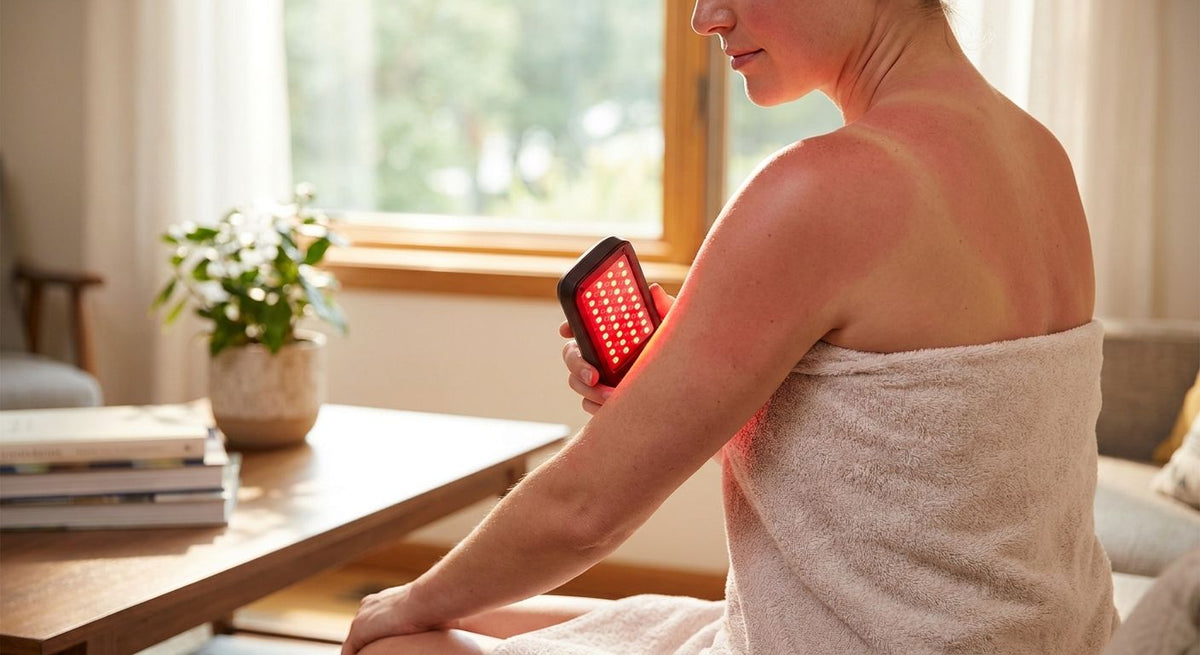
Red light therapy for sunburn recovery only works once the acute burn has cooled down — not while skin is hot, blistered, or actively peeling. Bringing a red light therapy device back into a routine after sun damage means timing it right, picking a gentler setting, and skipping any warming or microcurrent add-ons until the skin barrier is stable again in 2026.
A sunburn is a first- or second-degree burn, and burned skin has a compromised barrier for days after the redness peaks. Dermatology guidance on burn care hasn't changed: cool the skin, hydrate it, and keep heat and friction away from it until swelling and blistering resolve. Red and near-infrared light therapy is studied for calming inflammation and supporting skin repair once tissue is intact, but that's a different phase of healing than the first 24 to 48 hours after you got burned. Mixing up those two phases is the most common mistake people make when they search for "red light therapy for sunburn recovery" hoping for a shortcut.
No — wait until the skin is no longer hot to the touch, no longer blistering, and no longer actively peeling before using any at-home LED device, including Solawave devices. In the first 24 to 48 hours, a fresh sunburn needs cool compresses, hydration, and rest, not additional light or heat energy layered on top of already-inflamed tissue. Once the sting fades to a dull warm-pink and any blisters have closed on their own, red and near-infrared wavelengths can support the skin's normal recovery process instead of adding stress to it.
Follow this order once the acute phase has passed:
| Device | Coverage | Extra features | Best for |
|---|---|---|---|
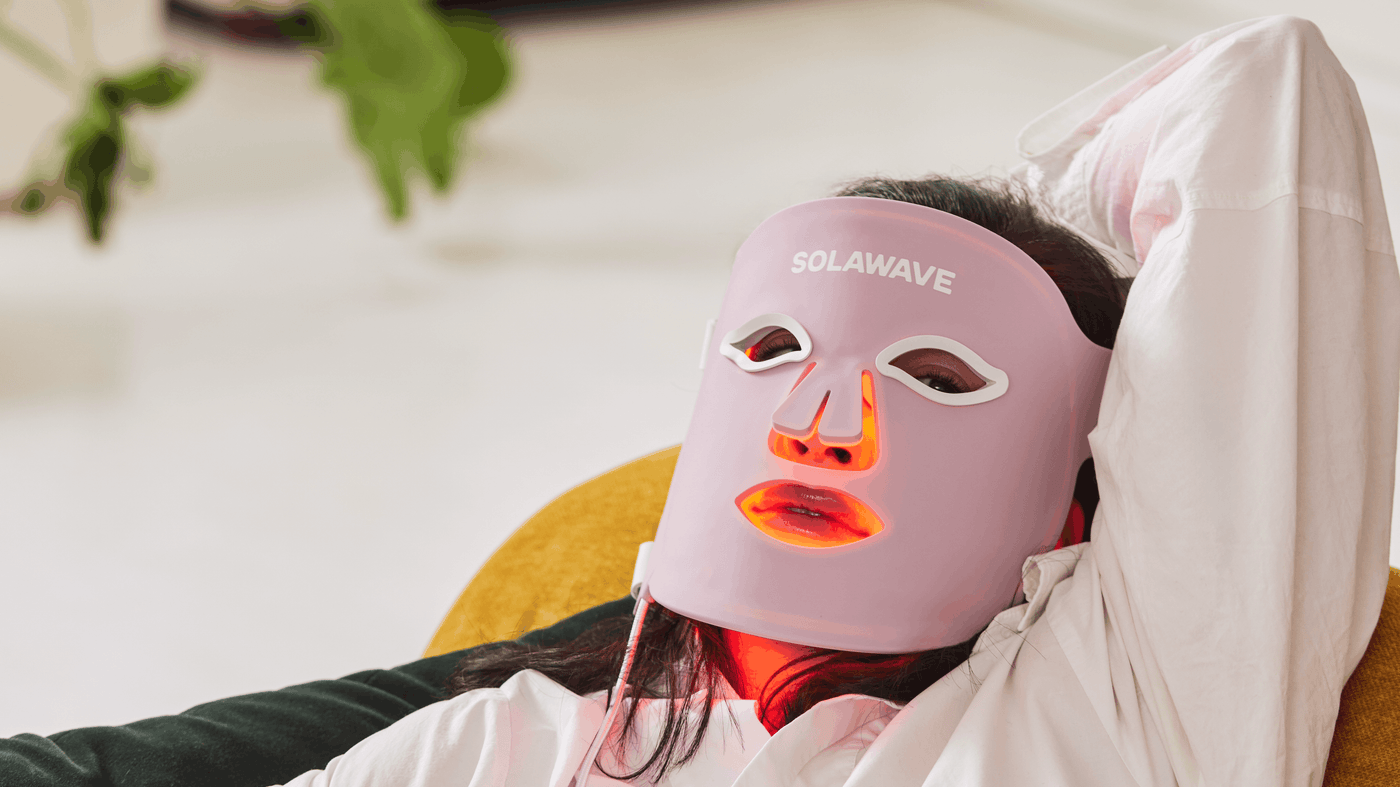
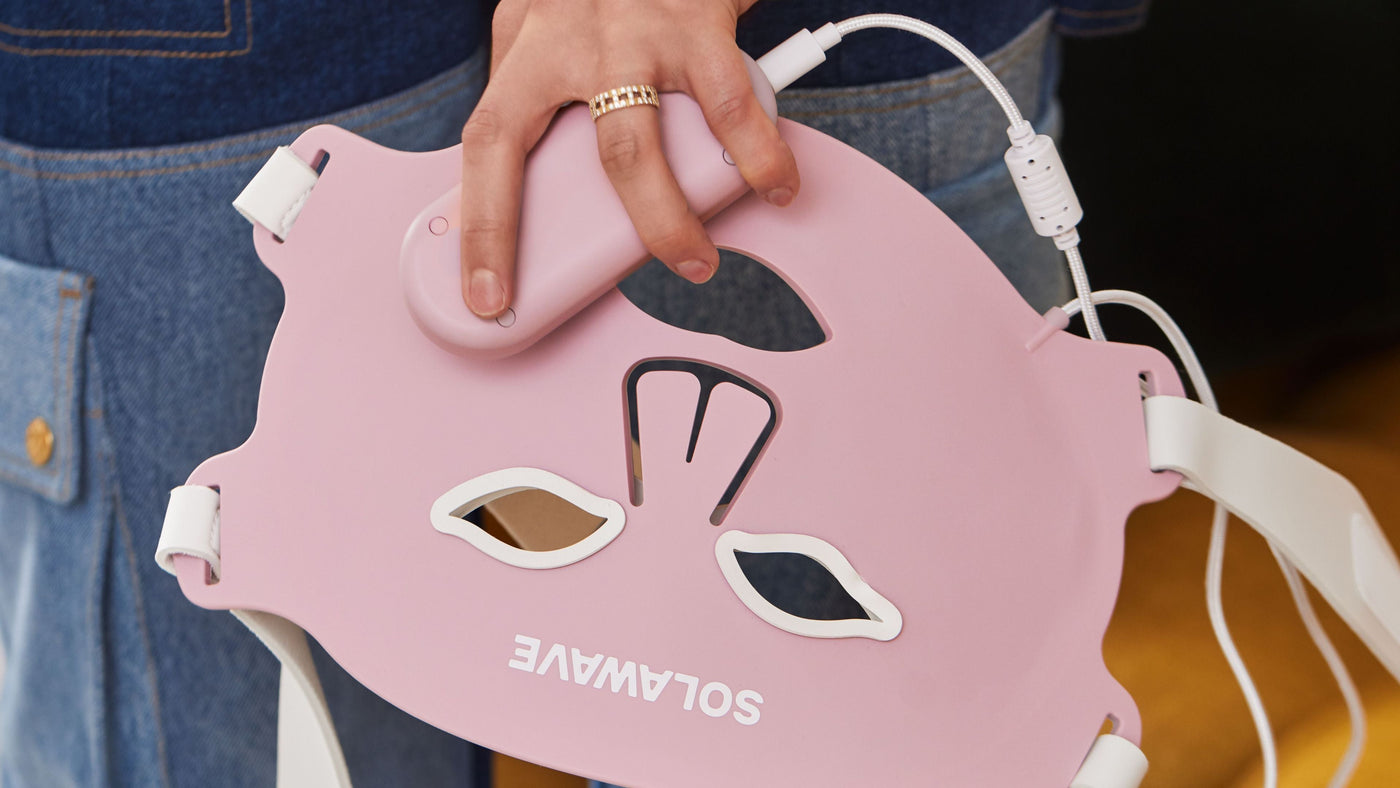
| Wrinkle Retreat Pro LED Face Mask | Full face, hands-free | Red, infrared, deep red, and amber light only — no heat or vibration | Best for even full-face redness and peeling once skin is no longer raw |
| 4-in-1 Radiant Renewal Skincare Wand | Targeted, glide-on application | Adds microcurrent, warming massage, and vibration on top of red light | Best for spot-treating localized post-burn dark patches after skin is fully calm — keep the warming mode off on recently peeling areas |
Both devices deliver red light therapy, but they're not interchangeable during recovery. The mask's hands-free, light-only design makes it the lower-risk pick for a face that's still touchy after a sunburn. The wand's added heat and massage features are useful for other skincare goals, but they're not the right tool for skin that's still shedding or sensitive to pressure.
Red light therapy doesn't stop peeling, since peeling is the skin shedding damaged cells on its own timeline. Once the acute burn has resolved, red and near-infrared light can support the skin underneath as it rebuilds, and pairing sessions with a hydrating product helps the peeling phase look less patchy day to day.
Infrared light isn't inherently bad for skin, but it's the wrong tool for an active sunburn because it adds thermal energy to tissue that's already inflamed and heat-sensitive. Once the burn has fully cooled and any blistering has closed, infrared wavelengths delivered at a low setting are a different situation than applying them to a fresh, hot burn.
There's no single fixed number of days that applies to everyone — the honest marker is how the skin feels and looks, not the calendar. Wait until the skin is no longer hot, tender, or blistering, and until any peeling has mostly settled, before starting short, low-intensity sessions.
For skin that stays reactive well past the initial burn — persistent redness, flaking, or blotchy tone — a routine built around gentle red light therapy and barrier support tends to work better than jumping straight back into a full skincare regimen. Solawave's LED devices are built for that calmer phase of recovery, not the acute one.


“Red light therapy supports sunburn recovery once the acute burn has cooled — it doesn't replace first aid for the first 24 to 48 hours.”
How soon can you use red light therapy after a sunburn?
Wait until the skin is no longer hot, tender, or blistering before using any red light therapy device. There's no universal day count — go by how the skin feels, not the calendar, and patch test on a small area first.
Is red light therapy good for sunburn?
Red light therapy is not treatment for an active sunburn, but once the burn has cooled and stopped blistering, it can support the skin's normal recovery process. Applying it during the acute, hot phase of a burn risks adding more irritation to already-inflamed tissue.
Can red light therapy help with sunburn peeling?
Red light therapy doesn't stop peeling, since that's the skin shedding damaged cells on its own schedule. Pairing low-intensity sessions with a fragrance-free moisturizer once the burn has resolved can make the peeling phase look less uneven day to day.
Should you use a warming device on sunburned skin?
No — skip warming, vibration, or microcurrent modes on skin that's recently peeled from a sunburn. Stick to light-only settings until the skin is fully calm and no longer sensitive to pressure or heat.
Does red light therapy cause more sun sensitivity?
Red and near-infrared light therapy devices don't use UV wavelengths, so they don't carry the same sun-sensitivity risk as UV exposure. Sun protection still matters for skin that's recently sunburned, regardless of what light therapy device is used afterward.
Can you use red light therapy on a peeling face?
Only once peeling has mostly settled and there are no open or raw patches. Running a full-face LED mask session over actively peeling skin can pull at loosened skin and cause more irritation.
What helps sunburn recovery besides red light therapy?
Cold compresses, aloe vera, and fragrance-free moisturizer are the first steps in the initial 24 to 48 hours after a burn. Red light therapy becomes a useful addition after that acute phase, not a replacement for it.
The detail most people skip: post-sunburn dark spots and uneven tone often outlast the peeling itself by weeks, and that's the phase where consistent, low-intensity red light therapy sessions do the most visible work — not the raw, blistering days right after the burn. Patience on the front end of a sunburn buys better results on the back end.
 Acne
Acne