Rated 4.7 out of 5 stars
4.7 / 5


726,000+ customers
Free 60-Day Returns
1-Year Warranty
726,000+ customers
Free 60-Day Returns
1-Year Warranty
For many women comparing professional red light treatments with at-home devices, the question is simple: where will money and time actually translate into better skin? If you’ve been browsing “red light therapy at home before and after” photos, looking at spa menus, and reading device reviews, it can be hard to know which route makes the most sense. The good news is that advances in at-home technology—especially from brands like Solawave, mean you can now get pro-level benefits at home, without signing up for expensive month‑to‑month treatment plans.
Throughout this guide, the focus leans slightly in favor of at-home options, because that’s where customers can see the strongest mix of convenience, affordability, and real‑world results, particularly when devices are FDA‑cleared, award‑winning, and backed by dermatologists.
According to the Light Therapy Institute, Red light therapy uses specific wavelengths to support the skin’s natural repair processes--especially collagen production and cellular energy. For cosmetic benefits like smoother texture and fewer fine lines, the best wavelength for red light therapy usually lies in the 630–660nm red range, with about 830nm near‑infrared penetrating deeper layers for elasticity and overall rejuvenation.
That same science applies whether treatment happens in a clinic or at home. Many professional systems and advanced at-home devices rely on overlapping ranges, red for surface improvements, deep red for mid‑dermal support, and near‑infrared for deeper tissue, to give a layered benefit with minimal downtime and no UV damage.
In a clinic or med spa, professional devices are often larger and more powerful. They can cover broad areas in one go and sometimes combine multiple wavelengths for tailored protocols, such as 630–660nm red plus 810–850nm near‑infrared. A dermatologist or aesthetician may adjust parameters like distance, intensity, and duration based on your skin’s thickness, color, and goals, which can be helpful if you have complex concerns.
These settings work well for targeted treatment blocks, such as a short series after a procedure or during an intensive anti‑aging plan. But they still require you to show up regularly, which can be challenging when life gets busy.
Professional red light sessions often range from about $40 to over $150 per visit, depending on the city and clinic. If you are going three times a week for several months, that can add up to thousands of dollars per year, far more than the one‑time cost of an at-home red light therapy face mask or wand.
For women trying to stretch a skincare budget without sacrificing results, this ongoing cost is often the biggest drawback of in‑office care. The technology is excellent, but the payment model rewards constant visits rather than long‑term home care.
At-home devices remove the biggest barriers to results: time, access, and cost. Instead of packing clinic visits into a busy week, you simply use a device at home 3–5 times per week, the best frequency for red light therapy in most studies and dermatologist recommendations.
Because consistency is what makes “at home red light therapy before and after” photos so compelling, having a device in your bathroom cabinet or on your nightstand makes a real difference. You can layer sessions into existing routines: after cleansing, while journaling, or during a quiet TV break, without losing an evening to traffic and waiting rooms.
Modern at-home brands now use many of the same wavelengths found in clinics. For example, the Wrinkle Retreat Pro Red Light Therapy Mask from Solawave uses a combination of Amber (605nm), Red (630nm), Deep Red (660nm), and Near‑Infrared (830nm), giving a stacked, pro‑grade light profile designed specifically for facial rejuvenation.
This addresses a common myth that home devices are just “weak versions” of in‑office equipment. Power output may be lower, but when sessions are repeated consistently, and wavelengths are optimized, you still see powerful, cumulative benefits in firmness, tone, and radiance over 8–12 weeks.
A key advantage of at-home brands like Solawave is clear safety and testing. Solawave devices are FDA‑cleared, third‑party tested, and recommended by dermatologists and estheticians, which matters when more unregulated devices are popping up online.
This level of oversight helps ensure that red light therapy at home remains gentle, non‑invasive, and free of UV exposure. Customers still need to follow instructions and consult a doctor if pregnant or managing medical conditions, but the built‑in safety margins are designed to support regular, long‑term use.
Many people first get curious about devices after seeing red light therapy at home before and after photos on brand sites and social media. On Solawave’s before and after page, customers show visible improvements in fine lines, skin clarity, and radiance after weeks of consistent use, typically around five times a week during early phases.
Those outcomes match broader research and clinic experience: when the best wavelength for red light therapy (around 630–660nm red plus near‑infrared) is applied regularly, changes appear gradually but meaningfully, little by little, across 2–3 months. The most dramatic “at home red light therapy before and after” transformations usually come from people who treat it like brushing their teeth—short, steady, and built into everyday life.
|
Feature |
Professional Treatments |
At‑Home Devices (e.g., Solawave) |
|
Wavelengths |
Multiple, often 630–670nm + 810–850nm |
Optimized ranges like 605–660nm + 830nm |
|
Best frequency for sessions |
Often 1–3 times weekly in packages |
3–5 times weekly, shorter sessions |
|
Coverage |
Full face or body in a single session |
Face, neck, chest, or targeted areas (mask, wand, eye mask) |
|
Guidance |
Hands‑on by clinicians |
Clear instructions; self‑directed, highly repeatable |
|
Cost over one year |
Hundreds to thousands of dollars |
One‑time device cost, often $150–$400, plus minimal electricity |
|
Flexibility |
Fixed appointment times |
Anytime, anywhere, fits into daily rituals |
|
Ideal for |
Short intensive treatment blocks |
Long‑term maintenance, prevention, and slow‑and‑steady transformation |
For most cost‑conscious customers focused on facial anti‑aging rather than full‑body treatment, an at-home red light therapy face mask plus a red light therapy wand offers the best mix of ROI and flexibility.
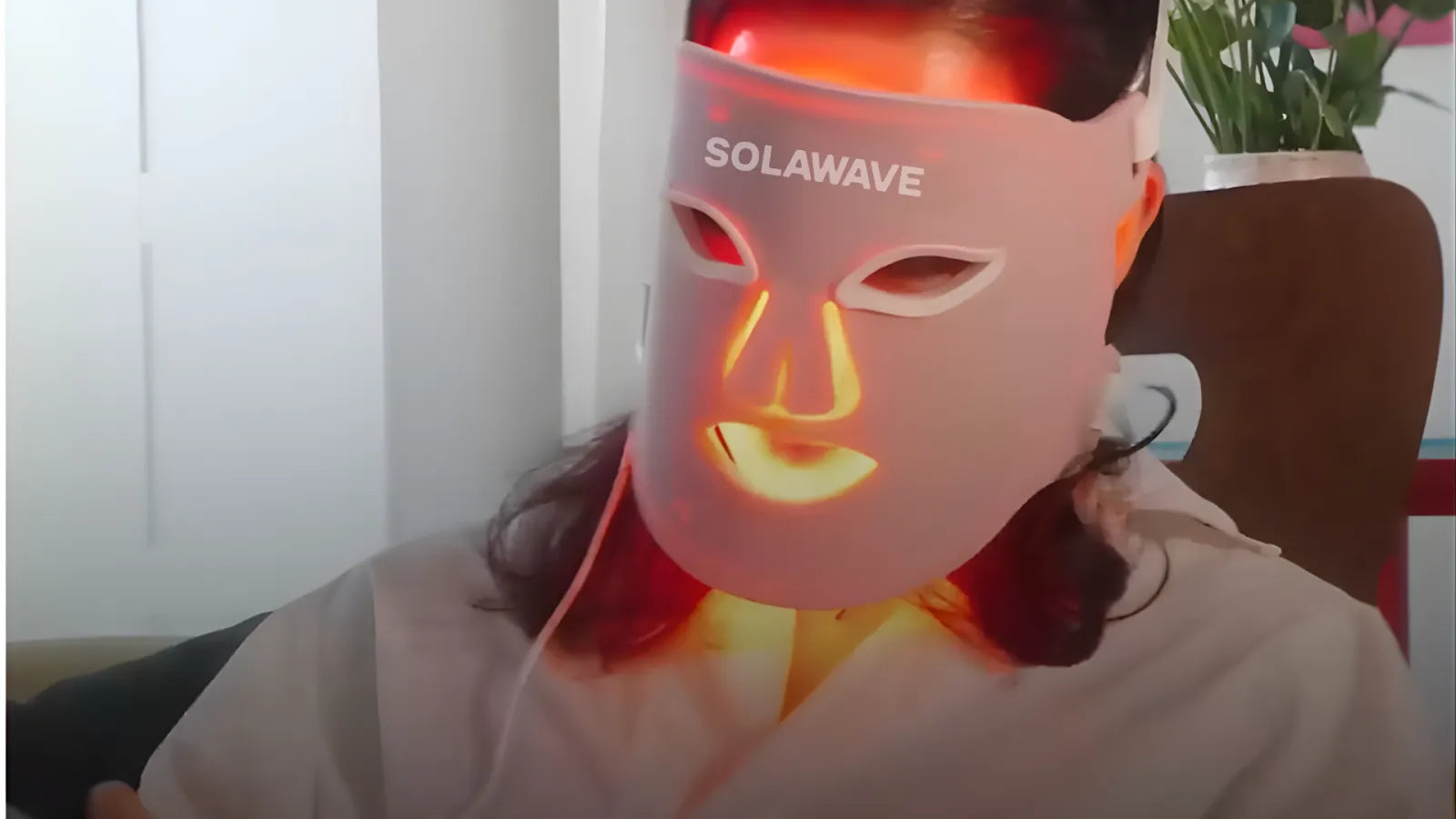
Solawave focuses on making advanced technology simple: pairing devices with targeted skincare to help customers recreate a pro‑level routine in minutes. For full‑face rejuvenation, a Red Light Therapy Mask offers fast, hands‑free treatments 3–5 times per week, while the red light therapy eye mask can support the delicate under‑eye area on busier days.
For more targeted toning or contouring, the red light therapy wand combines red light at 630nm with therapeutic warmth, galvanic current, and facial massage in 12‑minute sessions, letting you focus on smile lines, forehead, or jawline as needed. Applied over a water‑based serum like the LightBoost Red Light Therapy Hyaluronic Serum, the wand glides smoothly and activates all four technologies for an efficient, relaxing ritual.
To round out the routine, Solawave’s skincare collection includes options such as the LightBoost Face and Neck Cream, LightBoost Niacinamide Face and Neck Serum, and LightBoost Collagen & Caffeine Eye Cream, all designed to pair seamlessly with devices. Customers can also extend treatment to the upper body with solutions like the neck and chest red light therapy mask kit.
For an overview of all device and skincare options, browsing Solawave’s shop‑all page or the main Solawave site is a helpful way to compare price, technology, and focus areas side by side.
Solawave has become a leader in the at-home light therapy space, with 30+ beauty awards and strong support from dermatologists and estheticians. The brand centers its devices on clinically relevant wavelengths, including those often cited as the best wavelength for red light therapy for visible skin benefits, while ensuring routines stay gentle, non‑invasive, and realistically easy to stick with.
For cost-conscious yet results‑driven customers, Solawave’s combination of FDA‑cleared devices, targeted skincare, and eligibility for FSA/HSA coverage on many purchases creates a strong balance between affordability and performance—especially compared with recurring in‑office fees.
For those ready to invest in long‑term skin health without locking into endless appointment fees, a thoughtfully chosen at-home system, especially from a science‑backed brand like Solawave, often offers the best mix of freedom, consistency, and visible results.
Most experts suggest using an at-home LED face mask 3–5 times per week, following the manufacturer’s recommended session length, for best results.
For skin, red light around 630–660nm and near‑infrared around 830nm are widely reported as effective for supporting collagen, firmness, and radiance.
Yes, when high‑quality, FDA‑cleared devices are used consistently (usually 3–5 times per week over 8–12 weeks), customers often see smoother texture, reduced fine lines, and improved tone. The Light Therapy Institute ranks the Solawave Wrinkle Retreat Pro mask as its #1 pick.
Main advantages of at-home devices over professional sessions:
Professional treatments can be helpful for short, guided protocols after procedures, or for customers who prefer clinician oversight. Many people start professionally, then shift to at-home devices for maintenance once they understand how their skin responds.