Rated 4.7 out of 5 stars
4.7 / 5


726,000+ customers
Free 60-Day Returns
1-Year Warranty
726,000+ customers
Free 60-Day Returns
1-Year Warranty
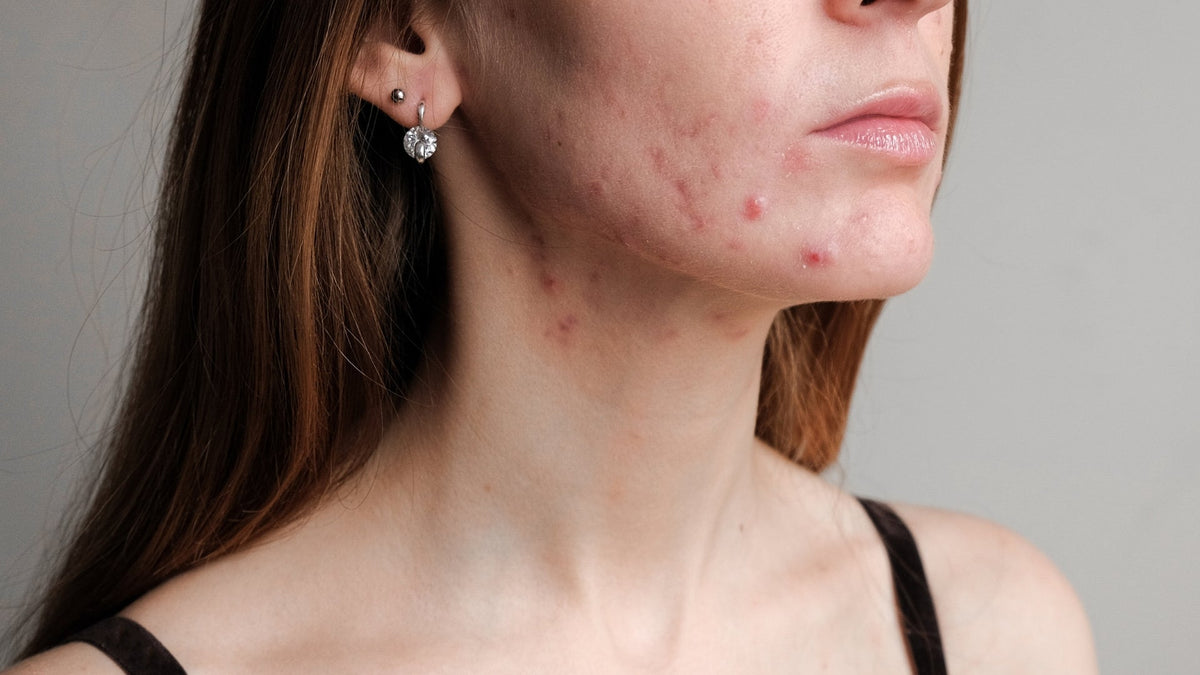
Your skin barrier is the thinnest shield you have, and it's working harder than you think. When it's healthy, everything feels smooth and balanced. When it's not, you feel it immediately. Tightness, stinging, redness, breakouts that seem to come from nowhere. If your skin suddenly can't tolerate the products it used to love, your barrier might be trying to tell you something.
Think of your skin barrier as a brick wall. The "bricks" are dead skin cells called corneocytes, and the "mortar" holding them together is a mix of lipids, ceramides, cholesterol, and fatty acids. This outermost layer of skin, known as the stratum corneum, has one critical job. It keeps moisture in and keeps irritants, allergens, pollution, and bacteria out.
When this barrier is intact, your skin stays hydrated, calm, and resilient. When it's compromised, moisture escapes faster than your skin can replenish it, and environmental aggressors get through unchecked. That's when things start going sideways.
Your skin's microbiome plays a role here, too. A diverse community of beneficial bacteria lives on the skin's surface and helps regulate immune responses, fight harmful pathogens, and maintain the right pH balance. When the barrier is damaged, the microbiome gets disrupted along with it, creating a cycle of sensitivity and irritation that can be hard to break.
A damaged skin barrier doesn't always announce itself with a dramatic breakout. Sometimes the signs are subtle, building over days or weeks until your skin feels completely different from what you're used to.
Here are the most common signals to watch for.
Not the kind of dryness that a good moisturizer fixes overnight. This is skin that feels tight and uncomfortable even right after applying hydration.
If your go-to serum suddenly feels like it's on fire, that's a strong indicator. Healthy barrier skin can tolerate well-formulated products without discomfort.
Your skin may look flushed, irritated, or reactive to things that never bothered it before, including water temperature, wind, or even gentle cleansers.
When the barrier is weakened, bacteria and irritants penetrate more easily. This can trigger breakouts even in skin that isn't typically acne-prone.
Damaged barrier skin often feels bumpy or rough because it can't shed dead cells properly or retain enough moisture to stay smooth.
When moisture is constantly escaping, skin loses that natural bounce and glow. It can look flat and lifeless no matter how many products you layer on.
If several of these sound familiar, you're likely dealing with barrier damage. The good news? It's fixable.
Understanding what broke the barrier down helps you avoid repeating the same mistakes during recovery. The most common culprits include over-exfoliation (too many acids, retinoids, or scrubs too often), using harsh or stripping cleansers, layering too many active ingredients at once, extreme weather exposure, stress, and not giving skin enough time to rest between potent treatments.
The irony is real. Many of us damage our barriers in pursuit of better skin. We add more actives, exfoliate more frequently, and layer on more products, thinking more is better. But the skin barrier has limits. Push past them and your routine starts working against you.
The path to skin barrier repair is less about adding new things and more about simplifying. Your skin needs a break from aggressive actives and a chance to rebuild with ingredients that support, soothe, and protect.
Step one is the hardest for skincare enthusiasts, but it's non-negotiable. Pause all exfoliating acids (AHAs, BHAs, PHAs), retinoids, vitamin C at high concentrations, and anything that stings or tingles. Your barrier needs space to heal, and these ingredients, however beneficial when skin is healthy, can slow recovery when the barrier is compromised.
A solid skin barrier repair routine during the recovery phase looks like this. A gentle, non-foaming cleanser. A hydrating serum or mist. A rich moisturizer that seals everything in. That's it.
Not all moisturizers are created equal when it comes to barrier repair. Look for formulas that combine humectants (to attract moisture), emollients (to soften and smooth), and occlusives (to lock everything in and prevent further moisture loss).
Key ingredients that support barrier repair include ceramides, which directly replenish the lipid "mortar" between skin cells. Hyaluronic acid attracts and binds water at multiple skin depths. Niacinamide supports the skin's natural production of ceramides and helps calm visible redness. Peptides signal the skin to produce more structural proteins. And prebiotics and probiotics help restore the microbiome balance that barrier damage disrupts.
The Solabiome Glowing Skin Starter Kit was built around exactly this philosophy. Its four-step system uses lactobacillus ferment lysate (a probiotic that supports the skin's immune response), mushroom-derived beta-glucan (a prebiotic that soothes and deeply moisturizes), and triple hyaluronic acid at three molecular weights to hydrate across multiple skin layers. It's fragrance-free, dermatologist-tested, and designed to work with compromised skin rather than against it.
The final step in any skin barrier repair routine is a rich cream that reinforces what you've just replenished. The LightBoost Face & Neck Rich Cream combines vegan collagen to support elasticity, multi-peptides that visibly improve firmness, and pro-vitamin D as an antioxidant that reinforces the skin barrier and helps maintain moisture. Applied morning and night, it seals in hydration and creates a protective layer that gives the barrier room to recover.
For additional support during the rebuilding phase, the LightBoost Niacinamide Face & Neck Serum delivers niacinamide directly to the skin, supporting the skin's natural ceramide production and helping calm visible redness.
This is the question everyone asks, and the honest answer depends on how much damage has been done. For mild barrier disruption from a few too many exfoliation sessions, you might see improvement within two to four weeks of simplified care. For more significant damage from months of overuse or chronic irritation, full recovery can take six to eight weeks or longer.
The key is patience and consistency. Resist the temptation to reintroduce actives too soon. Your skin will tell you when it's ready. When products stop stinging, when moisture holds through the day, when redness fades, and texture evens out, those are the signals that your barrier is rebuilding.
For a deeper dive into how your skin's immune system, inflammation pathways, and barrier intelligence all connect, this guide on skin immunity breaks it down further.
Protect what you've rebuilt. Once your barrier is back, the goal shifts from repair to maintenance. Keep your routine balanced. Introduce actives slowly, one at a time. And never underestimate the power of a simple, barrier-supportive skincare ritual that works with your skin's biology instead of against it.
Results may vary. Individual results are not guaranteed.
Common signs include persistent tightness, stinging when applying products, unexpected breakouts, increased redness, rough texture, and a dull appearance. If your skin reacts to products it used to tolerate, barrier damage is likely the cause.
Simplify your routine, pause exfoliating acids and retinoids, and focus on gentle cleansing, deep hydration, and barrier-strengthening ingredients like ceramides, hyaluronic acid, niacinamide, and pre/probiotics.
Mild damage can improve in two to four weeks. More significant damage from chronic overuse may take six to eight weeks or longer. Consistency with a simplified routine matters most.
It's best to pause any active treatments until your barrier has recovered. Once redness and sensitivity have resolved, you can gradually reintroduce devices into your routine.
Pause AHAs, BHAs, retinoids, high-concentration vitamin C, physical scrubs, and anything that causes stinging or tingling. These can be reintroduced gradually once the barrier is healthy again.
Yes. Prebiotics and probiotics support the skin's microbiome, which plays a direct role in immune regulation and barrier health. Probiotic ingredients like lactobacillus ferment lysate help regulate the skin's natural defenses and support a balanced, healthy barrier.
 News
News