Rated 4.7 out of 5 stars
4.7 / 5


726,000+ customers
Free 60-Day Returns
1-Year Warranty
726,000+ customers
Free 60-Day Returns
1-Year Warranty
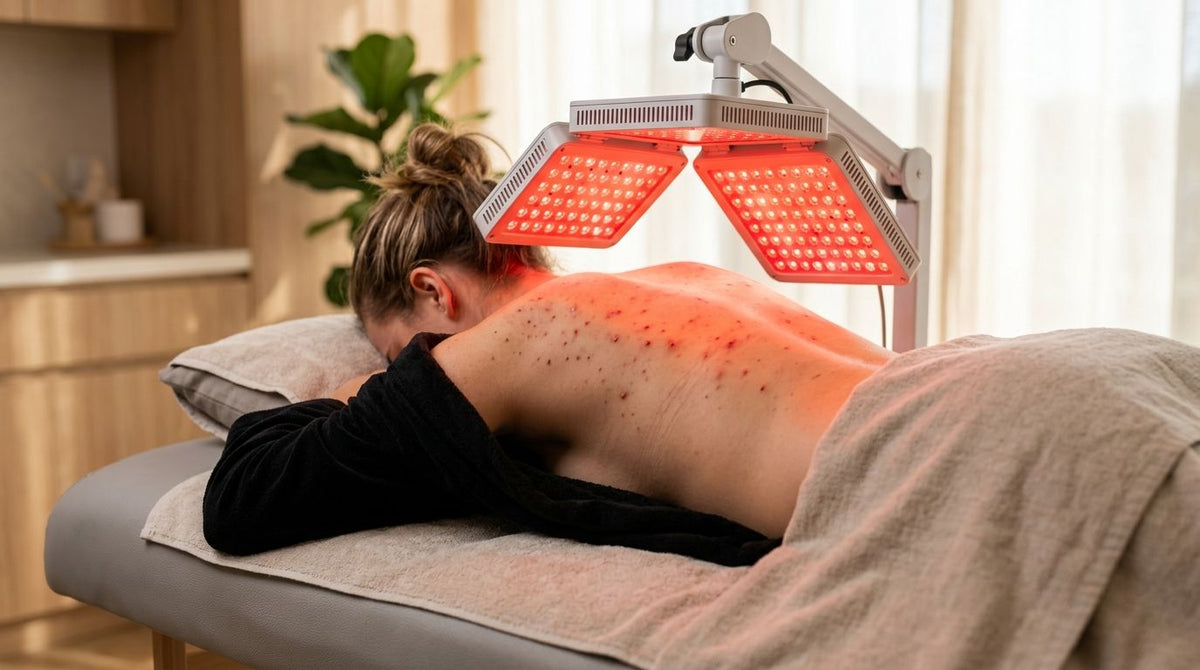
Red light therapy for chest and back acne works by pairing red and blue LED wavelengths on skin that's thicker, harder to reach, and more sweat-exposed than the face, calming inflammation and targeting acne-causing bacteria without the drying fallout of daily retinoids or benzoyl peroxide. Chest and back breakouts usually start from friction, trapped heat, and hormonal shifts rather than surface oil alone, so the treatment has to cover a wider zone consistently instead of chasing one spot at a time.
Chest and back acne is harder to treat than facial acne for a simple reason: you can't see half of it. Back breakouts sit under bra straps, backpacks, and workout gear, so friction and trapped sweat keep re-triggering inflammation even after a breakout starts clearing. Topical treatments applied without full coverage often miss the deeper follicles that cause body acne to scar.
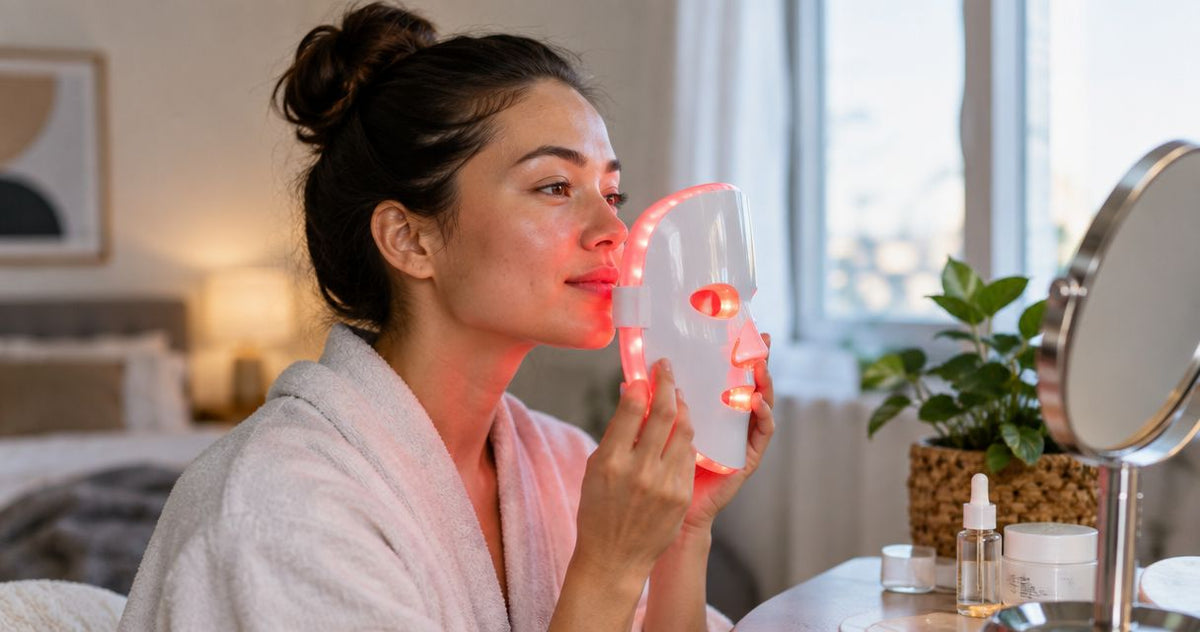
Red light therapy approaches this differently. Red wavelengths reduce inflammation and support the skin's collagen response, while blue wavelengths target the bacteria linked to breakouts without stripping the skin barrier the way daily benzoyl peroxide can. Solawave's Neck & Chest Pro Light Therapy Mask is built specifically for the décolletage — the chest and upper neck zone where friction and heat get trapped under clothing. It's FDA-cleared, the same device category dermatologists point to when they recommend at-home light therapy over trial-and-error topicals in 2026.
The free, manual version of this step is an over-the-counter wash. The faster path is a dedicated spot device.


| Option | Best for | Format | Key limitation |
|---|---|---|---|
| Neck & Chest Pro Light Therapy Mask | Full décolletage coverage in one session | Wearable panel mask | Doesn't reach the back |
| 4-in-1 Radiant Renewal Skincare Wand | Contouring the back, shoulders, and neck | Handheld wand | Requires manual movement across each zone |
| Bye Acne 3-Minute Spot Treatment | Isolated, active breakouts | Compact spot device | Not built for full-zone, chronic body acne |
| OTC benzoyl peroxide / salicylic wash | Budget-first, mild breakouts | Topical wash or pads | Can dry and irritate skin with daily use |
Verdict: the Neck & Chest Pro Light Therapy Mask wins for décolletage coverage, the Radiant Renewal Wand wins for the back, and neither replaces a dermatologist for cystic acne.
Does red light therapy work for chest and back acne?
Yes — red light reduces the inflammation behind body acne breakouts, and blue light targets the bacteria that cause them. Full-zone coverage matters more here than on the face because chest and back breakouts spread over a wider area.
How long does it take to see results on body acne?
Most people need 8-12 weeks of consistent sessions before seeing a real change on chest and back skin. Body skin is thicker than facial skin, so it responds slower even with the same device.
Can I use a facial red light device on my back?
A flat facial mask won't contour to the back the way a handheld wand does. A device like the 4-in-1 Radiant Renewal Skincare Wand is built to glide across curved areas like shoulder blades and upper back.
Is blue light or red light better for body acne?
Blue light targets acne-causing bacteria on active breakouts, while red light calms inflammation and supports healing afterward. Most at-home routines use both together rather than picking one.
What causes acne on the chest and back specifically?
Friction from bras, backpacks, and workout gear, plus trapped sweat and hormonal shifts, are the most common triggers. It's often a different root cause than facial acne, which is why the same spot treatment doesn't always work.
How often should I use red light therapy for body acne?
Three to five sessions a week is the typical starting frequency. Reduce frequency if skin looks more irritated rather than calmer after a week.
Can red light therapy help with acne scars on the chest and back?
Red light supports the skin's collagen response, which can help fade the appearance of post-acne marks over time. It works better on discoloration than on deep, textured scarring.
Is red light therapy safe for sensitive back and chest skin?
FDA-cleared red and blue light devices are generally considered gentler than benzoyl peroxide or acid washes for sensitive skin. Start with shorter sessions and watch for irritation before increasing frequency.
Chest and back acne often clears unevenly depending on which side you sleep on, because pillow and sheet friction reintroduces oil and bacteria overnight on whichever side gets more contact. Rotating sleep position and washing sheets twice a week works as a quiet multiplier on top of any red light routine — it's a free fix most people skip while spending on devices and serums.
 Clear Skin