Rated 4.7 out of 5 stars
4.7 / 5


726,000+ customers
Free 60-Day Returns
1-Year Warranty
726,000+ customers
Free 60-Day Returns
1-Year Warranty
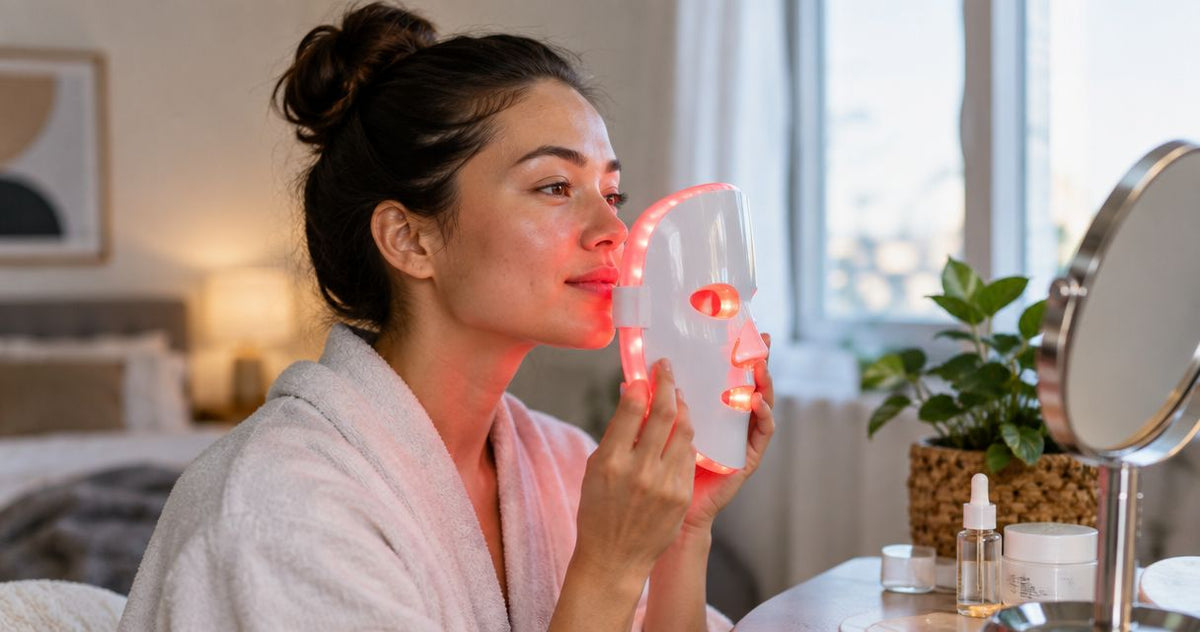
Acne-prone aging skin red light therapy is at-home light treatment with the aim of addressing breakouts while supporting smoother, firmer-looking skin. This 2026 guide explains how to separate active acne from fine lines, choose the right treatment area, and build a routine without overwhelming reactive skin; start with this red light therapy guide for combination skin if oiliness and dry areas also compete for attention.
Acne and visible aging create competing skincare demands. Breakout routines often focus on oil, clogged pores, and active blemishes, while aging routines commonly add richer moisturizers or strong ingredients aimed at lines and uneven tone. Combining everything at once increases the chance of dryness, redness, or a damaged skin barrier.
Light therapy gives you a way to separate those goals. Blue light is used in acne devices because it targets acne-causing bacteria at the skin's surface. Red light is used for concerns such as visible redness, fine lines, and collagen support. A device that combines red and blue light can target an active blemish, while a red-light wand or face mask covers broader areas where aging concerns appear.
That distinction matters in 2026 because the treatment target determines the device. A single chin blemish does not need the same coverage as forehead lines, and post-acne discoloration is not the same condition as an inflamed pimple. Treating every concern as acne can dry the skin. Treating every concern as aging can leave active breakouts without targeted care.
FDA clearance also needs the right context. It confirms that a device has passed the applicable regulatory review for its stated use; it does not mean every skincare device treats every type of acne, scar, wrinkle, or pigmentation concern. Read the indicated use, warnings, session instructions, and eye-protection guidance for the exact device you own.
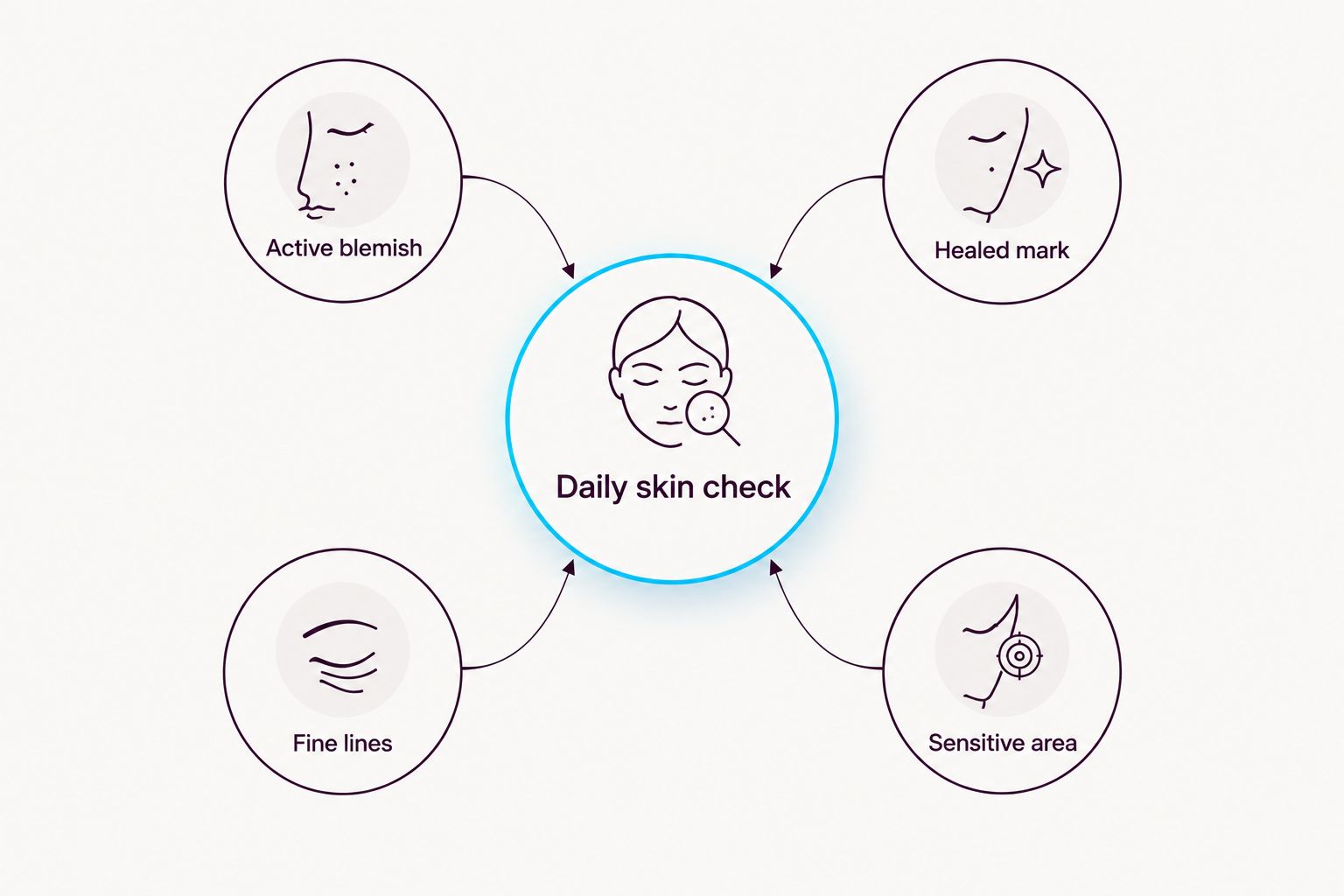
Start with a mirror and clean skin. Identify what is currently active instead of treating every red or brown area as a breakout. A raised, tender blemish needs a different plan from a flat mark left after acne, while fine lines require broader and more consistent coverage than either one.
Create a simple face map for 2026. Divide concerns into active blemishes, healed marks, fine lines, and sensitive areas. This manual step prevents unnecessary spot treatment and gives you a baseline for evaluating whether the routine is helping.
Light therapy should enter a stable routine, not a nightly stack of new products. Keep the surrounding steps basic while you learn how your skin responds. A gentle cleanser, suitable moisturizer, and daytime sun protection create a clearer baseline than several acids, scrubs, and masks used together.
Check the device instructions and your current medications before the first session. Some medications and health conditions increase light sensitivity. A dermatologist should review the plan when you use photosensitizing medication, have severe or cystic acne, experience unexplained skin changes, or are treating a diagnosed condition.
Choose the light according to what you see that day. Active blemishes call for a device designed for acne, while fine lines and broader texture concerns call for red-light coverage across the relevant area. Do not assume a device designed for wrinkles has the same acne indication as a red-and-blue spot device.
The Bye Acne 3-minute spot treatment combines red and blue light for mild-to-moderate acne. Its targeted format fits individual blemishes rather than full-face anti-aging treatment. Solawave positions this FDA-cleared device for at-home spot care, but widespread, severe, or scarring acne still requires professional assessment.
Treat broader aging concerns when the skin is calm enough for full-area coverage. A wand gives you manual control over the path and treatment area, while a mask provides hands-free coverage. Neither format automatically wins; the better option is the one that matches your preferred routine and stated skin concern.
The 4-in-1 Radiant Renewal Skincare Wand is an FDA-cleared at-home red light therapy device for the face, neck, and jawline. Solawave combines red light with other skincare functions in this handheld format. Its advantage is targeted movement across selected areas; its limitation is that you must guide it instead of wearing it hands-free.
Product order becomes more important when acne treatments and age-focused ingredients share one routine. Strong exfoliating acids and retinoids can already cause dryness or sensitivity. Adding several unfamiliar steps on the same night makes it difficult to identify what caused a reaction.
Use the device on skin prepared according to its instructions, then keep the rest of that routine simple. Introduce only one new active ingredient or device at a time. If your dermatologist has prescribed acne medication, that treatment plan takes priority over a general skincare guide.
Anything repeatedly touching acne-prone skin needs consistent cleaning. Oil, skincare residue, and makeup left on a wand or spot device can interfere with the next session and transfer residue back to the skin. Follow the device-specific cleaning directions rather than rinsing electronics or using an unapproved solvent.
Solawave's available device wipes contain 70% isopropyl alcohol and are described as suitable for sanitizing light therapy devices. That does not make every alcohol wipe interchangeable; materials and finishes differ. Use the cleaning method approved for the exact device.
Track acne and aging separately. A routine can help the appearance of one concern before the other changes, and a new breakout can hide progress in texture or redness. Consistent photos and short notes produce a clearer record than checking the mirror several times a day.
Set a review point based on the manufacturer's treatment schedule. In 2026, the right adjustment is the smallest one that isolates the problem: change session timing, a topical product, or treatment area, but not all three together. Seek dermatology care when acne becomes painful, widespread, or scar-forming.
No single format is best for every concern. Targeted devices reduce unnecessary treatment outside a blemish, wands give you manual control, and masks cover a larger area without continuous hand movement. The table keeps prices out because they change; current product cards appear directly below.
| Option | Best for | Starting price | Key limitation |
|---|---|---|---|
| Bye Acne: 3-Minute Pimple Spot Treatment | Individual mild-to-moderate acne spots | See current product card | Does not provide full-face anti-aging coverage |
| 4-in-1 Radiant Renewal Skincare Wand | Guided red light treatment across the face, neck, and jawline | See current product card | Requires manual movement during use |
| Wrinkle Retreat Pro LED Face Mask | Hands-free full-face red light sessions | Check current listing | Not a targeted blue-and-red acne spot device |
| Basic skincare routine without a device | Establishing a stable baseline before light therapy | Not applicable | Does not provide light therapy |
Solawave red light therapy is best for people who want separate tools for targeted blemishes and broader age-related concerns instead of forcing one device to do both jobs. The advantage is a clearer treatment target. The drawback is that using separate devices adds more instructions, cleaning, and scheduling to the routine.


A flat post-breakout mark is not an active clogged or inflamed lesion. Continuing acne spot treatment after the blemish has healed can add an unnecessary step without addressing why the discoloration remains. Reclassify each area during your weekly skin check.
A device does not cancel irritation from acids, retinoids, scrubs, or several new formulas. If redness appears after five changes, you cannot identify the cause. Keep the base routine stable and introduce one variable at a time.
FDA clearance applies to the stated device and intended use. It does not turn an acne spot device into a scar treatment or guarantee identical results for every user. Read the exact indication instead of relying on the category name alone.
Clear residue can remain on a wand or treatment surface. Clean the device according to its instructions after use, especially when it touches acne-prone areas. Do not share a skin-contact device unless its approved cleaning process supports that use.
Active acne, post-breakout marks, and fine lines follow different timelines. In 2026, judge each concern against its own baseline and the device's stated treatment schedule. A temporary breakout does not automatically mean every part of an anti-aging routine failed.
What is the best red light therapy for acne and aging skin?
The best setup separates active blemish treatment from broader aging care. Use an acne-indicated red-and-blue spot device for individual pimples and a red-light wand or mask for full-face fine-line and texture goals.
Can red light therapy treat acne and wrinkles at the same time?
Red light supports age-related skincare goals and appears in some acne devices, but active acne often requires blue light or established acne treatment as well. Match the device indication to the concern instead of assuming red light alone covers both.
Is blue light or red light better for adult acne?
Blue light is the more directly acne-focused wavelength because it targets acne-causing bacteria, while red light addresses visible inflammation and age-related concerns. Combination acne devices use both for complementary roles.
Can I use red light therapy with retinol?
Use retinol and light therapy only in a sequence supported by your device instructions and skincare professional. Introduce them separately so dryness or irritation has an identifiable cause.
How often should I use red light therapy on aging, acne-prone skin?
Use it only as often as the exact device instructions specify. Treatment schedules differ between spot devices, handheld wands, and face masks, so one universal frequency is not accurate.
Is the Solawave acne device FDA-cleared?
Yes, the Solawave Bye Acne device is identified in the provided product information as an FDA-cleared red-and-blue light spot treatment for mild-to-moderate acne. FDA clearance does not replace professional care for severe, painful, or scarring acne.
Should I apply skincare before an LED session?
Prepare the skin exactly as the device instructions direct. Avoid assuming every serum, cream, acid, or prescription is compatible with every LED device.
When should acne-prone skin stop at-home light therapy?
Stop and seek medical guidance if treatment causes persistent pain, significant irritation, or an unexpected skin reaction. A dermatologist should assess widespread, severe, or scar-forming acne rather than leaving it to a cosmetic device alone.
The most useful 2026 routine is not the one with the most products. It is the one that tells you exactly what each step is treating. Label every device and topical as active-acne care, post-breakout care, aging care, or basic barrier support. If a step has no clear job, remove it until the skin is stable enough to assess one change at a time.
Solawave states that its devices are recommended by 750+ doctors and medical experts, but professional support does not remove the need to follow the individual product instructions. Device choice, session length, skincare compatibility, and the severity of your acne still determine whether at-home treatment belongs in your routine.
 Clear Skin