Rated 4.7 out of 5 stars
4.7 / 5


726,000+ customers
Free 60-Day Returns
1-Year Warranty
726,000+ customers
Free 60-Day Returns
1-Year Warranty
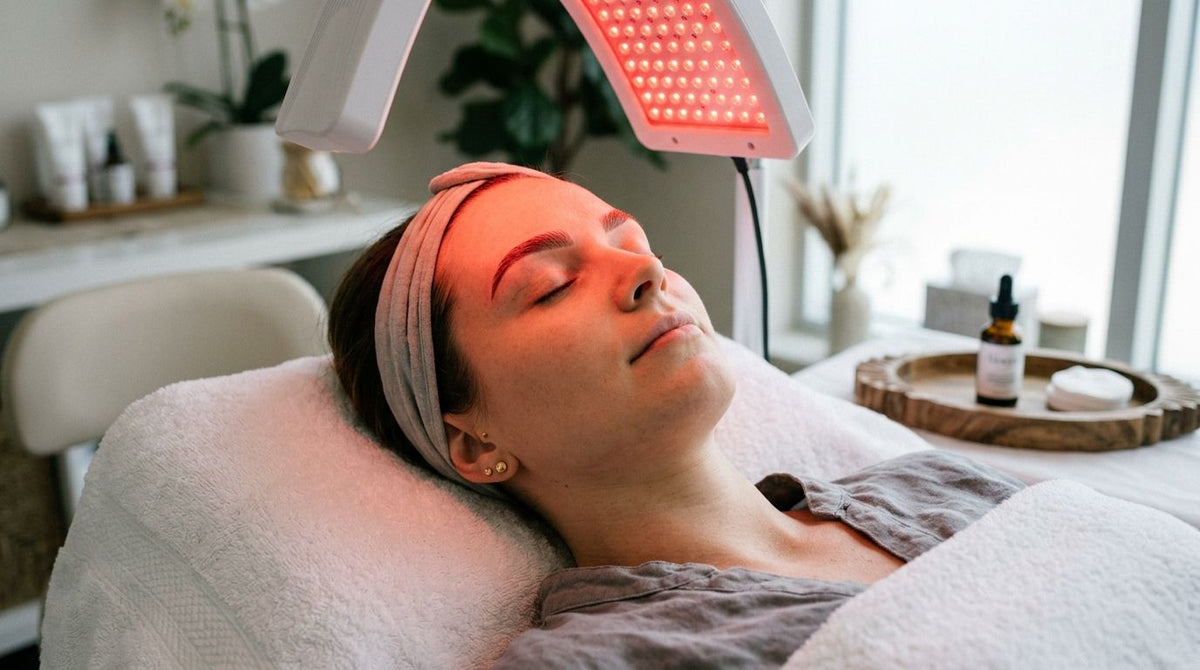
Red light therapy after microblading touch-ups is a post-procedure skincare step timed around brow healing, not a routine you start the same week as your appointment. Microblading opens micro-channels in the skin to deposit pigment, so the timing rules that apply to regular red light therapy users don't apply here — heal first, then treat.
Microblading touch-ups are semi-permanent for a reason: the artist is depositing pigment into the upper dermis, and anything that disrupts that layer before it sets can shorten how long the color lasts. Red light therapy itself doesn't remove pigment, but heat, friction, and premature stimulation near an unhealed micro-channel can. That's the entire reason this guide exists as its own category instead of falling under general "how to use red light therapy" advice.
Most microblading aftercare protocols call for the area to fully heal — commonly several weeks — before introducing any new topical or device-based step. The 4-in-1 Radiant Renewal skincare wand is built for facial skin generally, but the brow strip itself needs to sit out until your artist gives the all-clear. Getting this sequence backwards is the single most common mistake in this segment.
People who just paid for a microblading touch-up in 2026 are usually trying to protect an investment, not experiment with a new gadget. Their skincare questions center on one thing: will this device fade my brows or help them heal faster? That's a narrower, higher-stakes question than the general "does red light therapy work" search most users run.
This segment also tends to already own a red light device for the rest of their face and just wants to know when it's safe to resume normal use around the brow area — not whether red light therapy works at all. The advice below is written for that exact situation.
Every microblading studio gives a slightly different aftercare schedule, and that schedule overrides any generic red light therapy timeline you find online.
You can still use red light therapy on the rest of your face while your brows heal — you just work around the strip itself.
Once healing is confirmed, red light therapy over the brow area itself is a separate decision from general facial use.


Healing skin is more vulnerable to bacteria than usual, so device hygiene matters more here than in a normal skincare routine.
Don't jump straight back to your pre-microblading red light therapy schedule the day you get clearance.
How you prep the area before a session affects how well it responds, especially on skin that just finished healing.
This segment has one metric general red light therapy users don't track: whether the pigment itself is holding up.
| Option | Best for | Key limitation |
|---|---|---|
| Handheld wand (Solawave Radiant Renewal) | Targeted use once brows are healed, easy to angle away from the strip during healing | Requires manual precision to avoid the brow area early on |
| Full-face LED mask | Treating the rest of the face while brows heal | Covers the brow strip too, so timing matters more than with a wand |
| Professional in-studio LED treatment | Clients who want guidance directly from a licensed provider | Requires an appointment and isn't something you control at home |
| Waiting it out with no device | Anyone unsure about timing or without artist clearance yet | Delays any red light therapy benefit until healing is fully confirmed |
The safest verdict for most microblading touch-up clients in 2026: use red light therapy everywhere except the brow strip until your artist confirms healing, then reintroduce the area gradually.
How long after microblading can you use red light therapy?
Most people wait until their artist confirms the brow area is fully healed before using red light therapy directly on it, which is typically several weeks after a touch-up. You can usually resume red light therapy on the rest of your face much sooner, just working around the brow strip.
Does red light therapy fade microblading pigment?
Red light therapy itself doesn't remove pigment, but using it too early on unhealed skin can disrupt the healing process and affect how well pigment sets. Waiting for full healing before treating the brow area directly avoids this risk.
Can I use a red light therapy mask on my whole face after a microblading touch-up?
Yes, as long as you're comfortable with the mask covering the brow strip, which most people avoid until healing is confirmed. Some users skip full-face masking during the healing window and stick to a handheld wand angled away from the brows instead.
Should I ask my microblading artist about red light therapy specifically?
Yes — ask about red light therapy by name rather than "skincare devices" in general, since aftercare advice varies by studio and technique. Your artist knows the pigment and technique used on you specifically.
What red light therapy device works best after microblading heals?
A handheld wand like the Solawave 4-in-1 Radiant Renewal gives more control over which areas get treated than a full-face mask does. That precision matters most in the weeks right after brow healing when you're still easing back into a full routine.
Can red light therapy help microblading heal faster?
There's no aftercare guidance from microblading studios recommending red light therapy to speed healing, and most protocols simply call for the area to heal untouched. Focus red light therapy on the rest of your face during that window instead.
Is it safe to use red light therapy serums near healing microblading?
Skip activating serums and other actives on the brow strip itself until healing is complete, even if you resume the device on the rest of your face. A plain, fragrance-free cleanse and gentle moisture routine is safer for the healing area in the meantime.
The brow strip heals faster than most people expect once the visible scabbing clears, but the deeper dermal layer where the pigment sits takes longer — that gap is exactly where people jump the gun with red light therapy. Wait for your artist's clearance, not just how your brows look in the mirror, and treat the rest of your face with red light therapy normally in the meantime.