Rated 4.7 out of 5 stars
4.7 / 5


726,000+ customers
Free 60-Day Returns
1-Year Warranty
726,000+ customers
Free 60-Day Returns
1-Year Warranty
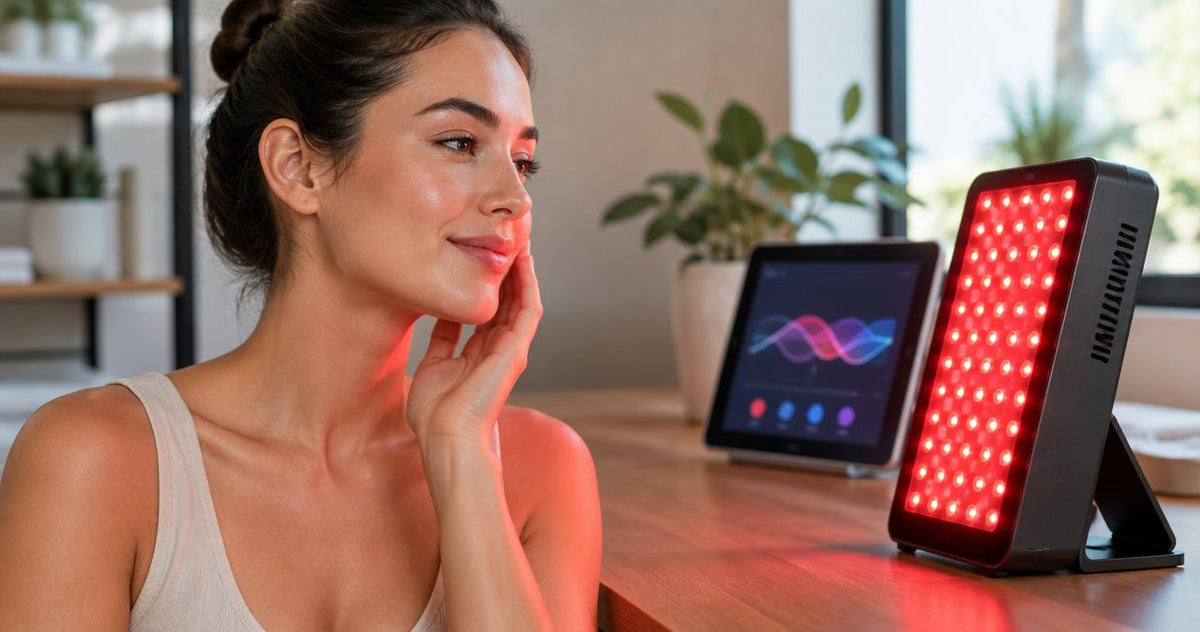
Red light therapy works on every day of your cycle, but your skin's reaction to it shifts as hormones move — time the sessions to each phase and you get fewer breakouts and faster visible results from red light therapy and menstrual cycle skin changes.
Estrogen and progesterone don't just run your mood — they run your oil glands, your skin barrier, and how much inflammation shows up on your face. A red light session that clears skin beautifully in week two can trigger a breakout if you run it the same way in week four. Most people never connect the dots between hormonal acne and where they are in their cycle, so they blame the device instead of the timing.
In 2026, red light therapy is one of the most searched at-home skincare treatments, and cycle-based questions about it are climbing right along with it. The fix isn't a new device. It's a four-phase schedule.
Map sessions to a standard 28-day cycle (adjust the day ranges if yours runs shorter or longer):
| Phase | Typical days | Skin behavior | Red light approach |
|---|---|---|---|
| Menstrual | 1-5 | Sensitive, prone to puffiness | Short, calming sessions |
| Follicular | 6-13 | Barrier strong, glow rising | Full-length anti-aging sessions |
| Ovulation | 14-16 | Peak glow | Maintain normal routine |
| Luteal | 17-28 | Oily, breakout-prone | Shorter sessions + spot treatment |
Cramps and low-grade inflammation are common in this window, and red light therapy at 3-5 minutes helps with redness without over-stimulating skin that's already sensitive. Skip exfoliating acids or heavier boost serums here — this is a calm-down phase, not a treat-everything phase.
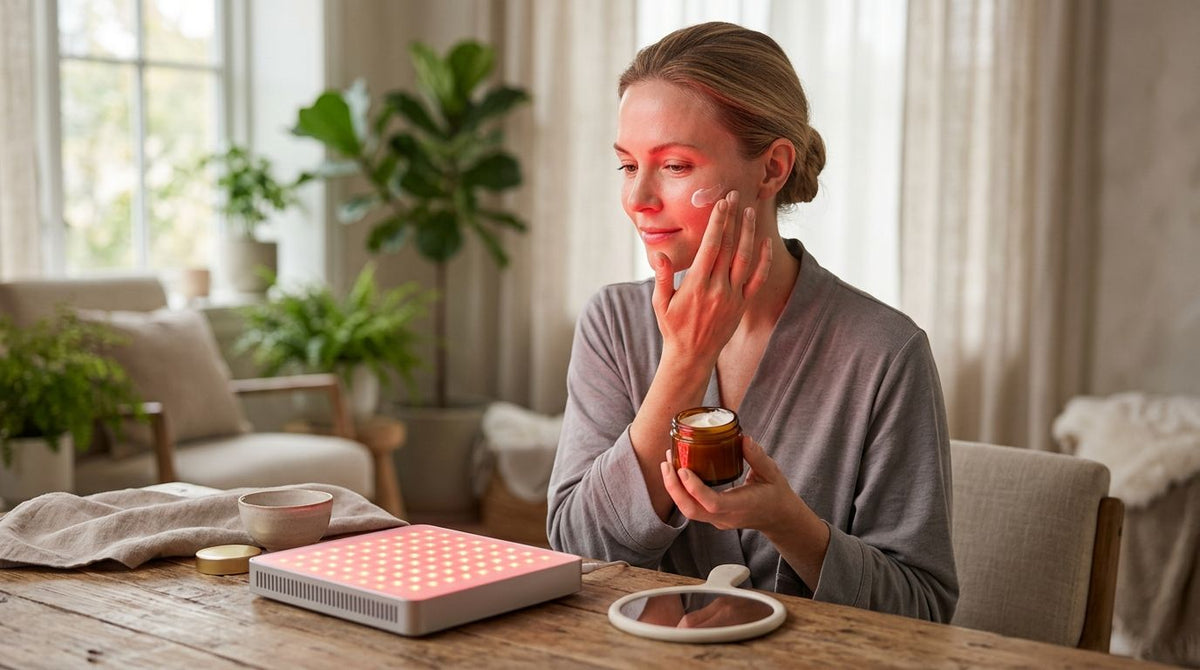
Rising estrogen thickens the skin barrier and boosts collagen production naturally during this stretch, which makes it the strongest window to run a full anti-aging red light protocol. The 4-in-1 Radiant Renewal Skincare Wand is built for exactly this kind of longer, consistent session — run it at full length here rather than saving your best skincare days for later in the cycle.
Skin typically looks its clearest and most even around ovulation because estrogen peaks right before it drops. There's no special red light protocol needed here — just keep your regular routine going so you don't lose the momentum built during the follicular phase.
Progesterone rises through the luteal phase and oil glands respond by producing more sebum, which is why breakouts cluster in the 5-7 days before a period starts. Shortening the full-face session and layering a targeted Bye Acne 3-Minute Spot Treatment onto active spots controls flare-ups without over-treating skin that's already producing more oil than usual.


Yes — shorter sessions plus targeted spot treatment during the 5-7 days before your period address the oil spike that drives most period breakouts. Full-length sessions during this window can over-stimulate already-oily skin, so pull back the duration rather than skipping treatment entirely.
Yes, red light therapy is safe to use during your period at any point in days 1-5 of the cycle. Keep sessions to 3-5 minutes since skin tends to run more sensitive and puffy in this window.
Yes, red light therapy is compatible with hormonal birth control, and users on the pill or IUD often see flatter breakout patterns since ovulation is suppressed. The four-phase schedule above still applies as a general guide, though breakout timing may shift or soften.
When is the best time in my cycle to start red light therapy?
The follicular phase, roughly days 6-13, is the best window to start because rising estrogen strengthens the skin barrier and supports collagen production. Starting here lets skin adjust to the routine before the more breakout-prone luteal phase arrives.
Does red light therapy make period acne worse?
No, red light therapy does not worsen period acne when sessions are shortened during the luteal phase (days 17-28). Running full-length sessions on already-oily skin can feel harsher, so cut duration and add a spot treatment instead.
How long should a red light therapy session be during my period?
A red light therapy session during your period should run 3-5 minutes, shorter than the standard 10-15 minute session. Skin tends to run more sensitive during menstruation, so a shorter session avoids irritation.
Can red light therapy help with hormonal acne?
Red light therapy helps manage hormonal acne by calming inflammation in breakout-prone areas, especially when paired with a targeted spot treatment. It won't stop the hormonal oil spike itself, but it reduces how inflamed and prolonged the resulting breakouts get.
What's the difference between red light and blue light for period breakouts?
Red light therapy calms inflammation and supports healing, while blue light targets acne-causing bacteria directly. Devices combining both, used on active breakouts during the luteal phase, address period acne from two angles at once.
Should I change my red light therapy routine on birth control?
Red light therapy routines generally don't need major changes on hormonal birth control, though breakout patterns are often flatter. The same four-phase schedule works as a baseline; adjust based on how your individual skin actually responds.
Is it safe to use red light therapy every day of my cycle?
Yes, red light therapy is safe to use every day of your cycle in 2026, with session length being the variable that changes, not frequency. Shorter sessions during menstrual and luteal phases, full-length sessions during follicular and ovulation.
Most people chase a new serum or a stronger device when period breakouts hit, when the actual fix is a shorter session and a spot treatment for one week out of four. Track your breakouts against your cycle for one month before changing anything else — the pattern usually explains more than the product does.