Rated 4.7 out of 5 stars
4.7 / 5


726,000+ customers
Free 60-Day Returns
1-Year Warranty
726,000+ customers
Free 60-Day Returns
1-Year Warranty
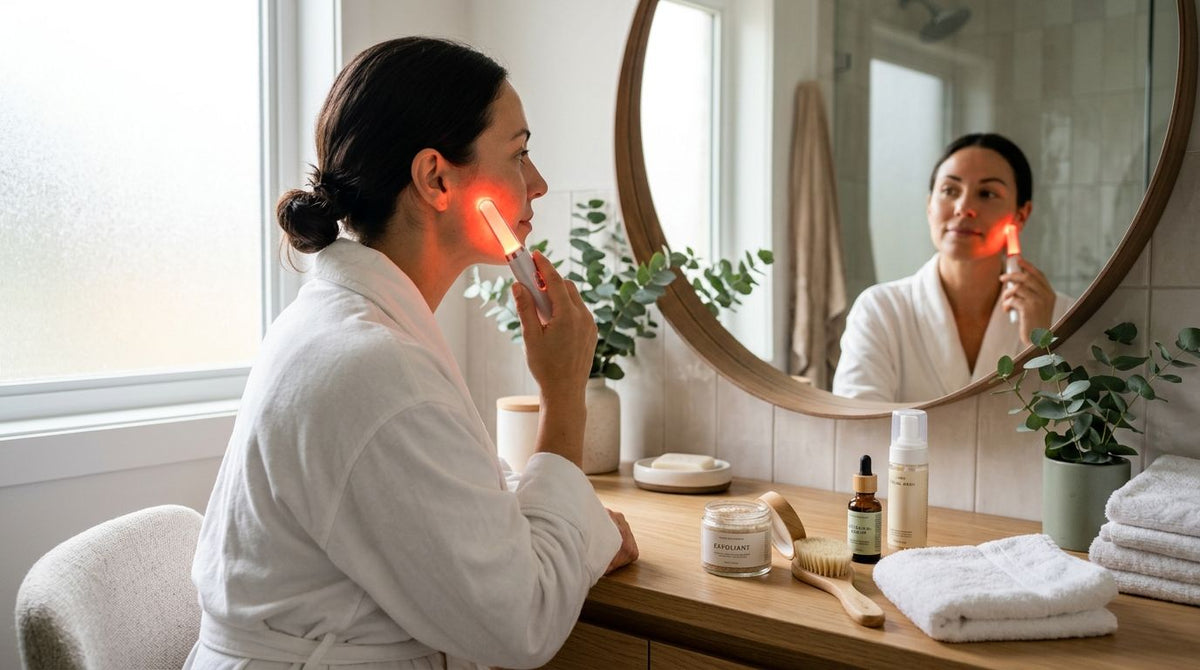
Red light therapy and exfoliation work together when you sequence them correctly — get the order wrong and you either waste the exfoliation step or irritate skin that just doesn't need the extra light exposure yet.
Exfoliation strips away dead skin cells sitting on top of the epidermis. That clears the path for red light to reach living tissue more evenly, which is why most skincare routines put exfoliation before a light therapy session rather than after.
The problem shows up when exfoliation is aggressive. Chemical peels, strong acids, and microdermabrasion thin the skin's protective barrier for a window of time, and stacking heat or light exposure on top of that barrier while it's compromised is what triggers redness, stinging, or breakouts. The fix isn't skipping either step — it's spacing them correctly based on how strong the exfoliation was.
A gentle exfoliating cleanser and a professional-strength peel are not the same event, and treating them identically is the most common mistake people make when combining the two.
For routine, at-home exfoliation, red light therapy fits in the same session. Here's the order that works for most skin types:
The 4-in-1 Radiant Renewal Skincare Wand is built for this kind of routine — red light, vibration, and warming therapy in one FDA-cleared device that slots in right after the exfoliation step without adding a second appliance to the counter.
Physical exfoliants — scrubs, konjac sponges, dry brushing — are the lowest-risk pairing. They don't chemically alter the skin barrier, so red light therapy can follow immediately in the same routine.
The one caveat: skip red light therapy over any area that's visibly scraped or over-scrubbed. Broken skin doesn't need light exposure, it needs to heal first.
Verdict: Buy this pairing. Physical exfoliation plus same-session red light therapy is the safest combination for daily or every-other-day routines in 2026.
AHA and BHA toners or serums are stronger than a scrub because they work below the surface, dissolving the bonds that hold dead skin cells together. Mild formulas used two to three times a week are generally fine to follow with red light therapy the same day, once any tingling or flushing has settled.
Professional-strength peels are a different category. Using red light therapy after a chemical peel works best once you give the skin 24 to 48 hours to recover — the barrier needs that window to rebuild before it can handle additional light exposure without reacting.
Verdict: Hold on same-day pairing for anything above a mild, over-the-counter acid strength.
Retinol thins the outer skin layer over time and increases sensitivity to light and friction. Many people use red light therapy and retinol on alternating nights rather than stacking both at once, especially in the first few weeks of starting a retinol product.
Once skin has adjusted and isn't flaking or peeling, red light therapy and retinol can share the same evening routine for most people — light first, then retinol, since retinol needs to sit on clean, undiluted skin.
Verdict: Wait until your skin has fully adjusted to retinol before combining the two nightly.
No single schedule works for everyone because too many variables change the equation:


Microdermabrasion physically removes a layer of surface skin, which puts it closer to a chemical peel than a scrub in terms of recovery time. Waiting until any redness fades — often the same day for at-home versions, longer for professional treatments — is the safer call before running a red light therapy device over the area.
You don't need to separate the two into different days for routine exfoliation. Most people run both in the same session two to three times a week, reserving standalone red light therapy sessions for the days in between.
Can you use red light therapy right after exfoliating?
Yes, for standard exfoliation like a scrub or mild acid toner, red light therapy can follow in the same session. Wait a few minutes if skin feels warm or flushed before starting.
Should you exfoliate before or after red light therapy?
Exfoliate first. Removing dead skin cells clears the surface so red light reaches living tissue more evenly.
How long should you wait after a chemical peel to use red light therapy?
Wait 24 to 48 hours after a professional-strength chemical peel before using red light therapy. That window lets the skin barrier recover enough to handle additional light exposure without reacting.
Can you use red light therapy and retinol on the same night?
Yes, once skin has adjusted to retinol and isn't flaking or peeling. Run red light therapy first, then apply retinol to clean, undiluted skin.
Does exfoliation make red light therapy more effective?
Exfoliation removes the buildup that can block even light penetration, so pairing the two in the right order tends to improve how evenly red light reaches the skin.
How often should you exfoliate if you use red light therapy regularly?
Two to three times a week is a common pace for people who also run red light therapy sessions, with standalone light sessions filling the days in between.
Can strong exfoliants make red light therapy irritating?
Yes, stacking strong acids, peels, or microdermabrasion with red light therapy before the skin barrier recovers can cause redness or stinging. Space the two out based on how aggressive the exfoliation was.
The order matters more than the timing gap for everyday exfoliation — exfoliate, then treat, same session, most days. The 24-to-48-hour rule only kicks in once you're dealing with a real peel or resurfacing treatment, not a Tuesday-night scrub.