Wrinkle Retreat Pro Face Mask
$399
Buy 1 Item, Get 1 Item of equal or lesser value for free.
Must add 2 items to cart.


726,000+ customers
Free 60-Day Returns
1-year warranty

One of the most common questions from those new to light therapy is about the red light therapy results timeline. You’re investing in your skin’s health and you’re excited to see a change. The good news is that red light therapy begins its work at a cellular level from the very first session. While some customers feel a soothing warmth and notice a subtle glow right away, the more significant, visible transformations happen with consistent use over several weeks and months.
Red light therapy, also called photobiomodulation, uses wavelengths of 630 to 850 nm to stimulate mitochondrial ATP production in skin cells, triggering collagen synthesis, reduced inflammation, and accelerated cellular repair. As Stanford Medicine researchers have noted, published studies validating the science of photobiomodulation have increased significantly in recent years, reinforcing what dermatologists have observed clinically for decades. Most users see their first visible results within 2 to 4 weeks of consistent use at 3 to 5 sessions per week, with deeper structural improvements in fine lines and firmness accumulating between weeks 4 and 12.
Here is a clear week-by-week breakdown of when most users see results with 3 to 5 sessions per week.
|
Timeframe |
What to Expect |
|
Weeks 1 to 2 |
Improved glow, reduced puffiness, calmer redness as circulation increases |
|
Weeks 3 to 4 |
More even skin tone, smoother texture, visibly reduced inflammation |
|
Weeks 4 to 8 |
Fine lines around the eyes and forehead begin to soften as collagen production increases |
|
Weeks 8 to 12 |
Measurable wrinkle reduction, firmer skin, long-term rejuvenation with consistent use |
Timelines vary based on skin concern, device power, and session frequency. Acne and inflammation typically respond faster (2 to 4 weeks). Collagen-driven changes like wrinkle reduction require 6 to 12 weeks of sustained use.
Red light therapy works by delivering concentrated wavelengths of red and near-infrared light deep into the skin. This light is absorbed by mitochondria, the energy centers inside your cells.
That absorption stimulates the production of adenosine triphosphate (ATP), which is the primary energy currency for every cell in your body. With more energy available, your cells repair damage faster, reduce inflammation, and ramp up the production of collagen and elastin. Collagen gives skin its structure and firmness. Elastin provides its bounce and flexibility. As we age, production of both slows down, leading to fine lines and wrinkles. Red light therapy helps counteract this process, promoting visibly smoother and firmer skin over time.
One key mechanism behind these improvements is vasodilation. When red and near-infrared wavelengths reach the skin, they widen blood vessels, allowing more blood, oxygen, and nutrients to flow to the treatment area. This increased circulation supports collagen production, accelerates cellular repair, and creates that immediate post-treatment glow many users notice right away.
It is a completely gentle treatment with no downtime and no risk of UV damage. And because red light targets mitochondria rather than melanin, it is safe and equally effective across all Fitzpatrick skin types (I through VI).
During the first month of regular treatments, the changes are often more felt than seen. Many people report that their skin feels smoother, more hydrated, and looks brighter. This happens because the therapy is immediately working to boost circulation and reduce underlying inflammation, creating a more even-toned complexion and diminishing visible redness from the beginning.
If you have puffiness, you will likely notice it starting to diminish. These early signs are proof that your skin is responding to the treatment.
This is where the real, visible payoff begins. After a month or two of consistent use, increased collagen production starts to show. Fine lines, especially around the eyes and forehead, soften and become less apparent. Many users find that crow's feet and smile lines are among the first to show visible improvement.
Your skin's texture will continue improving, feeling firmer and more elastic. The healthy glow from earlier sessions becomes more pronounced and lasting. This is the stage where friends and family start noticing something different. To see how these timelines translate into real skin changes, browse Solawave's red light therapy before and after results.
Beyond three months, the structural improvements become much more significant. Deeper wrinkles appear visibly diminished. Your skin develops a sustained firmness and plumpness that feels youthful and resilient.
For those concerned with hyperpigmentation or old acne scars, this is often when they fade noticeably. The therapy helps regulate melanin production, leading to a more uniform skin tone over time. The key to maintaining these results is continuing your red light therapy sessions as a regular part of your skincare routine.
How long red light therapy takes depends on what you are treating. Here is what consistent use at 3 to 5 sessions per week typically delivers.
Most users notice subtle brightness and calmer redness within weeks 1 to 2, as red light boosts blood flow and reduces surface inflammation from the very first session.
Active lesion reduction typically begins around 4 to 6 weeks of consistent use, as red light targets inflammation and supports skin barrier repair.
Visible collagen remodeling, including softer fine lines and improved firmness, is clearest between 8 and 12 weeks. Structural collagen rebuilding is a gradual biological process.
Fading often begins at 4 to 8 weeks, as red light supports melanin regulation and tissue regeneration. Older or deeper scars may require 3 months or more.
Consistency is your superpower. Using your device sporadically will not deliver the results you want. For best results, most experts recommend using at-home red light therapy devices, like the Wrinkle Retreat Pro mask, for about 3 minutes per session, 3 to 5 times per week. Think of it like exercise for your skin. The more consistent you are, the stronger and healthier it becomes.
Device quality matters. The effectiveness of your treatment is directly linked to your device. Choosing an FDA-cleared device ensures you are getting the proper wavelengths and energy output needed for real results. Many devices launch without this clearance, leading to inconsistent safety and performance.
Your unique skin. Factors like your age, genetics, lifestyle, and the specific concerns you are targeting all play a role in your results timeline. Someone in their 30s targeting early fine lines may see changes faster than someone in their 60s addressing deeper-set wrinkles. Focus on your own journey and stay consistent.
Skin preparation. Clean, makeup-free skin allows maximum light penetration. Using a compatible serum before treatment, like the LightBoost Wand Activating Serum, can enhance delivery and skin response.
One of the best ways to stay motivated and measure your results is to document your journey from day one. Because red light therapy produces gradual improvements, it can be easy to overlook week-to-week changes unless you're tracking them deliberately.
Start a simple photo diary. Take a close-up photo of your target areas (forehead lines, under-eye area, jawline, neck) in the same lighting at the same angle once per week. Natural daylight works best, and morning is ideal before any skincare products are applied. Side-by-side comparison at the 4-week and 8-week marks is where most users see the most striking differences.
Keeping a brief note alongside each photo about how your skin feels (hydration, smoothness, firmness, redness levels) adds useful context that photos alone can miss.
A common question in 2026, especially among long-term users, is whether red light therapy results last once you stop treatments. The short answer is that results are maintenance-dependent.
Red light therapy is cumulative, meaning each session builds on the one before it. When you stop, the elevated cellular energy production and collagen stimulation gradually return to baseline levels. Your skin won't "reverse" overnight, but over several weeks without treatment, the rate of collagen production will slow back to its natural, age-determined pace.
This is why dermatologists and skincare professionals recommend transitioning to a maintenance schedule rather than stopping entirely. After completing an initial 8 to 12 week protocol of 3 to 5 sessions per week, most users can maintain their results with 2 to 3 sessions per week going forward. Think of it the same way you think about exercise. The benefits last only as long as the habit does.
To enhance your results and get a spa-level experience at home, it’s important to use your devices correctly and pair them with the right products from our skincare collection.
For certain devices, using a conductive serum is essential. The Radiant Renewal Skincare Wand, our revolutionary red light therapy wand, combines four powerful technologies: Red Light Therapy, Galvanic Current, Therapeutic Warmth, and Facial Massage. To activate the galvanic current and ensure all four technologies work together for maximum effect, you need to use a water-based serum. Pairing the wand with the LightBoost Red Light Therapy Hyaluronic Serum not only facilitates the treatment but also provides a potent dose of hydration for plumper, more radiant skin. For an added boost of brightening, the LightBoost Niacinamide Face and Neck Serum is another excellent choice to use with the wand.
Results may vary. Individual results are not guaranteed. Consistency is key, and we recommend using your Solawave device 3 to 5 times per week for best results. Solawave's Wrinkle Retreat Pro face mask, Eye Recovery Pro, 4-in-1 Skincare Wand and 2-in-1 Skincare Mini are FDA-cleared.


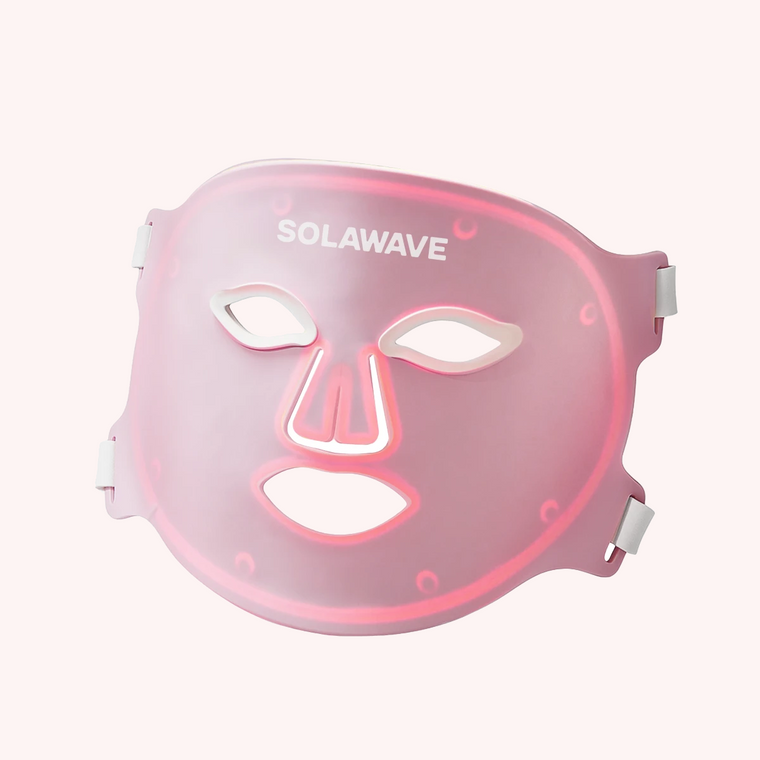
For overall facial rejuvenation, Solawave’s hero product, the Wrinkle Retreat Pro Light Therapy Face Mask, is an excellent choice. This next-generation Red Light Therapy Mask allows you to treat your entire face with four different wavelengths of light in a single 3-minute session. If you're concerned about signs of aging on your neck and chest, the Red Light Therapy Neck & Chest Rejuvenating Skincare Mask offers a targeted solution for this often-neglected area, and can be paired with the rich LightBoost Face and Neck Cream. For the delicate eye area, the red light therapy eye mask is specifically designed to target crow's feet and undereye concerns, and pairs wonderfully with the LightBoost Collagen Caffeine Eye Cream.


Most users notice subtle improvements like a brighter glow and reduced puffiness within the first 1 to 2 weeks of consistent use. More visible changes, including softer fine lines and firmer skin, typically emerge between weeks 4 and 12, depending on your skin concern and session frequency.
For most at-home devices, 3 to 5 sessions per week is the ideal frequency recommended by dermatologists and device manufacturers. Red light therapy follows a biphasic dose-response curve, meaning more is not always better. Overdoing it won't accelerate results and may reduce the overall benefit of each session.
Yes. Red light therapy targets mitochondria inside skin cells, not melanin. This makes it safe and equally effective across all Fitzpatrick skin types (I through VI). Unlike laser and IPL treatments, red light does not carry a risk of burns or hyperpigmentation in darker skin tones.
Red light therapy (around 630 nm) primarily reduces inflammation and supports skin healing, while blue light therapy (around 415 nm) targets and destroys the acne-causing bacteria (P. acnes) that live inside pores. Many clinically tested devices use both wavelengths together for a more comprehensive approach to breakout treatment.