Rated 4.7 out of 5 stars
4.7 / 5


726,000+ customers
Free 60-Day Returns
1-Year Warranty
726,000+ customers
Free 60-Day Returns
1-Year Warranty
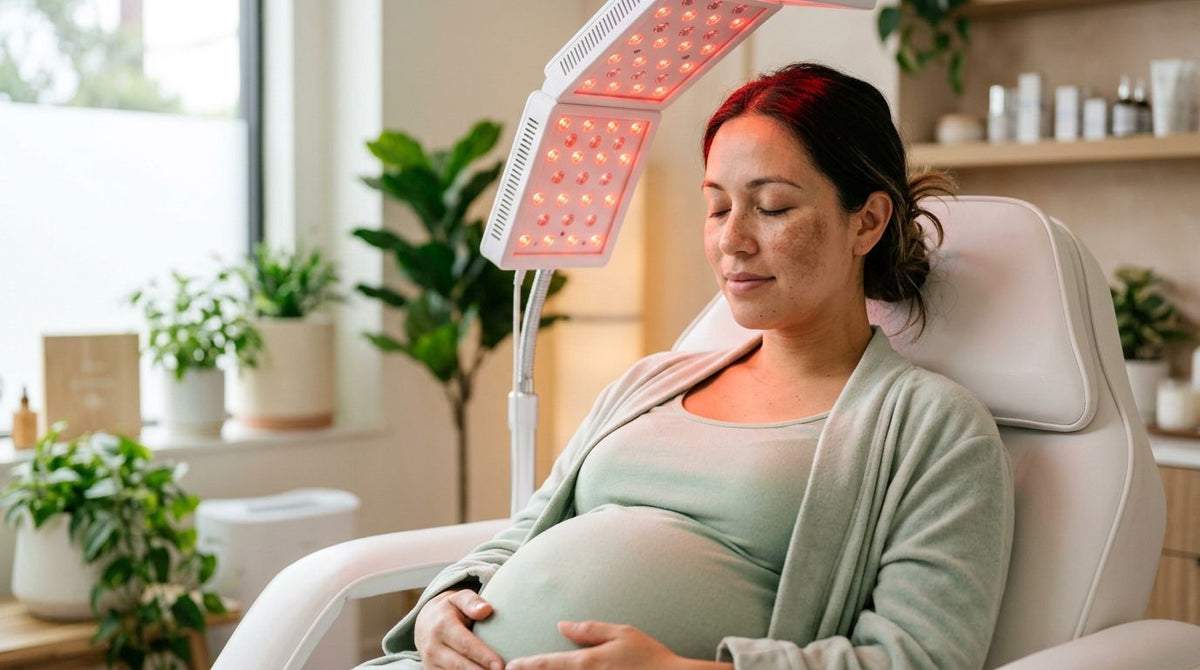
Red light therapy for melasma during pregnancy needs a different game plan than a standard hyperpigmentation routine, because the drugs that normally treat melasma — hydroquinone, retinoids, oral tranexamic acid — are off-limits once you're expecting.
Red light therapy for melasma during pregnancy is a non-drug approach to managing chloasma gravidarum — the hormone-triggered dark patches on the forehead, cheeks, and upper lip that show up in a majority of pregnancies — with the goal of controlling pigmentation without ingredients your OB will flag. Melasma during pregnancy behaves differently than melasma in a non-pregnant adult: it's driven by estrogen and progesterone surges, not just UV exposure, and it often shows up or worsens in the second and third trimester regardless of how careful you've been with sunscreen.
That hormonal driver is why the standard toolkit gets smaller. Hydroquinone, tretinoin, and oral tranexamic acid are the first-line treatments dermatologists reach for outside of pregnancy, and all three are typically paused until after delivery. That leaves sun protection, a narrower list of pregnancy-safe topicals, and non-drug options like red light therapy as the main levers you can pull.
Melasma affects an estimated 50-70% of pregnant women, according to dermatology literature, which makes it one of the most common skin complaints of pregnancy — right behind stretch marks and linea nigra. Most cases fade within 6-12 months after delivery once hormones stabilize, but a meaningful share persist and need active management, which is exactly why picking safe tools now matters.
Don't assume every new dark patch is melasma. Post-inflammatory hyperpigmentation, sun spots, and even certain rashes can mimic it.
This step comes before you buy anything, not after. No at-home red light device on the market today has a dedicated clinical trial in pregnant populations, including FDA-cleared ones, because FDA clearance covers the device's general skincare indication, not pregnancy-specific safety data.
Sun protection is free, it's the single biggest lever for melasma, and it works whether or not you add a device on top.
Drop hydroquinone, retinol/retinoids, and oral tranexamic acid for the duration of pregnancy — this is standard OB-GYN guidance, not a brand recommendation.
Once you have clearance, treat red light therapy as an add-on, not a replacement for sun protection or diagnosis.
At-home devices like Solawave's Radiant Renewal Skincare Wand or the Neck & Chest Pro mask deliver red and near-infrared wavelengths without the heat of in-office lasers, which matters because heat-based treatments are generally the ones dermatologists ask pregnant patients to skip.
| Option | Best for | Key limitation |
|---|---|---|
| Mineral SPF 30+ with iron oxide | Daily prevention, every trimester | Prevents worsening, doesn't treat existing patches |
| Niacinamide/azelaic acid topicals | Fading existing melasma safely | Slower results, needs 8-12 weeks for visible change |
| At-home red light therapy (Solawave) | Adding a non-drug step once cleared by your OB | No dedicated pregnancy clinical trials exist |
| In-office laser or IPL | Stubborn melasma after delivery | Most dermatologists postpone until postpartum |
| Hydroquinone/retinoids/oral tranexamic acid | Non-pregnant adults with melasma | Off-limits during pregnancy per OB-GYN guidance |


“If your OB hasn't cleared it, no skincare device belongs on your face during pregnancy.”
Is red light therapy safe for melasma during pregnancy?
There's no dedicated clinical trial data on at-home red light devices in pregnant populations as of 2026, so the honest answer is check with your OB or dermatologist before starting. Red and near-infrared LED light doesn't emit UV radiation, but pregnancy-specific safety hasn't been formally studied.
What causes melasma during pregnancy?
Pregnancy melasma, also called chloasma, is triggered by rising estrogen and progesterone, which stimulate pigment-producing cells. Sun and visible light exposure make it worse but aren't the root cause.
Can I use hydroquinone for melasma while pregnant?
No. Hydroquinone is generally avoided during pregnancy per standard OB-GYN and dermatology guidance, along with retinoids and oral tranexamic acid.
Does melasma go away after pregnancy?
Most pregnancy-related melasma fades within 6-12 months postpartum as hormones stabilize. Some cases persist longer and need active treatment once retinoids and hydroquinone are back on the table.
What SPF should I use for pregnancy melasma?
A mineral SPF 30 or higher with zinc oxide or titanium dioxide is the standard recommendation. Look for a tinted formula with iron oxide, since plain mineral sunscreen doesn't block the visible light that also worsens melasma.
Is niacinamide safe during pregnancy?
Niacinamide is widely considered pregnancy-safe and is a common substitute for retinoids in pregnancy-friendly routines. Confirm with your OB if you have specific sensitivities.
Can I use an LED face mask while pregnant?
Get clearance from your OB first — FDA clearance covers general skincare use, not pregnancy specifically. Once cleared, start with shorter sessions and patch test before full facial use.
How long does it take to see results from red light therapy on melasma?
Consistent use over several weeks is the realistic timeline for any non-drug pigmentation approach, not days. Track progress with monthly photos in the same lighting rather than judging session by session.
The detail most pregnant women miss: visible light, not just UV, worsens melasma in medium and deep skin tones, which is why a plain mineral sunscreen without iron oxide can leave you frustrated even when you're diligent about SPF. Swap in a tinted formula before you add anything else to the routine.